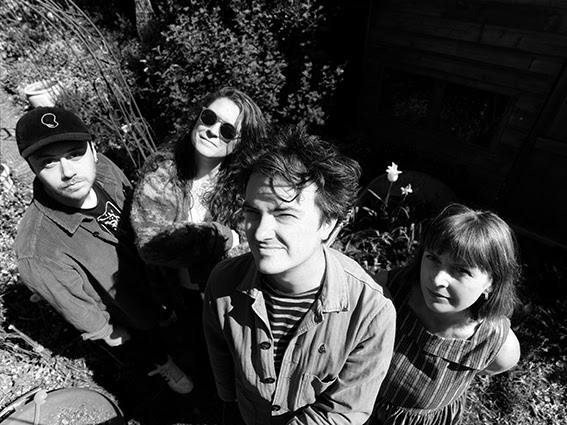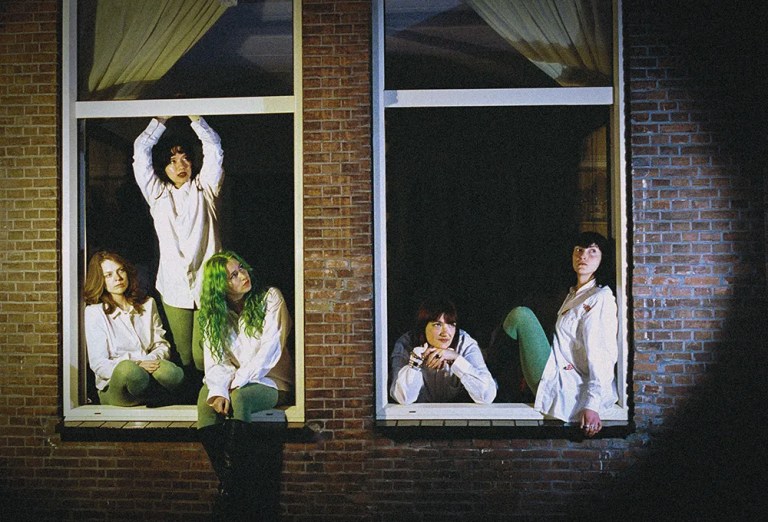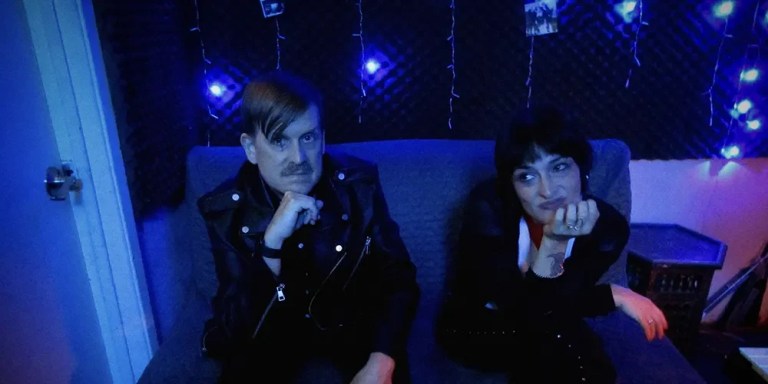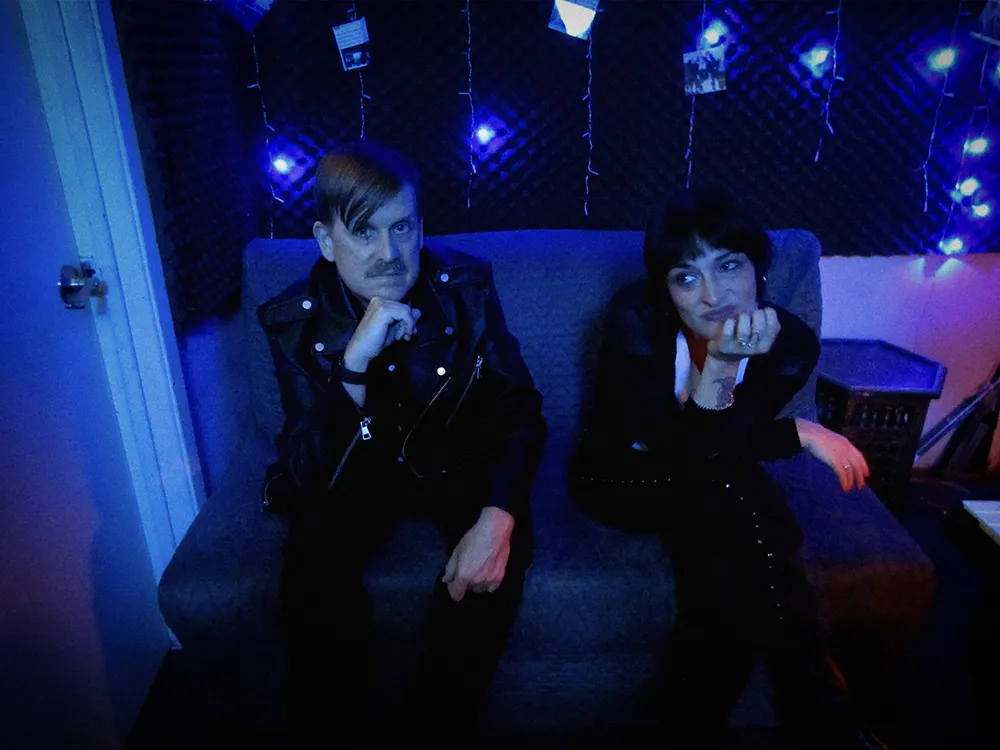
We caught up with Marisa and Josiah from Los Angeles darkwave/post-punk outfit Bizou to talk about their music, songwriting process, visual aesthetic, and future plans. Read our full interview below.
Hi, thank you for taking the time to answer these questions. How have you been?
Marisa: I’ve been good! Busy. Planning a wedding and a record release in the same month was crazy of me. Also my dog just had surgery. So things have been insane.
Josiah: I’ve been good! Working on multiple albums & getting Bizou ready to play live!
“Deep Rem” is the latest glimpse into Widow, landing right on the heels of “Death Mag.” How does “Deep Rem” build upon or challenge the emotional world you established with “Death Mag”?
Marisa: Oddly enough, Deep REM is an earlier demo than the rest of the songs on the EP. Destroy/Exist included it on their 10 year anniversary compilation in 2023. We decided to put it out with these songs because it fits really well with the tempo and feel of the Wire cover also on the EP.
“Death Mag” stands as the emotional centerpiece of the EP, a track that oscillates between hushed verses and euphoric choruses while meditating on the stubbornness of staying alive. How did you balance that heavy, fragile theme with such an uplifting, wall-of-sound chorus without losing its nuance?
Marisa: The instrumental track Josiah made for Death Mag already had some great tonal juxtaposition between the verse and the chorus, so I tried to accentuate that with the vocals, and I hope that translates.
The closing track, “Losing My Memory,” draws initial inspiration from a bizarre YouTube oddity, sheet music painted on a figure in Hieronymus Bosch’s The Garden of Earthly Delights. How did that obscure detail turn into a dreamlike, sugar-spun farewell song?
Marisa: That was all Josiah. I sent him a trashy demo arrangement and he came back with this ornate medieval bass VI intro. It’s such a great contrast to the rest of the song which to me is like, if Bizou was ever going to have a placement on an Urban Outfitters playlist, this would be the one.
Josiah: if you look up Heironymous Bosch Butt music on YouTube you can hear the music from the painting. I found it to be such a beautiful and haunting piece of music. I was definitely inspired!
Your live set staple, an irreverent cover of Wire’s “Ahead,” finally made its way onto a studio recording for Widow. What made now the right moment to capture that song on tape, and how did you adapt Wire’s post-punk energy into Bizou’s heavy synth aesthetic?
Josiah: We used to play this song in our set. It was more of a rock version back then . This version is more of a minimal Darkwave version.
Marisa: Yea! We played it live a ton at first and we had never released a recording of it until now. I always get jealous of Nicole when we play this live. The bass line goes crazy.
You’ve described the sound of Widow as a “fractured prism” that occasionally touches on “industrial Enya.” Where does that blend of harsh, angular post-punk and ethereal, floaty pop come from conceptually?
Marisa: I think it comes from us throwing all of our influences at the wall and seeing what that produces. When we’re writing together almost nothing is off the table. We basically say yes to everything in our range of motion genre-wise and work it out in production.
Josiah: We were definitely inspired by late 80s- early 90s industrial goth with this EP. I suppose Marisa has an Enya quality to her voice?
The title Widow feels heavy, stark, and evocative. What underlying themes or personal states were you tapping into that made Widow the fitting overarching name for this six-track EP?
Marisa: The title comes from one of the tracks, also called Widow. That’s my sleeper favorite track on the record and incidentally the only one we used live drums for.
It’s been five years since your debut full-length, Tragic Lover. In what ways do you feel the emotional lens of Bizou has shifted or matured between that record and Widow?
Marisa: I was really happy with the way Tragic Lover turned out, and I didn’t want us to repeat ourselves trying to recreate it. For this record, I wanted us to expand our boundaries and experiment a little bit more, and I think we accomplished that while still sounding like us.
Josiah: The shift was mostly using loops and beats rather than a drummer in the studio. It made us write differently for sure.
After Tragic Lover, everyone dove into various external projects. How did step-away time and working with other musicians enrich the chemistry when you all reconvened?
Josiah: It was an unintentional break. Our bassist moved out of town and Nicki is a Mom now. It was mostly life stuff. Having that break made us appreciate each other more musically and personally. We’re all really good friends.
Marisa: I take a lot of inspiration from everyone I’m lucky enough to collaborate with. It’s refreshing to see how other artists approach their work and return to your other projects with a different perspective. It made me very excited to revisit Bizou’s specific process and chemistry.
What was the atmosphere like during those initial recording sessions, and did the material take any unexpected left turns in the room?
Josiah: A lot of the songs were sitting on a hard drive for a while. It took some tinkering to make it cohesive. Marisa had a lot of interesting things happening in her demos. We tried keeping some of those elements in the end results.
Marisa: Josiah worked a lot on arranging our demos before we went back into the studio to track. I always have an incredibly relaxed and chill time recording at the Cave Studio. I felt right at home.
Bizou has always leaned on “chemistry over pedigree,” fusing synthwave, industrial, trip-hop, and shoegaze. In the studio, how do you keep such a wide range of subgenres sounding like a singular, cohesive wall of sound rather than a collage?
Marisa: Again, that’s all Josiah. He’s such a skilled producer. The best analogy I can make is that you have to be really good at design to make maximalism work. Josiah is good at that more is more approach and I think it helps tie all the elements we’re working with together cohesively.
Josiah: I recorded bands for a radio show called Part Time Punks for a couple years and would hear music from those genres. I was definitely influenced by many artists making post punk/ shoegaze. I was in shoegaze and industrial bands in the 90s. A lot of it was re-visiting my past!
When you’re producing your own band’s work, how do you know when a track’s balance of heavy distortion, shimmering synths, and delicate vocals is officially finished?
Marisa: The track is done when Josiah says it’s done! I will think a song is fully done and then he will have put samples, bass synth and new auxiliary percussion on and he’ll send me a new ref. This happened on Death Mag and I love it.
Josiah: For me, I tend to put tons of ideas down and then strip away different elements. I’ll make 20-40 different mixes until I’m done. It’s a long process!
To celebrate the release on Moonboot Records, you’re playing an EP release show on November 3 at Gold Diggers in LA with Nightjacket and Landroid. Given the multi-layered production on Widow, how are you translating these new studio textures into your live rig?
Marisa: Josiah’s building out the tracks right now for the live set. They will eventually be piped through a big ass speaker that we bring onstage with us. Genuinely the most stable tracks situation I’ve ever worked with in any project.
Josiah: We definitely use tracks to fill out the sound. Live we have a big sound.
Bizou’s live shows have built a dedicated cult following around your intense, high-volume performances. What can fans expect from your stage dynamic as you return after this incubation period?
Marisa: Reliably you can expect me to kick my drink over and everyone’s drink over onstage. Especially on a small stage, and I apologize in advance. Warning to my band mates to protect their pedalboards. I will kill again.
Josiah: Haha! It’s true. There’s always a feeling of danger when we’re on stage.
Widow is being released on Moonboot Records. How has joining forces with the label impacted the path and presentation of this EP release?
Josiah: Moonboot! Records is mostly an outlet for my productions. During the pandemic I considered putting out other artists but found a lot of artists aren’t willing to tour or play live. In the future I’d love to have more of a budget to throw around for production, advertising, and marketing.
With Widow officially arriving on September 25 and the release show locked in for November, what does the next chapter look like for Bizou as you close out 2026?
Marisa: I think we’re all just excited to get back in the room again and start working out the new songs after a long break. I missed playing with this group so much and I’m so ready to get back to it.
Josiah: I think playing live is our next chapter. This show is helping us be prepared to do more live shows.
Thank you so much for your time. Anything you would like to say to our readers before we wrap this interview?
Marisa: Thanks so much for chatting with us!
Discover more from Thoughts Words Action
Subscribe to get the latest posts sent to your email.