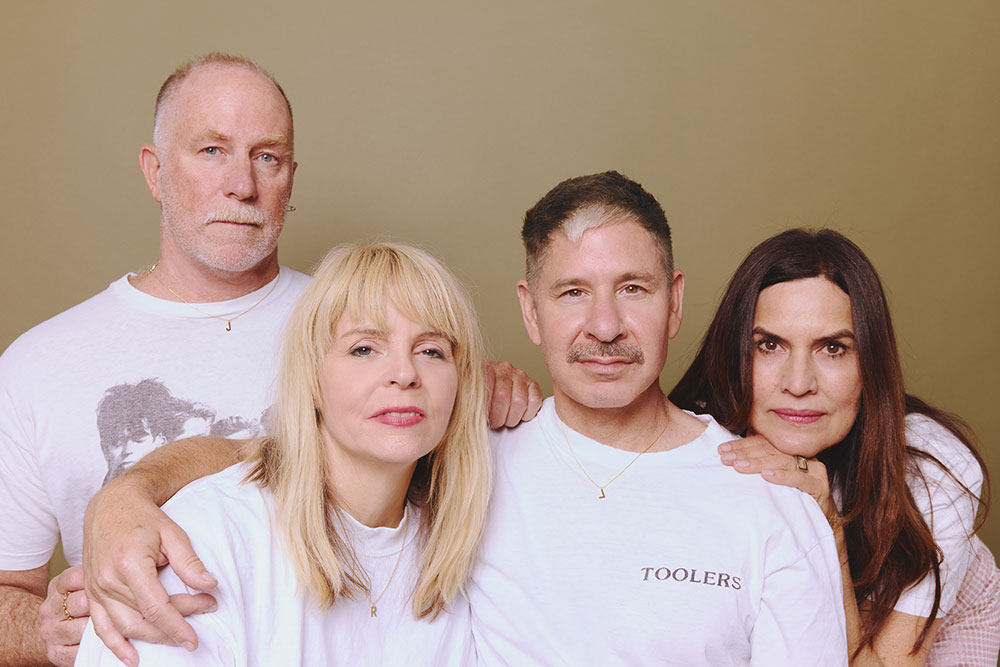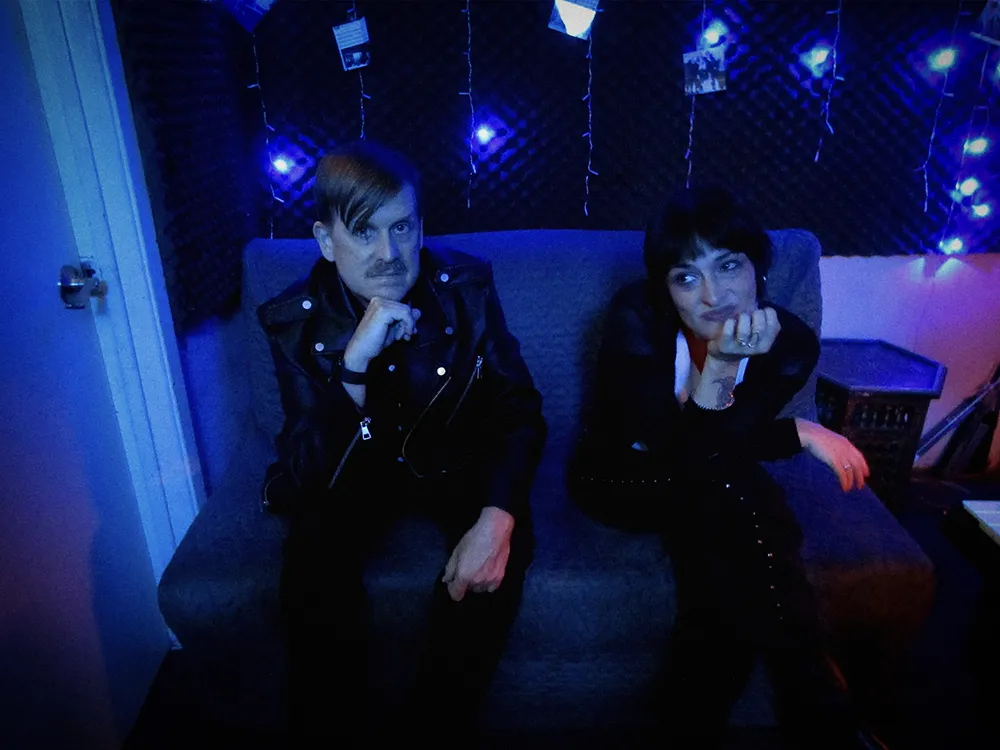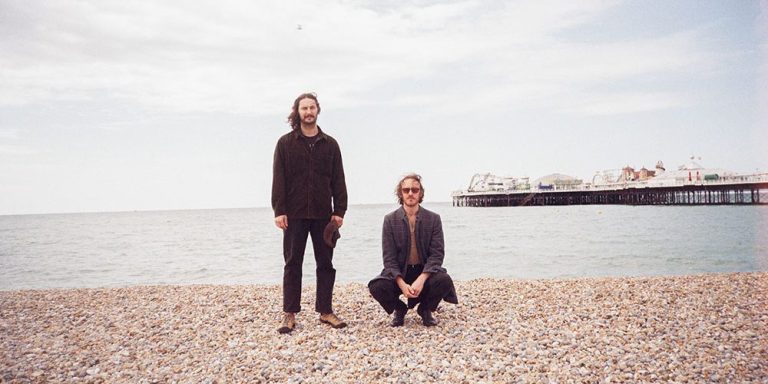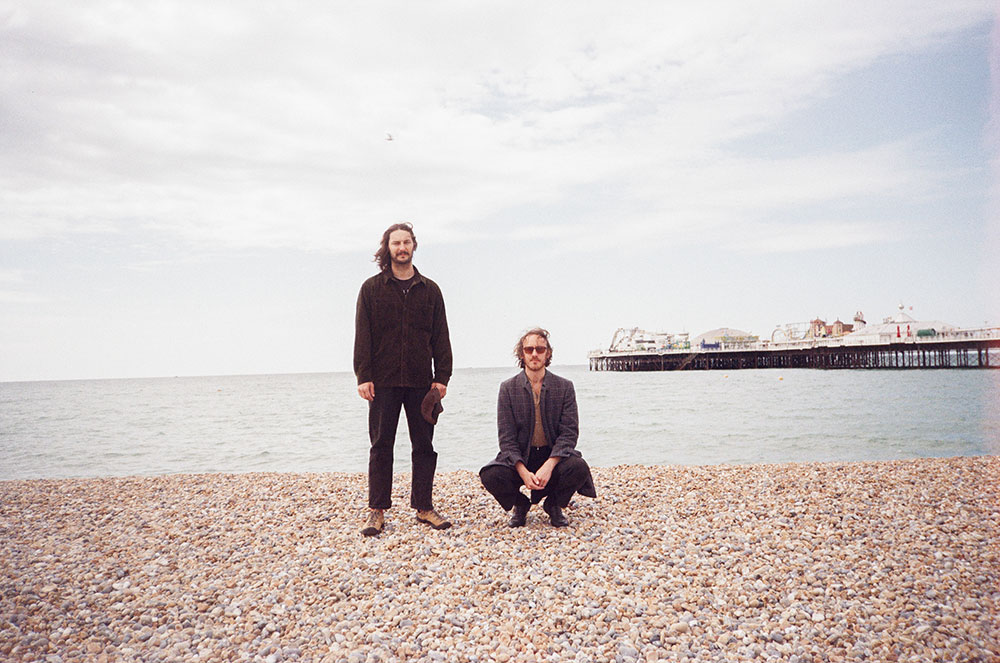
Montreal post-rock trio Yoo Doo Right have consistently pushed the boundaries of heavy, hypnotic sonic landscapes, blending krautrock-infused motorik rhythms with massive walls of shoegaze noise. Following the release of their latest singles and incoming record, we sat down with the band to break down their evolving approach to composition, the raw mechanics behind their songwriting process, and the spontaneous moments that keep their creative engine running.
Your new single, “Sofort, Si Fort,” carries a meditative, somber weight with its deep counter harmonies and floating bass lines. What was the initial idea behind this track, and how did you construct its layered, mystical atmosphere?
Justin came with this one fully composed and ready to fire. The main anchor of this song is definitely the bass lines. It’s such a strong hook and presence that we were pretty convinced we had heard it somewhere before. It’s interesting to see your perspective because this actually feels like a bright, bouncy, and optimistic song compared to our last record or works before that. It carries a weight, but in a new form or with a new direction.
The lead single, “Doldrums, Doldrums, Eviler Than the Devil,” pairs a hypnoticguitars with driving rhythm. How do you blend complex polyrhythms with krautrock without losing the hypnotic flow?
This is just what we do in the rehearsal space. This song was born out of both of us trying to flip in and out of 4 and 5 and layering it at different moments. From the top down incredibly simple, but it’s very fun to play and the push and pull of rotating times creates an interesting release.
Compared to “Doldrums…”, “Sofort, Si Fort” leans further into ambient drone and patience. How do these two tracks represent the dynamic spectrum of Build and Rest by the Shepherd’s Light?
That “lean” you’re describing is indicative of the record as a whole. The record pushes further into lush ambient work and patience with tracks like Industriestrauss 9 and the title track, while Tortue and Lambskin really hone in the more repetitive groove oriented approach. If anything, these two tracks are the most conventional in terms of song writing, with the rest of the album really choosing to lean into it’s respective spaces.
You’ve described this album as opting for a “symbolic approach to creation,” leaving pieces free to unfold in a myriad of ways. How did moving away from pragmatic boundaries change how you conceptualized and structured these songs?
Essentially, we were just so enriched and excited about everything we were working on. It wasn’t a way we had felt in quite a while. We weren’t second guessing or putting the weight of critique on anything. It was just create, having fun, get inspired, finish writing it. Even with recording we booked the studio time without the end goal of “finishing a record”, the goal was always to be in the moment of creating and work hard while we’re there, optimistically if possible.
The title Build and Rest by the Shepherd’s Light evokes heavy, almost mythic imagery. What themes or narratives were guiding you as you built this chapter of your sonic manifesto?
We were actually having a hard time naming this record. It was Amar Lal, who mastered this album and our last, who actually said that the title of the last song was very definitive of the journey of the record. We also wanted to the title to be something declaratory, a statement of action rather than description and this happened to work. The space we were in when making the record was very much an energy of surrendering yourself to something, of following the light that allows care and growth and creation. At the same time, I think as we both continue to get older there is significant significant meaning to be found in the routines that allow you to take care of yourself and those around you. Build and rest is the importance of caring for those around you whether it be friends, family, pets, spaces, tools, partners, or anything really. The shepherd’s light is the thing that allows you to give yourself meaning in your art or actions. I don’t know it sounds so fluffy and silly as I am writing this out but truly while we were making this record all I wanted to do was walk my dog, play music, and try to help contribute to a better world for those I love around me. A real rejection of nihilism and the heaviness of the world at large in that moment.
Your compositions are often described as “towering monoliths of roaring riffs crashing against swarms of restless rhythms.” When crafting such massive walls of sound, how do you decide when a piece needs more amplification versus when it needs space to breathe?
Mood, intent, energy. Even walls of sound need to have space for the light to get in.
Justin, your setup on this record spans electric guitars, bass VI, synthesizers, piano, tape recordings, and voice. How does juggling such a wide variety of textures shape your real-time performance and loop-building in the studio?
t’s funny, in the creative spirit of these sessions, we kind of threw caution to the wind in creating a lush horizon of instrumentation. I personally wanted the record to feel orchestrated, texturally dense and really wanted to allow ourselves to work outside of the confines of what we could perform live. It was certainly a situation where our ears were bigger than our stomachs, so to speak. Looking back, if I was to say that I had one regret about creating such a lush soundscape its that it has proven exceedingly difficult to perform live. There is always to a large degree work that I do with live looping, but when it comes to performing this record in particular, we have had to employ the help of several other guest musicians, effectively taking our normal three piece formation and spilling it over into a full 7 piece orchestra…Im not sure how that will work moving forward, but there is only so much tap dancing on loop pedals that I can do to convey the breadth of the sonic landscape of this record.
John, your drumming tightens up these shifting landscapes, moving between rigid krautrock motorik patterns and comprehensive, dynamic percussion. How do you approach building rhythm sections that can hold down a track while the melodic elements morph around you?
I think given the fact the we were writing this as a two piece made me feel like percussion needed to be interesting and busy enough to carry it’s own space in the songs. It’s not complimentary or the metronome, it really is a robust voice of its own. Carrying that “voice” into everything I do is important. Sometimes though, the challenge is doing less and slowing down so everything else can be carried towards an appropriate place.
Purposeful looping themes play a central role in your music. How do you balance the hypnotic, repetitive nature of a loop with the need for organic, linear progression over the course of a eight or ten-minute track?
I have no idea how to answer this. I guess it’s intuitive? Intuitive to what we like and what we want from a piece.
You recorded at Montréal’s legendary Hotel2Tango with Ky Brooks. Given the room’s deep history with post-rock icons like Godspeed You! Black Emperor and Do Make Say Think, how did that space and vintage setup influence the live feel of the tracking sessions?
It truly is a great room and an enriching warm place for us to be in. The drum sound is so real and huge for some reason. Ky is also the best, having them there makes us feel like we’re just absolutely knocking takes out and capturing the sounds we want. It’s creates an environment in which we have wind in our sails and aren’t too scared or daunted by the rough waters that is recording an album.
Seth Manchester mixed the record at Machine with Magnets (Battles, Lightning Bolt), and Amar Lal mastered it (Pile, Titus Andronicus). What did their unique sensibilities bring to the final mix, especially when balancing heavy distortion with intricate ambient details?
Seth has an incredible ear and intuition, every time we send him something to work on the first pass we get back is usually perfect. Amar also listens deeply, not just in terms of the sonic experience of the record, but he’ll really reflect on the feelings and thoughts and imagery of what the piece is evoking. Having folks like them take what we wrote and recorded and do the final steps of mixing and mastering always makes us feel like the record is in good hands.
Having recorded between Hotel2Tango and Error 403, did the environment or room acoustics dictate how specific songs took shape?
Error 403 is a studio Ky is a part of where we went to wrap things up and do all the guest pieces. So Hotel was really both of us being in the zone and dialing in our parts, where 403 was more the build.
Now heading into your fourth full-length album on Mothland, how do you feel the creative dynamic between the two of you has evolved since your early releases?
It’s good! We keep ourselves so busy, always rehearsing, saying yes to basically anything we can play. Very grateful to Mothland and the work they do as well as to anyone that will have us play. We immediately wrote and recorded another record, I thought Build and Rest was my favourite thing we ever made but now there is another new one that already took its place. I think we’ll need some rest in the new year, but as long as we can maintain an enriching creative energy we’ll keep working on playing shows and making new material!
Yoo Doo Right’s music is deeply immersive on record, but it takes on a whole different level of physical intensity live. How are you preparing to translate these effects-heavy arrangements into your upcoming live shows?
We’ll be playing the Build and Rest in it’s entirety at our record release show coming up in November. We’ll be performing it as a 7 piece band to really bring every layer to the stage. Some of the pieces take on very new forms live which is actually driving a lot of exciting energy into the rehearsals.
With Build and Rest by the Shepherd’s Light arriving this November, what lies on the immediate horizon for Yoo Doo Right as you bring this album out on the road?
New record in the bag, a nice tour with Slift around the corner! Booking some shows in Quebec for the new year. John’s going to work on his French. Justin is going to build a ton of guitar pedals. Another tour in spring! Maybe we’ll rest for a little while, maybe recording/releasing more collaborative records with Ky or other friends. A lot of time spent working at our day jobs! But really, I think we’ll just keep on trying to be optimistic what we’re doing, ensuring we feel good about the choices we’re making, and at the end of the day always just writing and practicing. Thanks for the interview!
Discover more from Thoughts Words Action
Subscribe to get the latest posts sent to your email.