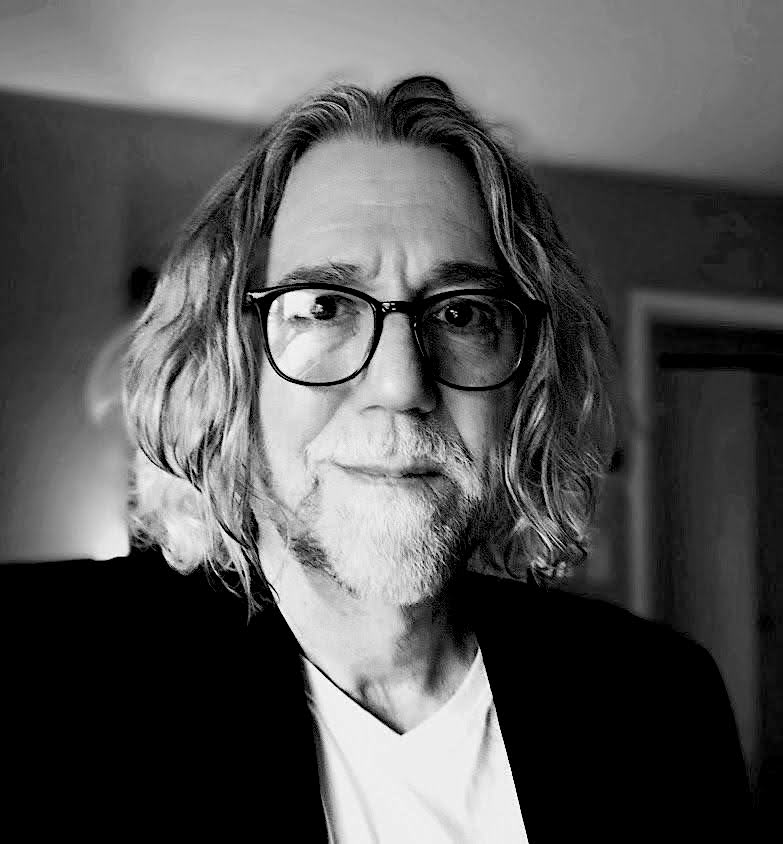
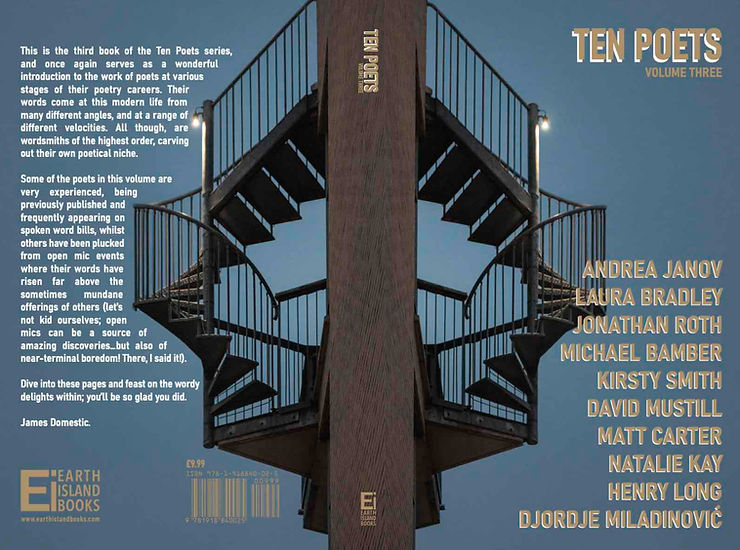
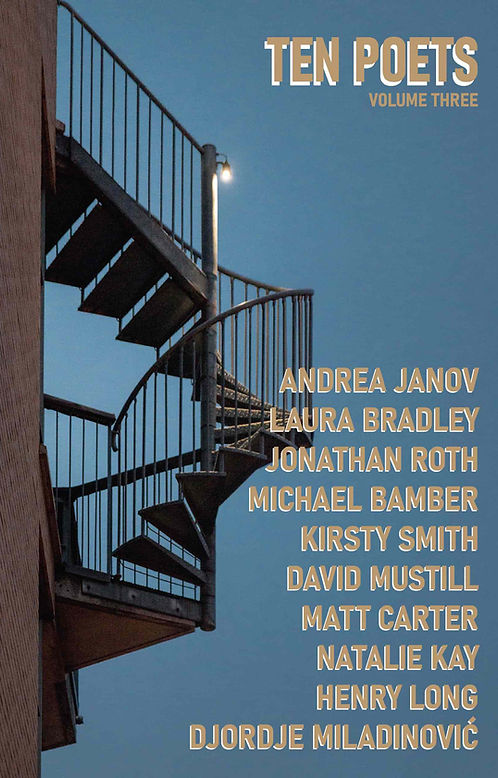
We sat down with poet Henry Long, featured in Earth Island Books‘ Ten Poets #3, to explore his distinct approach to writing. In this interview, we break down his core inspirations, creative process, recurring themes, writing techniques, and the favorite authors who influence his work.
Order Ten Poets #3 HERE
Thank you for taking the time to answer these questions. How have you been?
HL: I have been unapologetically happy. Thank you for asking.
What was the initial spark or catalyst that first drove you to start writing poetry, and how does that early impulse compare to what pushes you to put pen to paper today?
HL: The impetus for poetry came from writing my own lyrics to songs by the Beatles, The Monkees, and songs I’d hear on the radio. This was 1970, when I was seven going on eight. Later, in high school, I discovered (thank you, Richard Saunders, my English Teacher) the works of Richard Brautigan and Kurt Vonnegut, which set me on a lifelong commitment to reading and writing. Most everything I’ve written has its DNA in these early influences.
How has your background, involvement, or affinity with punk rock and DIY counterculture shaped your approach to poetry, performance, and creative expression?
My first rock concert was seeing Wendy O. Williams’ band, The Plasmatics, at a small, decrepit theater in the coal-mining town of Scranton, Pennsylvania. That energy lingered as I ventured up to microphones with my own words, willing to engage and provoke the audience, make some noise, and be a gentle disruptor of the status quo. This included (but was not limited to) lighting myself on fire, taking off all my clothes, or burning my poems as I read them. I have since mellowed with age and time, and prefer to let my poetry speak for itself these days without the distraction of self-destructive or illegal antics. As for the DIY element, that came as I began to self-publish Xeroxed chapbooks in the 1990s. This was also my approach regarding the art business. As an artist and painter, I wanted complete control over how my work was presented and promoted.

Can you walk us through a typical writing session? Do your poems usually start with a sudden line of dialogue, a rhythm in your head, a specific image, or a deliberate theme?
HL: The majority of my writing is based on actual events. Some poems and short stories are born on the waves of memory, while others present themselves in the smallest of fractions— a single word or phrase that shows up seemingly at random, or an image from a dream. Words and fragments are jotted down and gathered, offering clues as to what may emerge through the process of writing. They could become anything: song lyrics, a story, a poem, and I don’t know what it will be until I start writing.
I have a short story titled “The Clairvoyant Oyster” that seemed to write itself, inspired solely by a dream wherein I saw the phrase “the clairvoyant oyster” floating above me on a golden banner. When ideas come directly like that, one must pay strict attention and get something down as soon as possible.
A writing session is usually in three shifts. The first shift gets the raw materials down on paper or screen. The piece takes form, and then the second shift comes in. They refine the piece, omit lines that don’t work, flesh out the creation, and practice reading the lines aloud. The third shift are the cleaners. They finish the job by editing, naming the thing, making sure all the parts are working, then sending it on its way.
When you look back at the body of work you contributed to Ten Poets #3, what are the central obsessions, conflicts, or truths you find yourself continuously returning to?
HL: Love, loss, the mystery behind the mystery curtain, and dubious constructs of reality.
Which authors, poets, or underground writers have left the deepest scars on your literary style, and why do they resonate with you so strongly?
Besides the aforementioned authors, I would include the mystery and horror comic books of the early 1970s, English Romanticism, and the works of David Lynch.
If you had to pick a single book that changed your worldview or completely altered how you understood the written word, what would it be?
HL: For worldview, Joseph Campbell’s “The Power of Myth,” and Charles Dickens’ “A Christmas Carol” for understanding the written word. Both books changed my life, and continue to be read regularly.
Many punk-associated poets write with a distinct spoken rhythm in mind. How do you balance how a poem feels read silently on a printed page versus how it hits when spoken out loud?
HL: I balance both types— poems that are written with the voice in mind, and what I call in-your-lap poems. Both work either way, of course, and occasionally, tones will shift within a single poem, with the voice and the lap given equal consideration.
Writing and independent publishing in the underground scene often comes with its own unique hurdles. What keeps you motivated to keep creating and sharing your work in a climate that often overlooks poetry?
HL: I don’t know. Ideas are little treasures, and my impulse has always been to share those treasures, so I keep writing and publishing. From my experience, poets are a supportive and loving community, and when we gather together to read our work out loud to a room, it is a communion of saints.
Without giving too much away, is there a particular piece of yours featured in Ten Poets #3 that holds a heavy personal weight, or has a specific backstory behind its creation?
HL: They all do, but I wouldn’t want to sway the reader with any backstory or personal details. The poem should be allowed to speak for itself, more or less, without additional influence from the poet.
Now that this collection is out in the world via Earth Island Books, what is next on the horizon for you creatively? Are there broader writing projects, chapbooks, or performances we should look out for?
HL: There is a book being published as I write this titled “Dreaming Unified Fires,” and another one to follow based on the major arcana of the Tarot, both in collaboration with Bonnie Bostrom and Michele Cuomo. This October I’m teaching a workshop titled “Alchemical Amalgams: Collaborative Poetry and The Third Mind.” There’s almost always something on the horizon, and even when there isn’t, there’s the promise of another poem to be written, or short story.
That’s it. Thank you for your time. Anything you would like to say to our readers before we wrap this interview?
HL: Thank you, dear readers, for making time to read this. If you write, keep at it! Be relentless. Go to poetry events. Share your work. Buy someone’s chapbook and read it. And if you don’t write, why not? Start today. Now. Write something while sitting at your kitchen table looking out the window. Don’t have a window? Then write about your cat. Don’t have a cat? Write about not having a window or a cat.
Love and gratitude. —Henry Long
Discover more from Thoughts Words Action
Subscribe to get the latest posts sent to your email.