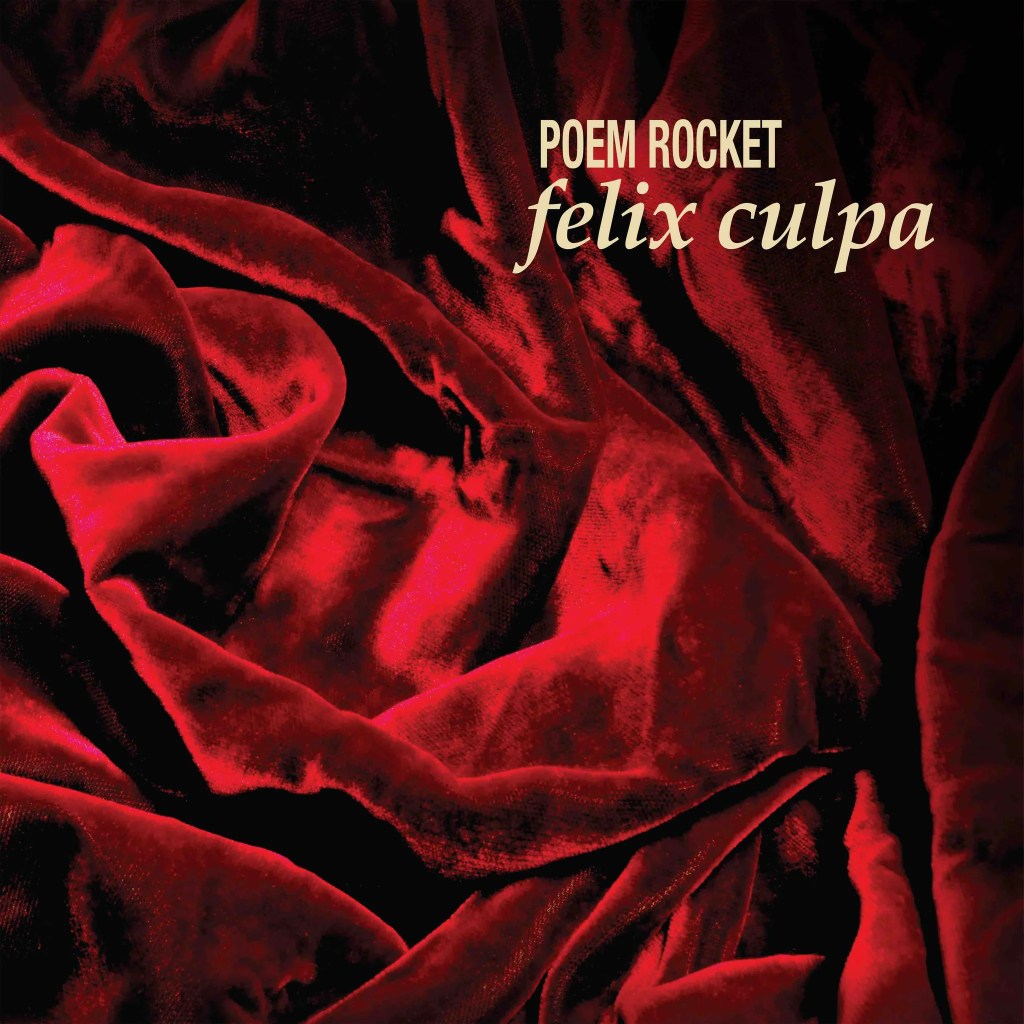
During the nineties, New York was an experimental rock mecca, and Poem Rocket stood right at the epicenter of that noise revolution. Silver Girl Records stood tall in that subterranean ecosystem, consistently backing bands that dared to smash conventional song structures in favor of raw artistic exploration. Among the absolute jewels is Felix Culpa by New York City’s Poem Rocket. Released during a pivotal era when post-punk, noise rock, no wave, and early post-rock were bleeding into one another, Felix Culpa remains a monumental piece of art. It is a record defined by its dark tension, intellectual power, and an uncompromising commitment to pushing sonic boundaries. Poem Rocket always occupied an enigmatic space within the 90s underground scene. They were never a band content with simply riffing over standard verse-chorus-verse setups. Instead, Felix Culpa, a Latin phrase translating to “happy fault” or “blessed fall,” acts as a complex exploration of dissonance, catharsis, and mathematical precision. Across the album, the group balances between the confrontational noise of Sonic Youth and Swans and the rhythmic dynamics of Slint and Unwound. But Poem Rocket also carved out a signature sound that was entirely their own. It is a record that continuously shapeshifts, moving from quiet, unsettling atmospheric passages into towering walls of feedback-drenched noise with total authority.
Rather than relying on straightforward power chords, the band uses angular leads, microtonal tunings, drony soundscapes, and ringing feedback that acts almost like a third guitar in the mix. The guitars constantly engage in a thrilling dialogue, one channel incorporating intricate, hypnotic arpeggios while the other unleashes abrasive waves of fuzz and metallic scraping. This constant interplay between stark minimalism and explosive dissonance keeps the listener on edge. Crucially, the noise here is never senseless noise for its own sake. Every swell of feedback and every sharp, bent note serves a distinct emotional purpose, building tension until the dam inevitably breaks. Delivering lines with a mix of detached cool, spoken-word intimacy, and sudden bursts of raw, emotive intensity, the vocals act as a guide on this epic sonic journey. The lyrics avoid cliché indie-rock tropes, leaning instead toward abstract imagery, existential questioning, and literary commentary. There is a haunting, cinematic quality to how the vocal lines are embedded into the mix. They are rarely placed high above the instrumentation in a pop-centric manner. Instead, they sit right inside the sonic wall, forcing you to lean in close, pay attention, and absorb every spoken cadence and sung melody. The bass guitar carries a generous serving of overdriven distortion and warm low-end weight, giving the album a heavy, pulsating spine. These basslines carve out independent, grooving counter-melodies that add immense depth to the mix. The drummer moves between strict, hypnotic, motorik-inspired beats and complex, unpredictable time signatures filled with sharp rimshots, thunderous tom rolls, and subtle cymbal work. The percussive dynamics dictate the album’s heart rate, knowing exactly when to hold back into a quiet, simmering pulse and when to explode into a frenzy that propels the entire band forward.
The record opens with an immediate sense of purpose, plunging the listener into a world where rough post-punk rhythms meet sharp, crystalline guitar lines. As the album progresses, Poem Rocket demonstrates their mastery over pacing. Tracks build with painstaking patience, laying down quiet, repetitive loops of bass and guitar that gradually gather momentum, picking up distortion, density, and volume until they reach a massive, cathartic climax. Shorter, punchier noise-pop tracks are brilliantly juxtaposed against rumbling, experimental compositions that allow room for ambient feedback loops and dark, cinematic textures to breathe. From a production standpoint, Felix Culpa captures the absolute gold standard of 1990s analog recording aesthetics. The album sounds alive, organic, and beautifully unpolished. You can feel the air moving in the room, the physical slap of drumsticks hitting the snare, the buzz of tube amplifiers pushed to their absolute limits, and the natural room resonance that modern digital recording techniques so often erase. The engineering preserves an incredible amount of dynamic range. The quiet passages are soft, delicate, and intimate, making the heavy, distorted explosions hit with double the physical impact. It is a production job that respects the listener’s intelligence, allowing every instrument its own spatial footprint while maintaining a thick, unified wall of sound. Decades after its initial release, Felix Culpa documents the peak of 90s subterranean art-rock. Poem Rocket created a timeless and impressive body of work. It is an album that demands and rewards active listening, revealing hidden guitar textures, subtle bass counter-melodies, and lyrical nuances with every subsequent spin. For anyone who holds a deep affection for noise rock, post-punk, or the golden era of American independent music, this record is an absolute essential purchase.
Silver Girl Records delivered a true masterpiece when they put out Felix Culpa, and it remains a crown jewel in their storied catalog. If you love your music intelligent, dark, adventurous, and packed with unfiltered artistic passion, do not let this phenomenal release remain a hidden secret. Head over to Silver Girl Records’ shop, grab yourself a physical copy of this underground classic, crank the volume knob all the way up, and let Poem Rocket take you on a magnificent, dissonance-fueled journey.
Discover more from Thoughts Words Action
Subscribe to get the latest posts sent to your email.