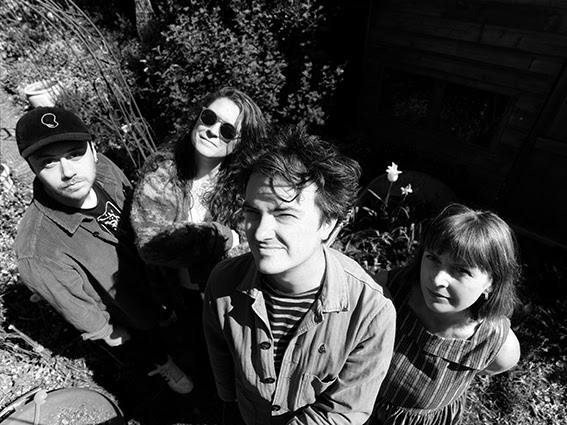
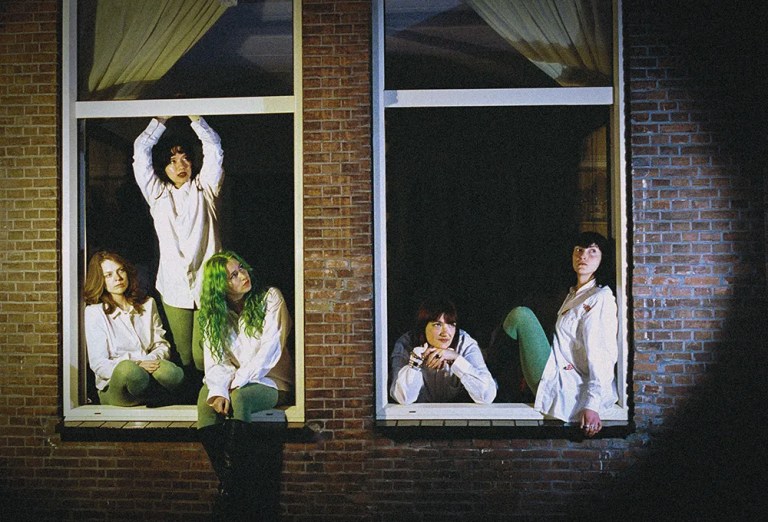
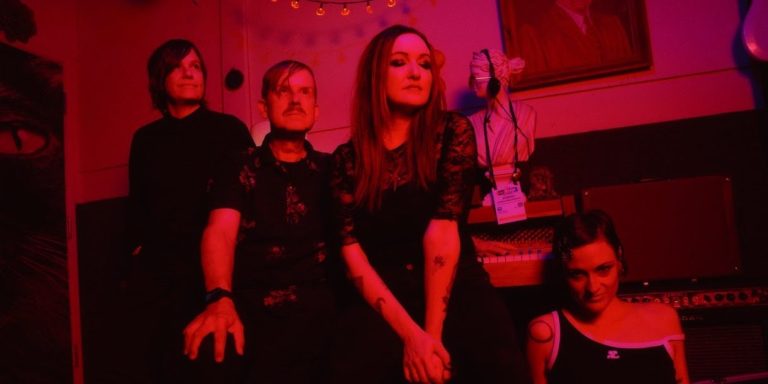
Less than a year after delivering their raw-nerve debut Party Time, Brooklyn post-punk outfits TVOD are already back on the offensive with their second full-length album, The Farm (out October 16 via Mothland). Born partly in the quiet French countryside of Neufchâtel-en-Bray and recorded in a two-week whirlwind in Leeds with producer Danny Blackburn, the record takes the band’s signature brand of danceable, angular punk & roll and sharpens it into a razor-edged satire of modern absurdity, authority, and collective unease.
At the center of it all is frontman Tyler Wright, whose detached yet urgent delivery captures the exact friction between artistic ambition, social collapse, and the chaotic pulse of the NYC underground. From hand-crafting Orwellian diorama artwork on his kitchen table to channeling late-night bathroom-ballad existentialism into infectious dancefloor anthems, TVOD continues to thrive in the creative mess.
We caught up with Tyler to talk all about the making of The Farm, the band’s songwriting and composing process, their UK recording adventure, and the dark wit, themes, and inspirations fueling their restless momentum.
“Bottomless Pit” tackles existential numbness and the friction between artistic ambition and real-world chaos, calling itself a “late night bottom feeder bathroom ballad.” How did you manage such heavy themes of entrapment and turn them into a danceable, confident punk-and-roll track?
I really don’t think I am able to balance those very well at all honestly. It just ends up coming out that way. I unknowingly always turn my bad thoughts into punk songs.
The music video for “Bottomless Pit” compiles raw tour footage from the UK and Europe. What was it like capturing that relentless, sweaty live energy on the road, and how does the live performance dynamic feed into your studio recordings.
We very much tried to recreate the energy of our live shows on this record and in that music video. Danny did a great job at capturing that and replenishing our minds with pints of guinness.
“Bottomless Pit” is the fourth and final preview before The Farm drops. How does this track set the stage for the rest of the album compared to the earlier singles?
Bottomless pit is a very raw and wild track. I think it’s a good song to warm your toes to before you listen to the rest of the record.
The album title and themes lean into George Orwell’s Animal Farm, poking fun at authority, power dynamics, and the hypocrisy of modern society. What was the spark that led you to use Orwellian satire as a lens for today’s social and political landscape?
I really didn’t take much to compare how much parallel we are at with the book nowadays. I think the spark is happening day in and day out with all the events that are happening in our world today. Genocide, brutal wars and waves of far-right toxic ideologies are wide spread across the world. You have to live under a rock to not be frightened at what is happening.
You wrote part of the album on an actual farm in Neufchâtel-en-Bray, France. How did stepping out of Brooklyn into the French countryside shape the record, and when did you realize that “the rot has spread even to the furthest reaches” of rural escapes?
I think that stepping out of our busy city and resetting on tour in the French Country let us focus on just making art. With phones, social media and the always online life we live in, I think that you can never truly escape “the rot”. It is in your face at all times.
Tyler, you hand-crafted a 12”x12” diorama on your kitchen table for the album artwork. What scene did you build, and how does that hands-on visual mirror the disturbing, dystopian themes inside the music?
I tried to mirror the “Battle of the Cowshed” from Animal Farm for the cover. I felt like the train model motifs could add to the strange morbid cover. Hopefully it comes across as a little surreal. I’m a freak idk. I really enjoyed making it and hope that my kitchen table recovers from all the glue I used.
Less than a year after your debut Party Time, you were already back in the studio, this time in Leeds with producer Danny Blackburn (Adult DVD). What made you want to cross the Atlantic to record at Nave Studios rather than staying in your usual Brooklyn environment?
It was honestly serendipity that we got to record with Danny at Nave. We became friends with Adult DVD after doing some shows and festivals together last summer. Then at the bar one night before a show I mentioned to him that we had more songs and wanted to record somewhere. He said he was working at Nave and would be able to take it on and it clicked. I loved being over there in Leeds. Great food, good times and lovely people.
You recorded the entire album in just a two-week whirlwind. Did that tight timeframe force you to rely more on raw instinct, and how did Danny Blackburn help capture that crooked charm and volatility?
It definitely added no time for fucking around. I would have gladly stayed for more if the pocket book could have afforded it. However, I do like recording in short spurts of time. Just record the damn thing and move on.
TVOD’s signature sound balances angular guitars, sticky basslines, and driving drums with vocals that feel simultaneously detached and urgent. How do six band members negotiate space in the studio so the arrangements stay punchy without getting cluttered?
I think that’s where practice and playing live comes into play. We always play the songs out before recording. I think the stage can be a great way to reflect back what needs to change or what the song can sound like.
The Farm reflects a lot of the creative chaos and restless momentum of the Brooklyn scene. How has the current NYC underground ecosystem shaped your growth between Party Time and this new record?
The music scene, like most of them in the states, is not doing very well at the moment. Venues and DIY spaces are shuttering their doors constantly. No one can afford to even go to most shows anymore here in the states. I think the angst about losing these special places added to the fervor in creating this album.
Your music marries post-punk grit with danceable, late-night grooves. How important is keeping a dance floor moving when you’re writing songs about collective unease, apathy, and social collapse?
Dancing is the best way to escape the dread. Don’t ever let the dance floor die. Don’t ever let them win.
There’s a sharp streak of dark humor and cynicism running through your lyrics. Is poking fun at the absurdity of the world your primary coping mechanism for dealing with today’s heavy realities?
Haha yea I guess it is. My family has a really dark sense of humor and I always found that laughing at things makes them less scary.
With The Farm coming out on Mothland this October, how are you preparing to translate these new, polished studio scorchers into your famously unpredictable live shows?
I would tell yea, but then I would have to feed ya to the fishes. That’s a TVOD secret and you can come see what we got cooking at our album release show at Alphaville November 14th.
Having toured heavily across Europe and the UK recently, what are some of the biggest differences you’ve noticed in how international audiences react to your Brooklyn brand of punk & roll?
I think they enjoy it for the most part. Mosh pits go a little harder over there I will say that. I came back with a lot of bruises and a chipped tooth this year.
Once The Farm is officially out in the world, what lies on the immediate horizon for TVOD as you head into the rest of the year?
I think you can hopefully expect some more new music and some US shows. 🙂 Don’t want to say too much, but yea I’m really looking forward to this year.
Discover more from Thoughts Words Action
Subscribe to get the latest posts sent to your email.