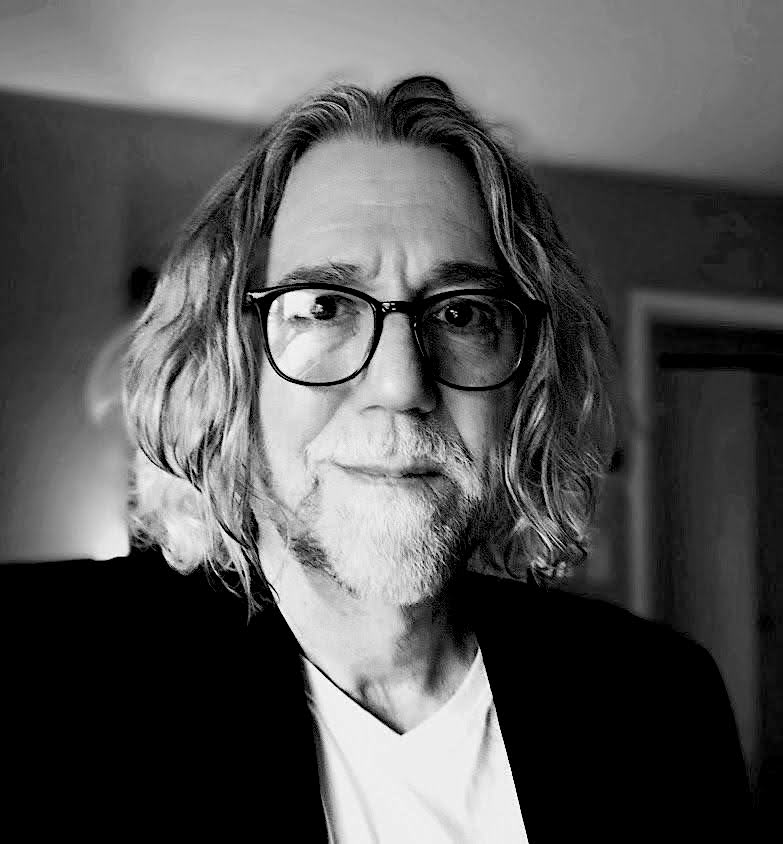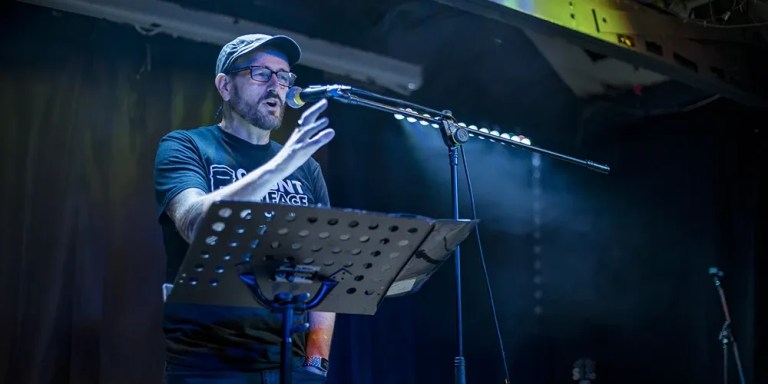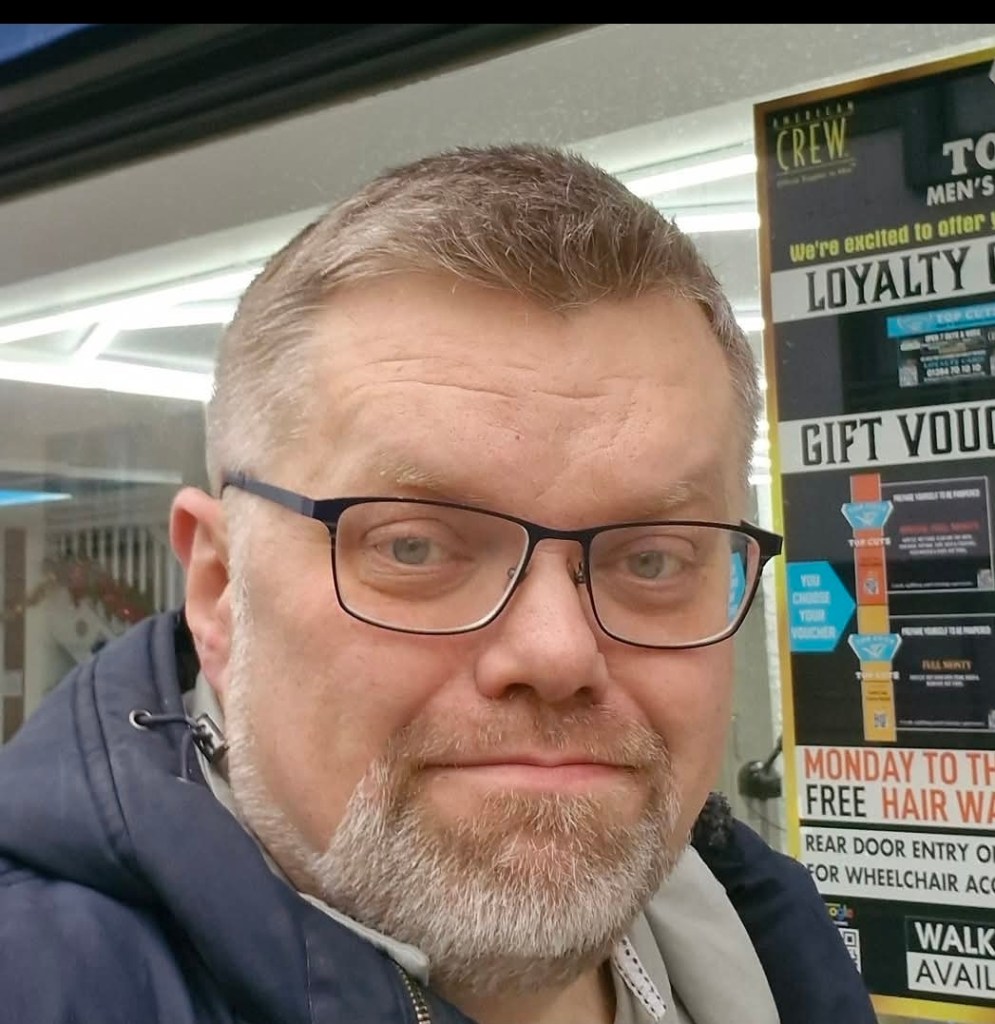
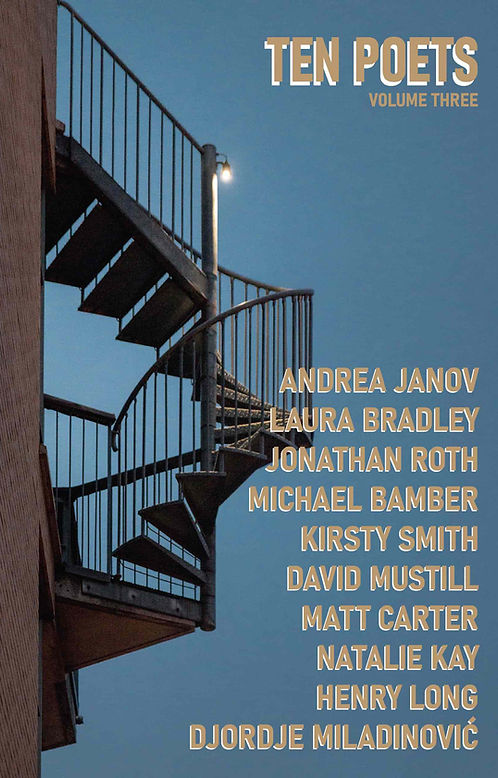
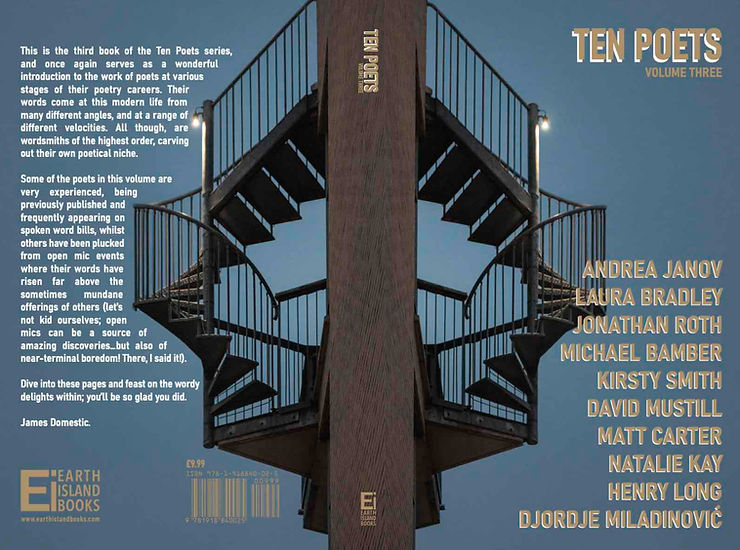
Earth Island Books recently published the third volume of their Ten Poets collection, featuring an inspiring group of contemporary writers. We had the pleasure of sitting down with one of the project’s featured poets, Michael Bamber, to talk about his writing habits, main inspirations, favorite books, and the core ideas driving his poetry. Enjoy!
Order Ten Poets #3 HERE
Thank you for taking the time to answer these questions. How have you been?
Doing alright. It’s quite a buzz being a published poet.
What was the initial spark or catalyst that first drove you to start writing poetry, and how does that early impulse compare to what pushes you to put pen to paper today?
I picked up the pen when I was a kid and was quite good at it, but there wasn’t much of an outlet. Then I saw my mate Matt Carter, who is also featured in this book, reciting a poem on Facebook. I thought, “I could do that,” and wrote one that night and sent it to him. He liked it, and I’ve been writing ever since.
How has your background, involvement, or affinity with punk rock and DIY counterculture shaped your approach to poetry, performance, and creative expression?
I like to throw all the rules out of the window and write quickly from the heart. I bury myself in a memory and then whack it on the page. I do a bit of refining, but the memory is generally pretty vivid and expressed with total honesty.
I like the fact that they don’t take long to write and that they connect with people. I love performing them and always make sure I have new material to deliver every month at my local club, GOB, where I am the compere.
Can you walk us through a typical writing session? Do your poems usually start with a sudden line of dialogue, a rhythm in your head, a specific image, or a deliberate theme?
They start with a memory. Swapping football stickers, buying a packet of condoms on a school trip, that sort of thing. Stuff that was eventful. I explore what happened and form a quick narrative.
I just put together lines that drive the narrative. They literally fall out of my fingers onto the keyboard. I like to inhabit the moment, cast myself back and emotionally react on the page. I bet that sounds terribly wanky.
I then send them to my mate and mentor, James Domestic, who gives me a heads-up on whether or not they are any good. He has been a tonic, and his feedback has driven me on.
When you look back at the body of work you contributed to Ten Poets #3, what are the central obsessions, conflicts, or truths you find yourself continuously returning to?
It’s about me trying to make sense of the world. Trying to fit in and exist as a kid and a teenager. It’s an honest account of growing up and overcoming challenges.
It’s interactions with peers. Teachers. It’s big trouble and how to get out of it. It’s humanistic. There are no heroes and villains. It’s light-hearted, and people who know me can hear my voice when they read it.
Which authors, poets, or underground writers have left the deepest scars on your literary style, and why do they resonate with you so strongly?
I have three massive influences and all manner of other ones that mill around in my mind when I am writing.
I love Michael Rosen. I used to sit on the carpet and listen to my teacher’s renditions of his poems on a Friday afternoon. He got into the detail of growing up.
I love Roddy Doyle. I love the electric dialogue on the page and the rich humour of ordinary life.
As an A-level student, I read The Handmaid’s Tale and was initially irritated by the first-person, present-tense way Margaret Atwood delivered Offred’s terrible story to us. Then I got into it and utterly embraced it, and now I find it hard to write any other way.
A big influence has, of course, been James Domestic. I saw him perform a long set on the first night I took the stage at GOB, my poetry night in Bury St Edmunds, and was captivated by his confidence, humour, form and style. I am very lucky that he accepted my request to be a mentor. He has been massively encouraging.
If you had to pick a single book that changed your worldview or completely altered how you understood the written word, what would it be?
It’s hard to look much further than The Hitchhiker’s Guide to the Galaxy. I first read it when I was 12 and fell completely in love with Douglas Adams and all he had to offer.
I thought it meant that I was a sci-fi fan, but this wasn’t really the case. I became addicted to the wit and wisdom: the futuristic exploration of ideas such as the Babel fish and constantly updated electronic information that became very real in the 21st century.
It feels like Douglas Adams looked into the future and then helped mould it, with a healthy dose of hilarity and cynicism all mixed into one. It’s so wonderfully absurd.
Many punk-associated poets write with a distinct spoken rhythm in mind. How do you balance how a poem feels read silently on a printed page versus how it hits when spoken out loud?
My work is designed to be performed. It’s my script for a monologue and a way to connect my memories with an audience. I love to give it the life of performance and try to take the audience on a journey that is hopefully relatable, entertaining and amusing. I hope that people picking up the book get the same vibrancy that I try to give the words on the stage.
Writing and independent publishing in the underground scene often comes with its own unique hurdles. What keeps you motivated to keep creating and sharing your work in a climate that often overlooks poetry?
I write to feel my way and make sense of my life. I write to hopefully connect with others and help my audience reconnect with their past selves.
I like the buzz of going to a new poetry club, performing for the first time and getting a few compliments. I am a true extrovert and love bringing my new work to my poetry club and then getting other people to bring theirs along.
Sam Marsh from Gob has been incredibly motivating. I was a bit star struck when i met him as he was a teen hero as singer/drummer in the wonderful Jacob’s Mouse. He gave me the chance to compere the gigs and then selected me for Ten Poets. We are firm friends and his compliments have spurred me on.
I enjoy discovering talent at the club and being part of a creative community.
Without giving too much away, is there a particular piece of yours featured in Ten Poets #3 that holds a heavy personal weight, or has a specific backstory behind its creation?
If you read my poems, you will find they are deeply personal and honest. My poem about swapping football stickers is about trying to fit in with the other lads. Trying my best to climb the mountain of completing an album with 550-odd spaces where stickers need to be stuck and trades need to be made.
It’s about vulnerability, tenacity and achievement. There is a moment of emancipation when the book is complete, but then a wish to get straight back into the hobby.
I still have the sticker album. I take it with me to poetry events. It’s the first poem I ever performed live as an adult, and I hug my inner child whenever I deliver it.
Now that this collection is out in the world via Earth Island Books, what is next on the horizon for you creatively? Are there broader writing projects, chapbooks, or performances we should look out for?
I am writing my first collection. It’s called The Boy With The Massive Head, as I had undiagnosed hydrocephalus as a child. I hope to have it out next year.
I am still the compere at GOB and love having my own little club. I have collaborated with David Mustill who is also in Ten Poets 3. We are setting up a night called Five Poets in Ipswich, which showcases poets at various stages of development and will give me a chance to hone new material in front of a warm audience.
James Domestic has invited me to perform on some bills next year, and I will also be bringing my compere skills to more stages.
The great thing is that I get to expand and grow my own material as well as back other poets and give big rock ‘n’ roll introductions to fellow poets every month at my club. I recently introduced Attila the Stockbroker at Sudbury Arts Centre, which was an immense privilege.
That’s it. Thank you for your time. Anything you would like to say to our readers before we wrap this interview?
Two years ago, I hadn’t written anything that I had performed to anyone. Now I am published in Ten Poets Volume 3, am the compere at GOB in Bury and have made so many connections with so many people.
Fellow poets have been amazing to get to know, and there is so much to be gained from getting out and about and meeting people who share this common interest.
It takes a bit of guts to get up on a stage and pour forth with words that you’ve written, but I believe there is a bloody good poem inside just about everyone. It’s just about unlocking that poem and delivering it to others in whatever form makes you happy.
Poetry has been great for my health and happiness. I hope it can be great for you too.
I love hearing new stuff from new people, so please step up and communicate how you see the world.
You know it makes sense.
Discover more from Thoughts Words Action
Subscribe to get the latest posts sent to your email.