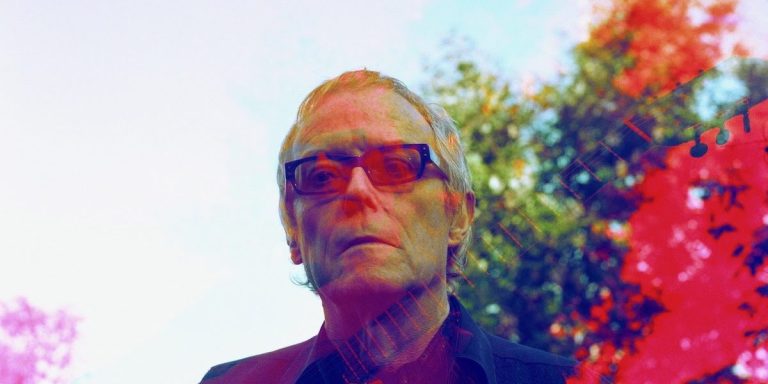
Pioneering bassist Kira Roessler (Black Flag, dos) is back with Enigma, her sophomore solo album arriving July 10 via Org Music. Built on the stark, intimate, and bass-driven architecture introduced on her 2021 debut, the new record is a masterclass in raw feeling and musical restraint. Djordje Miladinović sat down with Kira Roessler to talk about the songwriting process behind the album, her unique philosophy on playing and recording bass, and composing from the heart.
Pre-order “Enigma” HERE
Thank you for taking the time to answer these questions. How have you been?
Things have been lively! I have been working, and writing songs, and taking care of our new puppy Billie (after Billie Holiday). And things have been slowly building for the release of Enigma!
You’ve described Enigma as a continuation of your life’s narration. In what ways does this album pick up where your 2021 debut left off, and what chapters of your life are you focusing on this time?
In a sense the first record was catching up across many years of narration. Enigma contains a couple more “vintage” Kira creations but is mostly about life as I currently live it. I focus on anything and everything, from silly phrases to big emotional life changing events.
What led you to choose Enigma as the title for this collection? Does it refer to a specific mystery you were trying to solve through these songs, or more of a general feeling?
This question leads very well from the last. The song enigma was written for my dear friend Glenn Brown, who was an influential guitarist throughout my life. When he died, I had to process it and that song came out. He is the Enigma. He also plays on the “vintage” songs because we recorded them to the same tempo as my oprig9inal demos many years ago. He was one of those guys that was really hard to actually know.
The lead single “How Could You” has been noted for its looser, jazz-influenced feel. Was that a conscious shift in style, or did the emotional weight of the song simply demand that specific rhythm?
I think my two bass style of writing creates a lot of jazz-like interplay. Paul (brother, piano guy) writes his parts based on the second bass parts I have written while establishing the feel of the song. That being said each song sort of evolves it’s own style to my ear.
You co-produced the record with your brother, Paul Roessler. How does your shared history influence the shorthand you have in the studio, and does he ever push you to step outside your comfort zone?
Sure. He is completely safe to push and create parts that challenge the original feel of the song and to question my choices. I am not sure there is a shorthand – it is a painstaking process that has gotten a bit easier over time.
Petra Haden contributes backing vocals to the record. How did you decide where the arrangements needed that extra layer of texture versus where they needed to stay completely bare?
Petra is an old and dear friend. She contributed beautifully to my last record, so I knew I wanted to at least ask. And she agreed. As to which songs – I had one in mind specifically at first because it needed that layer. Another song I was stumped on melodically and she came up with 20 possible melodies that I then mixed and matched and she became the lead vocalist on that song! So this process happens organically because collaboration happens in so many ways.
Enigma is praised for its stark, spacious arrangements. Is it more difficult for you to decide what to leave in a song or what to take out? Your approach to the bass has always been unconventional and melodic. When you are writing for a solo project, does the bass function as a second voice to dialogue with your vocals?
First, second, third … songs evolve differently, but often there is a concept first. A bass line usually comes second. And then either a vocal line or a second bass line. The second bass line then sometimes becomes the vocal line or part of it. More often it becomes the beginnings of the piano part. So my bass is how I first take a concept and make it musical. It is my voice, but my voice then is also my voice.
What specific gear or recording techniques did you experiment with to expand your tonal palette while keeping the core minimalist?
I am the opposite of a gear head. I record my blue bass completely straight and think it sounds very good. It is the writing of the song that brings the nuances I think.
After decades of playing in bands like Black Flag and dos, what has been the most rewarding, or perhaps the most daunting, aspect of being the sole primary architect of these recent records?
Well it is definitely more rewarding – my ideas, right or wrong will be featured and my voice will be heard. The feeling started in dos, where my songs were featured, and at times I was the vocalist and somewhat on the front lines of the band. Mike started sitting down while we played live. I started writing two bass music before dos, but it evolved a great deal during the decades of playing with Mike. He pushed me at every turn. Then there are the other artistic decisions! What will the cover look like? Which songs will be in/excluded? So a lot of rewarding experiences.
You mentioned these songs are honest, if over-dramatized. Do you find that exaggerating an emotion in a song actually helps you process the real version of it more clearly?
Well yes this is how I process emotion, but no in that I tend to put my tongue in cheek in order to exaggerate into absurdity. In the end it is a mashup of real emotion and making fun of that same emotion. Then I can step back and see how real the feeling is. Sometimes it just cuts me to the core to relive, sometimes I laugh. Depends on the initial concept or emotion.
Regarding “How Could You,” you mentioned you rarely find yourself in conflict. When those rare moments of hurt or friction do occur, do you find they provide a more potent spark for songwriting than peaceful moments?
Well – as I said – it is rare… but yes moments of rage are what drives certain songs to dive into the extreme of that rage. There may or may not be a song called Kill Him on Enigma. But moments of despair, moments of confusion, surprise, all of them can work. They are potent when I dive in and start writing a few words down about them. I get a phrase or series of words I like… and then I build on it.
In your music, the silence between notes is often as important as the notes themselves. How do you cultivate that sense of space in a world that is increasingly noisy?
Mike taught me to leave holes, so his parts would poke through, and my parts would grab and let go of attention… This really worked within the two bass structure which is pretty much where I still live.
You’ve famously avoided revisiting past formulas throughout your career. How do you stay present in your current sound without letting your legendary history in the punk and hardcore scenes dictate your direction?
Punk is about non-conformity. I think the important thing is to chalenge yourself to do what isn’t cool or accepted. I know my music doesn’t seem punk to some…. I just ask them to remember what caused punk to rise – a rebellion against disco and arena rock – a small underground rebellious few. So I guess I always hope to be in those few. My history taught me that.
Does your professional work in film and television sound editing ever bleed into your solo music, perhaps in how you perceive the depth or clarity of a recording?
Well my ears are my ears, so I am conscious about the quality of recordings, but my work has also given me solutions to some recording problems and sometimes I use those.
You’ve expressed a sense of luck in being able to share this music. What do you hope someone sitting alone in a room with Enigma takes away from the experience?
The luck is just that anyone would help me release my weird music. If someone were listening I would hope that the underlying emotion might come through to someone sitting alone and listening. Be assured I am singing about actual feelings, this is not just “an act” it is the story of my life.
That’s it. Thank you so much for your time. Anything you would like to say to our readers in the end of this interview?
Be honest, be true, check out some new music, tell your own story …..
Discover more from Thoughts Words Action
Subscribe to get the latest posts sent to your email.