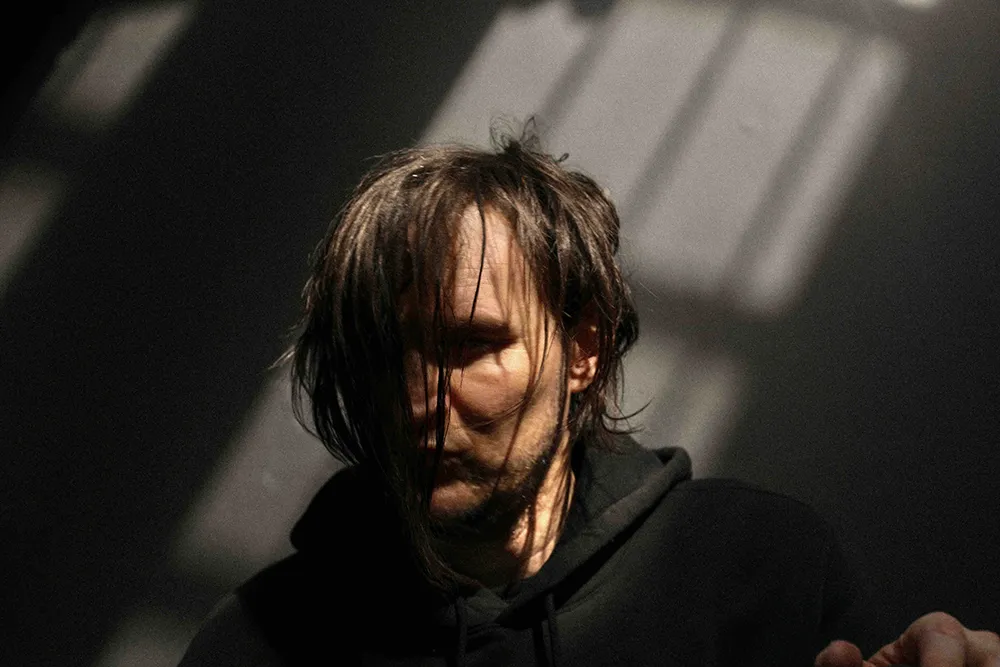
Few musicians balance the demands of stadium-sized rock with the spirit of an underground experimentalist as fluently as Josh Klinghoffer. Between his current roles with Pearl Jam and Jane’s Addiction and his decade-long tenure with the Red Hot Chili Peppers, Klinghoffer has remained one of the most prolific and versatile multi-instrumentalists in the game.
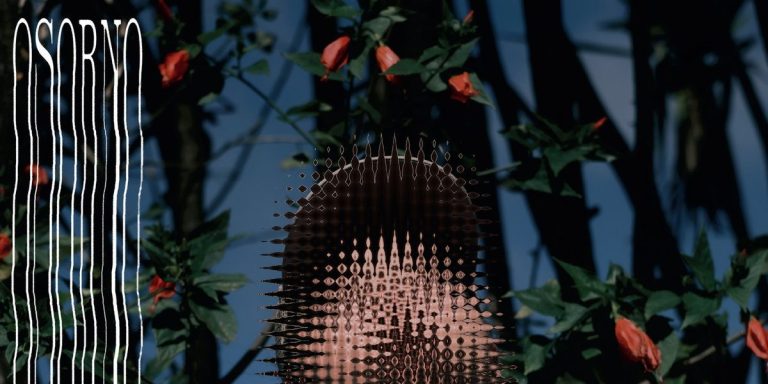
Pluralone, his solo work provides the most direct window into this restless creative energy. Klinghoffer is now gearing up for the release of his fourth solo LP, A Drop In The Ocean, arriving June 12th via Org Music. Following the album’s initial announcement, Pluralone has just unveiled the second single, “Ranting And Raving,” a track that further explores the atmospheric and nuanced melodicism that defines his recent output.
Djordje Miladinović sat down with Josh to pull back the curtain on the new record, diving into the mechanics of his composing process, the evolution of his songwriting, and the philosophy behind this latest collection.
PRE-ORDER: Pluralone – A Drop In The Ocean
Pre-Order
First of all, thanks for taking the time for this. How have you been?
Not at all, it’s my pleasure! Thanks for your wonderfully thoughtful questions. How have I been? I think I’ve been better, but certainly not terrible. I have an incredible amount to be thankful for.
You’ve spent a lifetime moving between massive tours and legendary bands, but Pluralone always feels like the most intimate window into your headspace. How are you feeling now that A Drop In The Ocean is finally ready to be shared?
I can’t wait for it to come out! I started working on these songs a few years ago now that it feels like they’ve been eagerly waiting on the tarmac, getting irritable, ready to get out there. I’ve started work on finishing another group of songs that were also started in the past few years. There was something about some of these I found difficult I guess. Difficult to find my way through. I’ve seemed to move beyond whatever the hold up was.
You’ve mentioned that for the first time, you feel like you “no longer have all the time in the world.” How did that sense of urgency or mortality shape the atmosphere of this specific record compared to This Is The Show?
There was something I experienced after the bit of touring I did with Pearl Jam in 2025 that felt somewhat strange and destabilising. Basically I have had something to do for, certainly the last fifteen years, if not more. Suddenly I had a completely free calendar. That’s something I really did well with during the pandemic, but after that tour, I was sort of staring at a future of uncertainty for the first time in forever. The future is always uncertain, but always having something to do or look forward to helped distract me from that fact for a long time. So that feeling combined with feeling somewhat no longer at all in the least bit young was very strange for me. I’ve usually always been the youngest one in any group setting I’m in. Suddenly being closer to fifty was a shock. I think this record feels a bit more accepting of where I am in life than the previous one. This Is The Show felt to me like there was still a world to conquer, whereas now, I think I’m a bit more comfortable with where I am or where this project sits in the big picture.
“Peer Into Your Dreams” is such a fragile, beautiful piece. You mentioned it came from a “hopeful time” that was short-lived. Why was it important for you to lead the album cycle with a song that carries that specific, perhaps bittersweet, fragment of hope?
Thanks so much for the kind words! Well, I think perhaps if there is a hopefulness that translates in that song, it will bring one toward the other songs. I hope it feels inviting. I’m not sure I’ve ever figured out how to truly open the door for people with my songs. That’s one way of stating the ongoing goal. I hope I have, I’m just not sure.
The Pluralone’s upcoming single “Ranting and Raving” seems to layer soft electric guitars with synths and acoustics. Can you talk about the sonic architecture of that track? Is the “you” in that song someone external, or is it a dialogue with yourself?
A lot of these songs were written on guitar. Whatever sounds felt like they’d help distinguish one song from another, I gravitated toward. I think Ranting And Raving is the only fingerpicked guitar song that I added synths to in that way. I used the Therevox which I got just before the last Pearl Jam tour. It’s a wonderful instrument built by a wonderful fellow. I’m always switching perspectives in songs, sort of having a conversation within them. With this one, I’m definitely the one ranting and raving. I’ve been known to rant, and I suppose by extension that means rave as well. I do so far less than I did in the past, but this song serves as a reminder to continue the work of not being someone who does those things.
A Drop In The Ocean seems to pull back the curtain, focusing on acoustic guitar and voice. Was it a challenge for a multi-instrumentalist like you to resist the urge to “over-decorate” and instead lean into that vulnerable, stripped-back territory?
It’s always a challenge not to over-decorate, or over-embellish a song. There are so many fun and beautiful sounds to try. Before you know it, you’ve lost the song. On occasion I have a really clear idea what the song should be, or how it should sound, and other times, maybe a third of the time, I have no idea and the song only finds its way by allowing itself to be layered on top of. The questions below about “Give” and also about Eric Palmquist will touch on this more. For this album though, I always knew it was going to be more of an acoustic, or guitar-based collection of songs.
Some of these songs, like “Give,” have been with you for nearly twenty years. What is it about a piece of music that allows it to survive two decades of your life before it finally finds its home on a Pluralone record?
I suppose it’s simply down to my enjoying it. Enjoying playing it, or singing potential words along with it. In the case of “Give,” it took years for me to hone both the arrangement and the lyrics into something I could stand. I’ve known I liked this music for a long time, it was just finding lyrics that both matched the feeling or meaning I assigned the song years ago, and also shortening it whilst I did that. I used to let the sections go on forever. I’ve recorded three or four versions of this song, whittling it down more and more each time.
Speaking of “Give,” you used Nashville tuning as the actual foundation of the song rather than just a textural layer. What drew you to that shimmering, thinner string sound as a primary songwriting tool for this track?
This was a perfect example of the aforementioned whittling. The last version of this song I tried to record was basically the same but with regular acoustic guitars. It still felt too big to me. It wasn’t gentle enough. Once the idea came to base it around the Nashville tuned guitars, everything fell into place. It suddenly felt right. The song had confidence for the first time. It became easier for me to help it say what it wanted to say.
You brought in Eric Palmquist as a producer this time around. After years of navigating your own recordings, what did Eric’s perspective bring to the “Pluralone sound” that maybe wasn’t there before?
Eric Palmquist has been involved in every Pluralone and Dot Hacker record apart from ‘Inhibition’. Since we’ve worked together now for over a decade, it felt completely natural to (finally) call him the producer. Producer has always been a funny word to me. Perhaps due to my somewhat limited experience with people who call themselves that. I’ve also crawled a bit out of my own arse and enjoy collaboration more than I may have in the past. It’s a trust thing. I trust Eric completely with what I’m trying to do. He’s such a genuine and caring listener of music. Our history working together and our friendship allows me to feel totally comfortable exploring different avenues within a song. If I get lost, I know he’ll be able to guide me back to safety.
The closing track “Sadly” keeps the original iPhone voice memo of the piano. In a world of high-end studios and “perfect” takes, why did that specific moment of “innocence” feel untouchable to you?
I’m not sure we live in the world of high-end studios and perfect takes anymore, do we? All I hear about are studios closing and people making music in their bedrooms. No, I don’t know…this one just felt like it’d be impossible to replicate the timing. You’re hearing me think of the chords, or write while I play it. I just felt like there was an unbeatable honesty that should be preserved in that performance.
There is a very “lush” quality to the record, even in its quietest moments. What’s the secret behind achieving such a deep, luxuriant guitar tone when you’re working with more minimalist, acoustic-focused arrangements?
I’m not sure I know the secret. I do have the privilege of playing some beautiful instruments. Hopefully though the sound and tone is in the hands of the player. That’s the hope anyway. Wonderful engineering and mixing also help.
You’ve got Chelsea Hodson providing backing vocals on a few tracks. How did her literary background and vocal presence influence the “world-building” aspect of this album?
Chelsea is someone I’ve recently become friends with. I always get excited when I meet a new friend at this age. I still have this lingering fear (from my 20’s) that it’s hard or next to impossible to make lasting friendships as you get further into ‘adulthood,’ whatever that is. I read and absolutely enjoyed Chelsea’s book and just sort of trust her as an artist. Before she released any music, which she’s recently done, she shared some music with me and gave me the opportunity to compliment her voice over and over.
I love when I feel something so genuinely that I can’t resist repeating a compliment. I just love her voice and at some point was struck with the idea to ask her to lend it to a few songs. Actually, there’s more of a story but I needn’t bore you with it. I was telling Chelsea at one stage that one of the songs on this record’s lyrics went missing. I lost a notebook. I sent her the music and said here, you have a go. That’s how the idea first came. I loved what she had envisioned over the Simple Action song. Once the idea came to include her voice on that, it seemed criminally negligent not to find more places for her to sing.
In your opinion, what is the “secret sauce” that makes a song truly resonate—that element that turns a simple melody into something “great”—and do you feel you captured that on A Drop In The Ocean?
Gosh, if I knew that I’d be doing it all day, every day. I think things resonate differently for everyone. I know for me it could be the simplest vocal. Half a word. The way one chord moves into another. For some it’s a cohesive lyric and a lot of them. I must feel like I captured something as near to that as I could at the time or else I wouldn’t let these songs out. For me, crippling self-doubt is never far away and I wonder if every song on this record is pointless nonsense at times. Other times, I get the feeling that you mentioned. I’ll listen and there is something that seems to be dripping in the sauce you referred to. But again, that’s just me, sometimes. Others may agree with my diseased and doubtful side.
Between your work with Pearl Jam, Jane’s Addiction, and your own solo material, how do you manage the mental “switch” required to go from massive arenas to the quiet, isolated space of your own NowSpace studio?
Whether I’m on a massive stage or playing on my bed, in the studio, or at a stadium, I can’t help but be me. I’m still there, wherever it is. That, I can never shake.
Lastly, “A slight change in belief” is a powerful lyric from the new single. What’s the biggest change in your own musical or personal beliefs that occurred during the four years it took to finish this album, and what’s next on the horizon?
In the past four years? I suppose it was the belief that these songs should be finished. I always knew I wanted to, but I suppose I lacked the knowledge of how to complete them. I found it, at some point, somewhere. I think that includes a sort of belief.
It’s usually slight. That’s all you need.
That’s it, thank you so much for your time. Anything you would like to say to the readers at the end of this interview?
Thanks so much for YOUR time! Thanks so much for listening. Thanks so much for taking the time to let these songs in. Thank you.
Discover more from Thoughts Words Action
Subscribe to get the latest posts sent to your email.