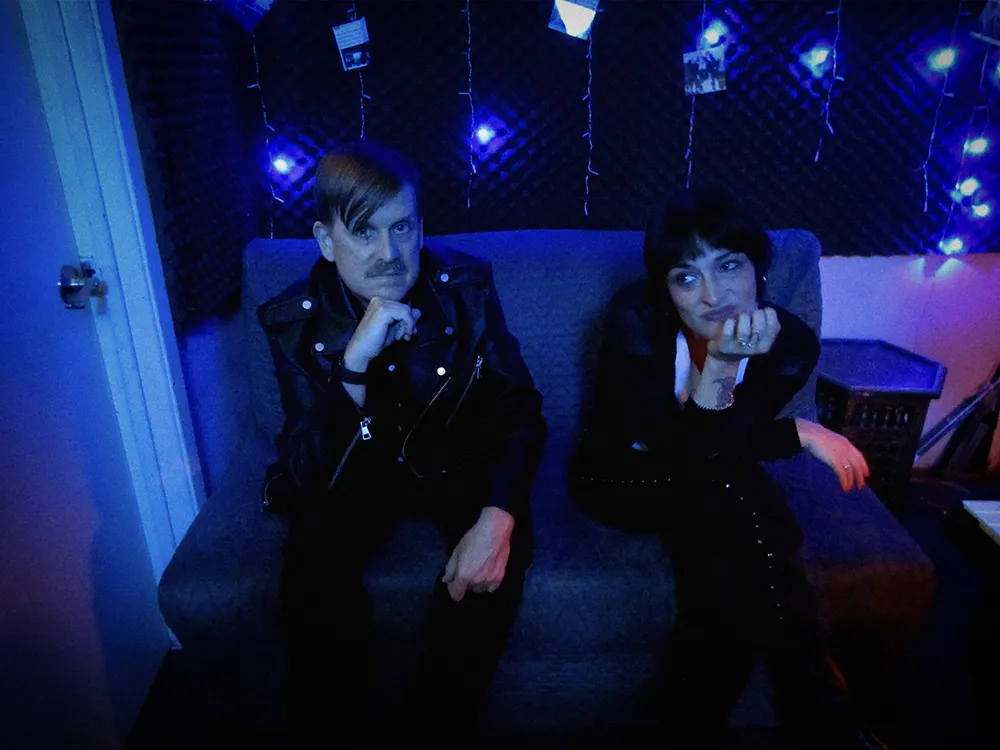
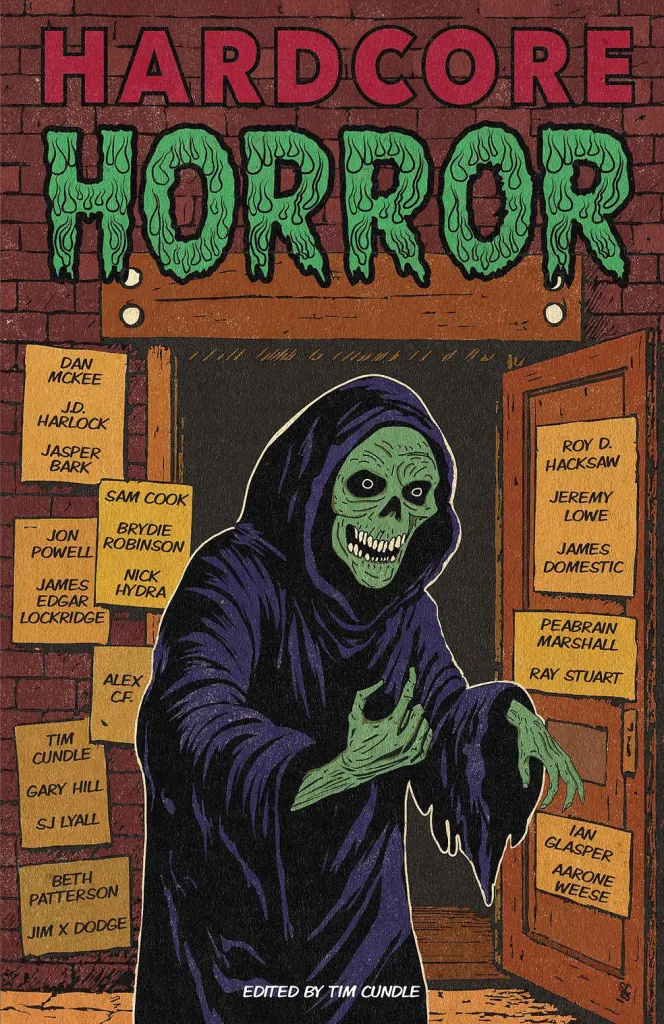
We sat down with James Domestic, multidisciplinary artist, contributor to Earth Island Books’ Hardcore Horror anthology, author featured in Ten Poets, and creator behind releases like Is An Acquired Taste, Poets Day Dream, and Domesticated. In this conversation, we explore his jump into dark fiction, his core inspirations, recurring themes, creative process, and how a punk rock ethos ties his poetry, music, and horror storytelling together.
Order Hardcore Horror HERE
Order James Domestic’s books HERE
How did you first get into horror? Do you remember the very first horror book or movie that truly terrified you?
JD: I’ve got a memory like a sieve, but I think some of the first ones I saw were The Toxic Avenger, Bad Taste and Evil Dead. Though I guess it’s debatable whether the first two really count as they’re so comedic
Over the years, which horror authors, directors, or artists have had the most tremendous impact on your creative sensibilities?
JD: Pretty standard fare really. I’m a big fan of Stephen King, although again, is he really a “horror” writer per se? He sets great tone and tells great stories, which sometimes fall into horror and sometimes don’t. Sam Rami is of course great, Yeon Sang-ho is really good, and I’ve enjoyed lots of other Korean zombie films whose directors’ names escape me. I also enjoy things with a more Tales of the Unexpected kind of feel. Some of the Inside Number 9 episodes have that. I enjoy some good old fashioned gore, but sometimes creeping dread is worse (better!)
Hardcore Horror brings together voices from the punk, hardcore, and alt-rock communities. What do you think is the connective tissue between the underground music scene and the horror genre?
JD: People who are into music are nerds. We seek stuff out and want to hear new stuff to enjoy. Film and books are the same I guess. Similar mentality.
Turning to your specific contribution to this Earth Island Books anthology, where did the initial spark or inspiration for your story come from?
JD: I honestly don’t know! It was just a kernel of an idea that had been sitting there quietly by itself until the time was right to pick it up and crack it open. I’m often not sure what inspires the things I do to be honest.
Without giving away any major spoilers, what are the core themes or underlying fears you wanted to explore in this piece?
JD: It is going to be tricky to say very much without giving the plot away, but I’d say the main themes are technology, the desire to fit in, and the workings of the family unit. I’ll say no more!
How did your story evolve from the first draft to the final version, and what was the experience like working on it?
JD: It was fun to write and only really needed a little finessing and tidying to get it from first draft to completion. That doesn’t always happen, but this did kind of write itself to some extent.
What was the most challenging aspect of writing this particular story? Was it nailing the ending, writing a specific terrifying scene, or something else entirely?
JD: The pacing was important. I didn’t want to give too much away too soon, so was sort of breadcrumbing little bits of info along the way and it’s a balancing act. People tell me they didn’t work out the ending too early so I’m reasonably confident I got the breadcrumbs out at the right pace.
When it comes to your writing process, how do you approach crafting a short horror story? Are you a detailed outliner, or do you let the narrative unfold organically?
JD: Well, that’s a tough one to answer as I’m primarily a musician and poet and this was my first horror story! But my writing and editing process was not dissimilar to some of my poems. The story was just longer and didn’t rhyme!
Horror relies heavily on pacing and atmosphere. What techniques do you use to build tension and a sense of dread on the page?
JD: For me it’s the small everyday things. Seeds of doubt, a building of distrust or misunderstanding that the reader can see but the characters can’t always. That’s where the tension and dread comes from. For me, at least. Mundanity.

How do you approach character development in a short format, ensuring that the reader cares about the protagonist before the horrific elements take over?
JD: I think you have to engender some kind of affinity. Does the character behave in a way that chimes with the readers worldview or moral compass? If they do and can see that something’s coming down the track unbeknown to that character then they’re going to care. It’s a really important element; in film too. Sometimes I’ll start watching a film or a series and if after 20 minutes I think “I don’t give a fuck if these people live or die” I’ll switch it off and watch something else. Life’s too short!
Horror as a genre is incredibly vast and constantly evolving. What are your thoughts on the current state of horror literature and cinema?
JD: I’m by no means an expert; I just enjoy good stories really. If I see a new Korean horror is out, I’ll probably watch it as they do seem to have perfected the art. Other than that, I just go on what people that know more than me recommend!
If you had to recommend one essential horror book and one essential horror movie, what would they be?
JD: Off the top of my head I’m gonna say Train to Busan and Thinner. Ask me tomorrow and it’ll be a different answer!
What is next for you? Are there any upcoming books, projects, or other creative endeavors we should keep on our radar?
JD: My new book, Is an Acquired Taste just came out through Earth Island and I’m up and down the country doing gigs. The Domestics are working (slowly) on a new record and doing some gigs here and there. I’m still DJing reggae, soul, funk and whatever the hell else I fancy whenever anyone asks me to, buying too many records, and I’m putting together a fun performance poetry workshop for 2027.
Finally, what is the one wavering thought or feeling you hope readers take away after finishing your story in the anthology?
JD: Be careful what you wish for!
Discover more from Thoughts Words Action
Subscribe to get the latest posts sent to your email.