
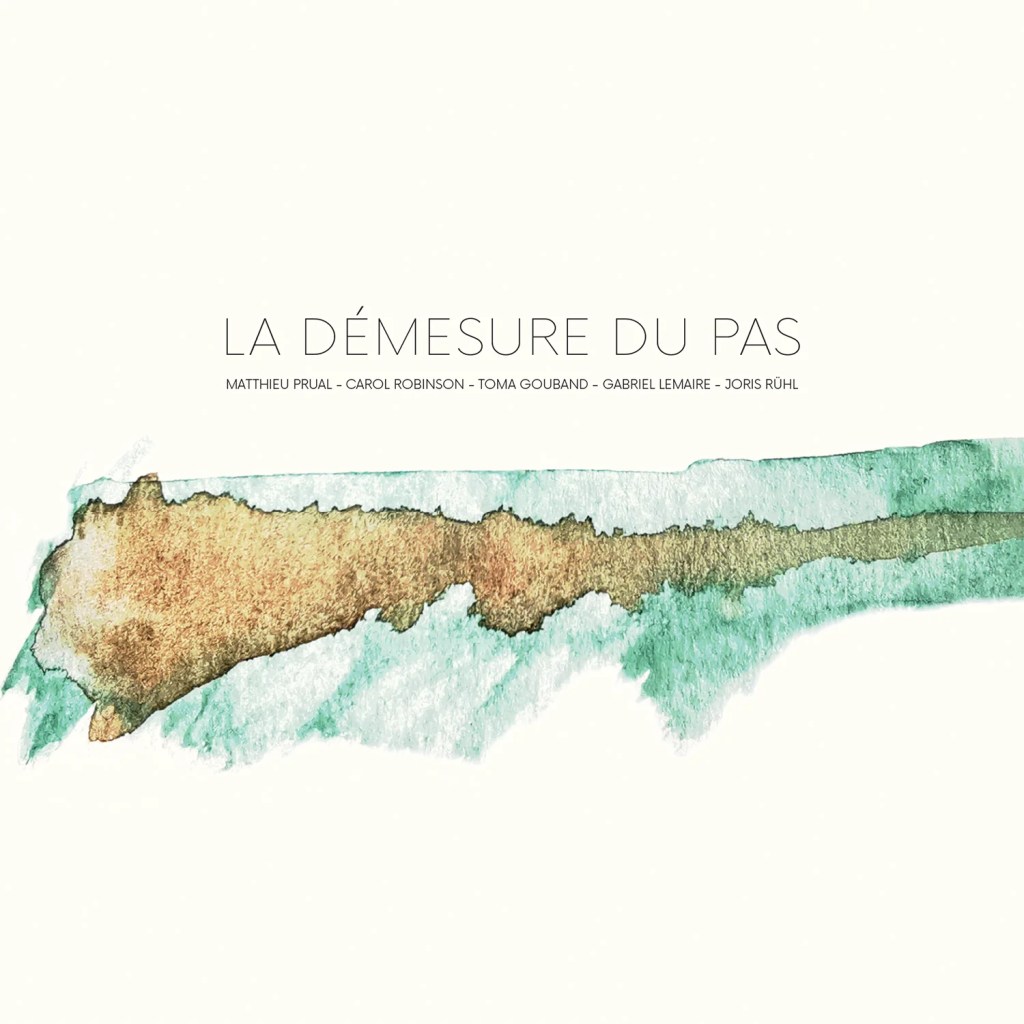
La Démesure du pas’s Musique Migratoire – Enregistrements Nomades is an immersive avant-garde journey that defies conventional listening experiences. This deeply experimental blend of field recordings, musique concrete, and improvised instrumentation, pushes the boundaries of what we traditionally consider music. It transcends the auditory and instead invites listeners into a world where sound and place are inseparably intertwined. Conceived and led by Matthieu Prual, the project challenges the listener to reimagine music as a living, breathing interaction between the environment and the instruments. Each composition is a fragment of a larger, nomadic exploration, where the sounds of nature and human-created noise flow freely through the recording. The first thing that stands out about Musique Migratoire is the sheer audacity of its concept. This is not just an album of music; it’s a document of movement, of sonic wanderings through diverse landscapes, recorded outdoors in spaces with unique acoustic and poetic qualities. The project captures the very essence of sound in motion, as instruments such as saxophone, clarinet, flute, and various percussive elements interact with their surroundings—water, wind, the resonance of stone, the distant hum of airplanes, and even the footsteps of the musicians themselves. These recordings blur the lines between composed music and environmental sound, often feeling as though the instruments are simply another part of the landscape rather than the focal point of the performance. This approach situates the album squarely within the realms of musique concrete and avant-garde experimentalism, but there’s a unique fluidity here that feels almost organic.
Prual and his collaborators have mastered the art of finding beauty in the unexpected. The album is not about polished, premeditated melodies or structures, but about capturing moments—both sonic and emotional—that arise spontaneously. There’s a sense of playfulness in how sounds are captured and manipulated. For instance, pieces like Clarinette bulle and Eau to Crunch feature wind instruments dipping their bells into water, creating primitive, gurgling tones that feel at once experimental and whimsical. In other moments, like the duo pieces recorded in rural landscapes, water becomes a central player, its constant presence not just an environmental sound but an active participant in the music. These field recordings are not passive backgrounds but active components, woven with the instrumental performances. The use of space as an instrument is another standout feature of Musique Migratoire. Prual’s team selected locations that had their own acoustic identity, such as the submarine base in Saint-Nazaire, which provides a vast, cavernous resonance, amplifying the impact of each note. In Sainte Marguerite, a quartet plays under a staircase by the Atlantic Ocean, and the soundscape feels imbued with the salty air and the rhythmic lapping of waves. The recording space itself becomes a crucial element of the performance, each environment offering a unique sonic fingerprint that colors the music in subtle, yet profound ways. These outdoor recordings go beyond the traditional studio experience, where acoustics are controlled; instead, they embrace the unpredictability of natural reverberations, echoes, and interruptions, further blurring the line between performance and environment.
Instrumentally, the album is a kaleidoscope of textures. The saxophone, clarinet, flute, and percussive elements all find space to breathe, to converse with the sounds around them, and yet they never overwhelm the organic soundscapes they inhabit. The interplay between the instruments is delicate and precise, often as much about what isn’t played as what is. There’s a noticeable restraint, a willingness to let the sounds of nature take center stage when necessary. The percussive work, especially by Toma Gouband, feels particularly alive, with rhythms crafted from stones and the environment itself, adding an earthy, tactile quality to the music. Each strike of a drum or tap of a stone against water feels intentional and alive, grounding the more ethereal, floating qualities of the wind instruments. What makes Musique Migratoire so captivating is its ability to create a sense of movement without rushing. This is music that feels like it is constantly in motion, yet it doesn’t hurry from one point to another. Instead, it revels in the spaces between sounds, in the pauses and the echoes. The pace is slow, deliberate, and meditative, much like the walking concert form that inspired these recordings. The rhythm of footsteps, the breath of the wind, the distant drone of an airplane—all these sounds contribute to the pacing of the album, creating a soundworld that feels expansive yet intimate.
The mixing and production work by Christophe Havard is a triumph in itself. Havard’s active listening and attention to detail are evident in the way he balances environmental sounds with instrumental performances. The album is mixed in such a way that it never feels cluttered or chaotic, despite the wide variety of sounds present at any given moment. There’s a clear sense of direction, even when the compositions feel at their most abstract. Havard’s work ensures that the listener is not simply hearing a sound document, but is immersed in the act of listening, as though they are walking through these landscapes themselves, experiencing the clash and fusion of natural and musical sounds firsthand. Ultimately, Musique Migratoire – Enregistrements Nomades is more than just an album, it’s a sound journey that invites the listener to engage with the world in a new way. By blending the sounds of nature with human-made music in such an intimate and effortless way, La Démesure du pas has created something that feels deeply experimental but also profoundly human. It challenges the listener to question where the music ends and the environment begins, offering no clear answers but instead providing a space for contemplation and immersion. It’s an album for those who appreciate the avant-garde, but also for anyone willing to slow down, open their ears, and simply listen to the world around them.
 Thoughts Words Action