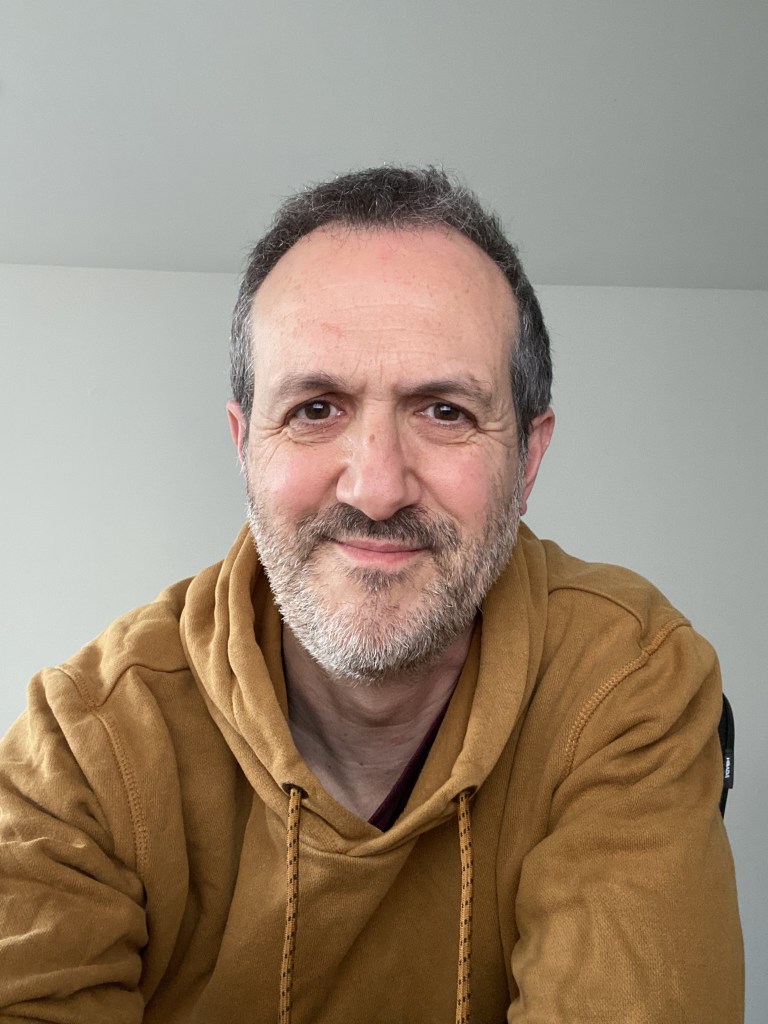
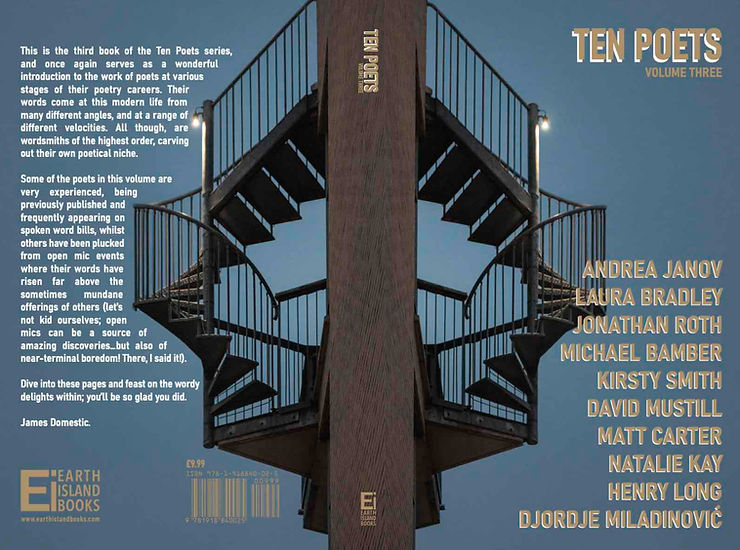
We caught up with poet Matt Carter, featured in Earth Island Books’ Ten Poets #3, to dive into the heart of his creative process. In this interview, we explore his core inspirations, writing techniques, recurring themes, favorite authors, and the distinct literary voice he brings to contemporary poetry.
Purchase Ten Poets #3 HERE
Thank you for taking the time to answer these questions. How have you been?
All’s good here thanks!
What was the initial spark or catalyst that first drove you to start writing poetry, and how does that early impulse compare to what pushes you to put pen to paper today?
I was writing songs before I’d hit my teens, and my first poems were lyrics. Rap artists like Run DMC and Tone Loc initially inspired me, but once I discovered indie/alternative music and learnt how to strum guitar chords, my lyrics became much deeper, introspective, and more poetic. Understanding what makes me tick is still a large part of why I still write. The buzz of having a blank page infront of me, and not knowing what my mind is going to come up with next, has to be one of the most fun, liberating, and downright therapeutic things I can think of doing! I’m also very lucky to have a supportive network of fellow poets around me that I regularly meet up with – at GOB in Bury St Edmunds and beyond – with whom I can try out material old and new. Some of my newer material has been written with these people in mind, aiming to put smiles on their faces.
How has your background, involvement, or affinity with punk rock and DIY counterculture shaped your approach to poetry, performance, and creative expression?
I used to host Open Mic nights at a grassroots music venue – The Hunter Club in Bury St Edmunds – for several years. During that time I was constantly performing my own acoustic pop-punk act, Matt Reaction. I found that the songs I wrote during that time were pretty much all written about the people I met at these nights, those in the wider local music scene, and about things in the world that I was frustrated about (e.g. Donald Trump’s rise to power, Ed Sheeran and Justin Bieber making it when much more talented artists were left by the wayside….) I also left my heart on the stage when I performed. One reviewer wrote “There is irony in this man’s performance, anarchy too, angst, anger and humour in abundance – but above all passion.” I always loved doing unexpected things on stage. It kept the audience guessing.
Can you walk us through a typical writing session? Do your poems usually start with a sudden line of dialogue, a rhythm in your head, a specific image, or a deliberate theme?
The most common starting point is a single sentence, and then I write quickly from that. The first few minutes usually determine whether the poem will have a rhyming structure or be free form. The theme starts developing after a few sentences and I quite often come up with the last few lines at this point, as I like my poems to have poignant endings and it also gives me an idea of what needs to be in the rest of the poem.
When you look back at the body of work you contributed to Ten Poets #3, what are the central obsessions, conflicts, or truths you find yourself continuously returning to?
I return to music, humour and mental health time and time again. These three topics form the majority of my work, both in Ten Poets #3 and in my wider work in general.
Which authors, poets, or underground writers have left the deepest scars on your literary style, and why do they resonate with you so strongly?
I love the natural tone of Roger McGough’s poetry. I grew up being captivated by the randomness of Spike Milligan, Ogden Nash, Roald Dahl and Edward Lear. And anyone whose writing evokes intense emotions in me – from Philip Larkin to Sylvia Plath to Charles Bukowski – leaves a trace too. Song lyrics hugely affect me as well, with people like Thom Yorke, Laetitia Sadier from Stereolab, Richard Ashcroft, Kae Tempest, Damien Rice and Jimbob from Carter USM writing words that massively resonate.
If you had to pick a single book that changed your worldview or completely altered how you understood the written word, what would it be?
At the risk of sounding pretentious, it’s Voltaire’s Candide. I read it about 20 years ago and have read it over and over since. Nothing I’ve read before or since has evoked so many different emotions in me.
Many punk-associated poets write with a distinct spoken rhythm in mind. How do you balance how a poem feels read silently on a printed page versus how it hits when spoken out loud?
The rhythm is obvious with most of my poems, so line breaks and syllable counts usually do a lot of the work.
Writing and independent publishing in the underground scene often comes with its own unique hurdles. What keeps you motivated to keep creating and sharing your work in a climate that often overlooks poetry?
Having a local poetry scene is key, and meeting up with other like-minded writers and performers is a huge motivator. I’m also finding many new inspirational poets and creatives on Instagram at the moment, and love giving and receiving feedback on new ideas.
Without giving too much away, is there a particular piece of yours featured in Ten Poets #3 that holds a heavy personal weight, or has a specific backstory behind its creation?
The poem Shards started off with me discovering a song with the title I Have The Moon, You Have The Internet. I used that as the first line, and then this whole story unravelled about how we’re all so different and yet we can connect emotionally through similar life experiences. There’s more to it than that though. It’s one of those poems which has several meanings.
Now that this collection is out in the world via Earth Island Books, what is next on the horizon for you creatively? Are there broader writing projects, chapbooks, or performances we should look out for?
I’ll be performing at GOB in Bury St Edmunds most months, and have already written enough for a full-length collection. Am hoping to have this published at some point in 2027.
That’s it. Thank you for your time. Anything you would like to say to our readers before we wrap this interview?
Do what makes you happy. And if that’s writing poetry, I’d love to read it!
Discover more from Thoughts Words Action
Subscribe to get the latest posts sent to your email.