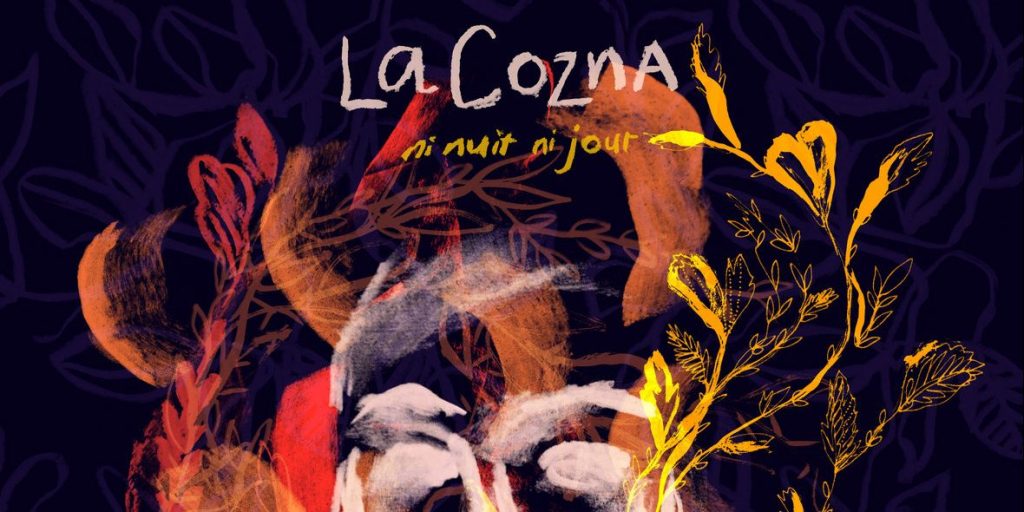
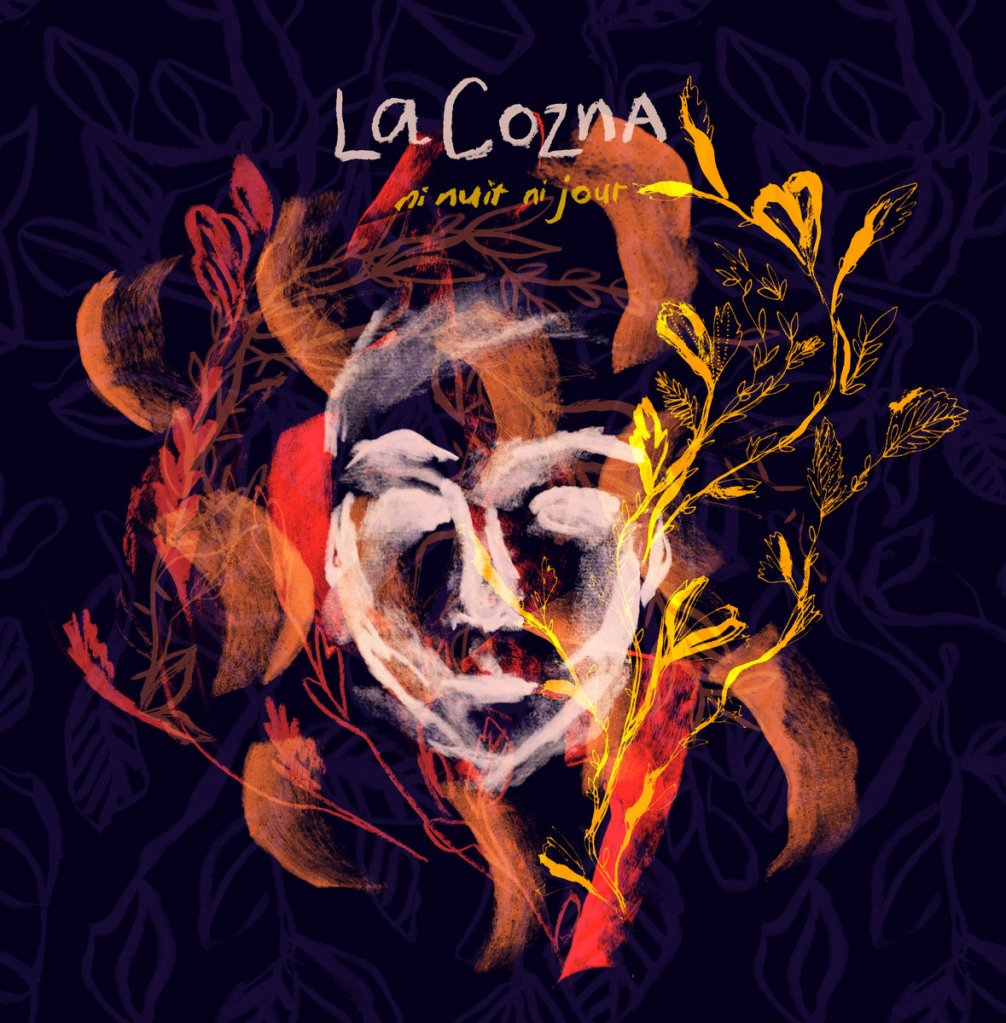
La Cozna’s debut album, Ni Nuit Ni Jour (Neither Night nor Day), is a fascinating incursion into the uncharted territories of experimental folk, a genre that dances on the fringes of tradition and innovation. The album unfolds like a carefully crafted landscape woven with threads of ancient melodies and modern soundscapes, creating a disorienting and captivating aural experience. In the vast landscape of modern music, Ni Nuit Ni Jour stands out as a bold statement, a declaration of the quartet’s intent to redefine what folk music can be. From the very first notes, it is clear that La Cozna is not interested in playing it safe. The album opens with a haunting drone from the boîte à bourdon, a motorized hurdy-gurdy that immediately sets the tone for what is to come. This instrument, crafted by experimental luthier Léo Maurel, becomes the heartbeat of the album, its rhythmic pulses and eerie overtones weaving in and out of the arrangements like a spectral presence. The use of such an unconventional instrument exemplifies their commitment to pushing the boundaries of traditional music, blurring the lines between the past and the future.
The quartet’s sonic palette is rich and varied, drawing from a diverse range of influences and traditions. The influence of groups like La Novia and Hart Brut is evident, but La Cozna is not content to merely replicate what has come before. Instead, they take these influences and stretch them, pulling at the seams until something entirely new emerges. The album is a constant push and pull between the familiar and the unknown, with the musicians using every tool at their disposal—from prepared instruments to electroacoustic techniques—to create sounds that defy categorization. One of the most striking aspects of Ni Nuit Ni Jour is its use of texture. The quartet treats sound like a pliable substance, something to be shaped and molded in real-time. Clothes pegs, knitting needles, coffee stirrers, and other everyday objects become instruments in their own right, adding layers of complexity to the music. This approach gives the album a tactile quality as if you could reach out and touch the sounds themselves. The result is a series of compositions that feel alive, constantly shifting and evolving, refusing to be pinned down.
At the heart of La Cozna’s sound is the voice of Clémence Baillot d’Estivaux, whose celestial tones float above the dense instrumental textures like a beacon in the night. Her singing is ethereal and grounded, carrying with it the weight of centuries of folk tradition while also pushing forward into new territory. The lyrics, often drawn from traditional French songs, are infused with a modern sensibility, tackling themes of love, violence, and freedom with a raw, unflinching honesty. There is a political edge to these songs, a sense that La Cozna is not just making music for the sake of it, but to give voice to those who have been marginalized and forgotten. The album’s title, Ni Nuit Ni Jour, speaks to this liminal quality, this sense of being caught between two worlds. It is music that exists in the spaces between night and day, past and present, tradition and innovation. The songs are ancient and contemporary, rooted in the earth yet reaching for the stars. This duality is reflected in the album’s structure, with each track flowing seamlessly into the next, creating a continuous cohesive and ever-changing narrative.
La Cozna’s use of the studio as an instrument in its own right is another key element of the album’s success. The production is carefully planned, with every sound placed and manipulated to create a specific effect. The studio becomes a playground for the quartet, a place where they can experiment with different textures and techniques, pushing the boundaries of what is possible within the confines of a recording. This approach gives the album a cinematic quality, with each track unfolding like a scene in a larger story. Ni Nuit Ni Jour is not an album that reveals all its secrets on the first listen. It is a work that demands time and attention, inviting the listener to dive deep into its layers of sound and meaning. There is a sense of discovery that comes with each subsequent listen, as new details emerge and the connections between the tracks become clearer. It is music that rewards patience, offering new insights with each spin.
In the end, what makes Ni Nuit Ni Jour such a remarkable album is its refusal to be anything other than itself. La Cozna has crafted an album that is unapologetically experimental, yet deeply rooted in tradition. It is music that challenges the listener, pushing them to rethink their assumptions about what folk music can be. But it is also music that is deeply human, filled with emotion and passion, and a sense of urgency that is impossible to ignore. La Cozna is not just playing with fire; they are keeping it alive, tending to it with care and attention, and using it to light the way forward. For those willing to embark on this journey, Ni Nuit Ni Jour offers a glimpse into a world where the old and the new coexist in perfect harmony, where music is not just a form of expression, but a way of life. It is an album that defies easy categorization, but one that will undoubtedly leave a lasting impression on all who hear it. La Cozna has set a high bar with its new album, and it will be fascinating to see where they goes from here.
 Thoughts Words Action