For Record Store Day 2026, Wire will release Read & Burn 03+ via pinkflag, an expanded reissue of Read and Burn 03 which was originally released in 2007. Ahead the release, they’re releasing a new video for out the single “23 Years Too Late” comprised of archive footage and photos, carefully compiled by director Malcolm Boyle.
“23 Years Too Late” is unique in Wire’s history. The song actually started life as a highly transformed cover of the 70’s Wire single “Dot Dash” – performed under the name “Dip Flash” (included here as an extra track) as part of Iain Sinclair’s London Orbital, a night at the Barbican London on 25th October 2002, celebrating London’s M25 motorway (AKA The Orbital). As the ensuing 2002 headline tour unfolded, unbeknownst to the band, some of the tour dates covered cities that had been on the routing of a cancelled 1979 tour – as someone pointed out, they were 23 Years Too Late – a concept that stuck. Fast forward to 2007 when they put out the third of the Read & Burn trilogy of EPs – the last release from the band’s original line-up. “Dip Flash” got transformed into “23 Years Too Late,” with new text based on Graham’s diary of that 2002 European tour, with a double speed chorus and live drums to keep the motorik beat, but essentially a machine-based piece, which was not easy to play with a conventional band – making the release a bit more special.
Colin Newman explains, the track is unique in Wire’s history for several reasons. “Although its length is unusual for the band, there are plenty of other Wire pieces (‘Crazy About Love‘ & ‘Harpooned’ to name just two) that are also long. It’s more the combination of its genesis, its subject matter and the fact that it has a special place in the affection of both band and core fans – and by core fans I mean people who know all the catalogue and not just a couple of selective releases – that makes it unique.”
For additional insight into the song’s history, you can read an essay by Colin Newman HERE.
Malcolm Boyle adds, “The video showcases material from the upcoming documentary Wire – People in a Film. I personally think these particular clips give a strong sense of the unique character and absurd wit of the band.”
Deconstructing the narrative whilst remaining two steps ahead, Wire are both the mavericks and yet the outer limits of a certain kind of pop. Their endless reinvention and longevity underlines their innovation and yet only Wire can revisit their own past and make it still sound like a future shock.
For Record Store Day Wire have curated their own museum and have revisited 2007’s Read and Burn 03, the third EP in a series started in 2002 the first two instalments of which had been partly compiled onto the Send album (2003) and later released on the PF456 Deluxe vinyl/book collection (2021).
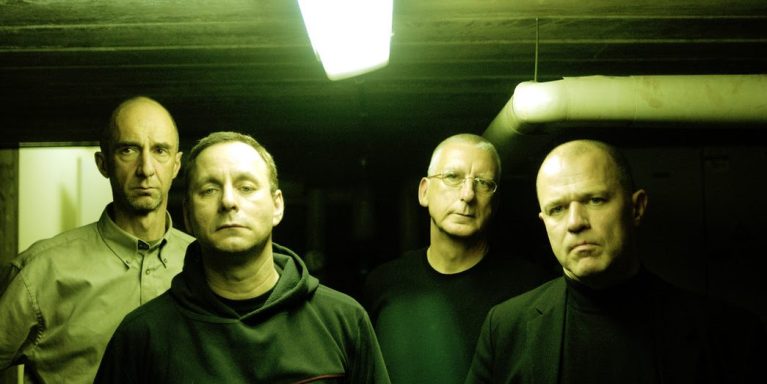
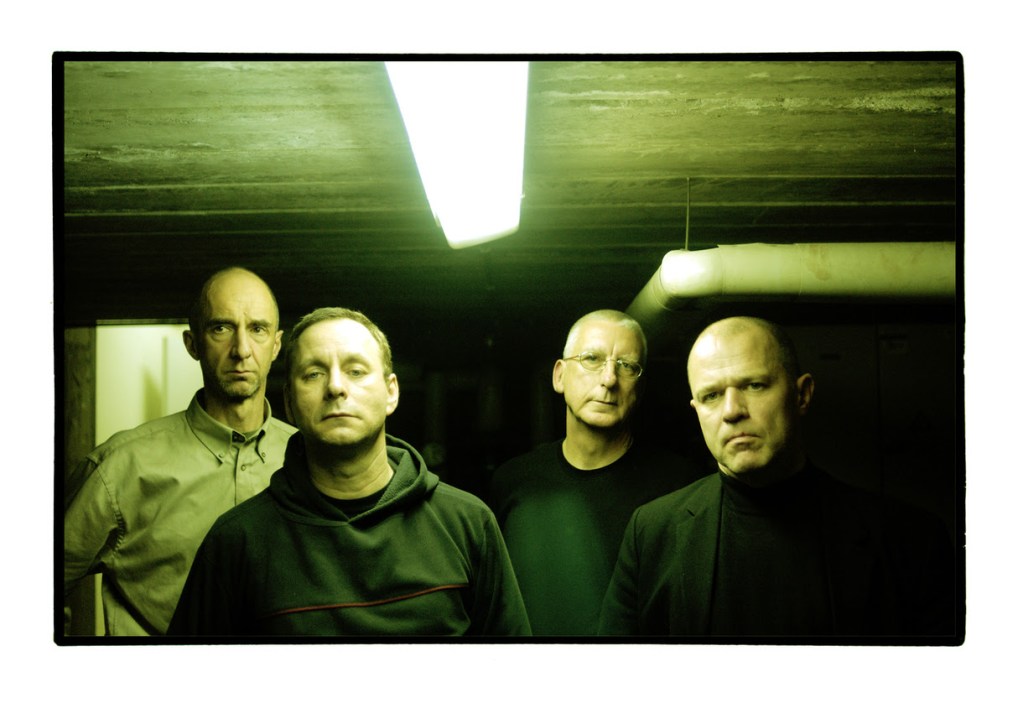
The album, now entitled Read & Burn 03+, which has not been properly released on vinyl before now, is also distinguished as the last non historic release by the original Wire line up of Colin Newman, Graham Lewis, Bruce Gilbert and Robert Grey. This 2026 version brings the original 4 tracks and adds 3 more.
Releases like this used to be the core of Record Store Day experience – deep cuts, curveballs and chances to release lesser-known moments in catalogues. Wire’s music defines this hidden gem collectors cut status with a timelessness and each release from whichever period somehow still sounds like the now as the band always seemed to create in an everlasting present with one this being the last hurrah from the first line up and the ultimate art rock fab 4.
This release, one of the more overlooked moments in the band’s career, is a timely reminder of the riches to be found in their deep cuts. In 2007 the band were already thirty years into their creative adventure and had taken full advantage of carving out their own space for a creative freedom and playful deconstruction of their own sound. Perhaps because it is the last gasp of their classic line up, Read and Burn saw them somehow reconnect with their earlier minimalistic 1977 pop/noise and short sharp shocks of stripped guitar immediacy. This startling brevity of their earliest music somehow ran parallel with punk despite the band’s willful disconnection from the rest of that scene. Yet despite this embrace of their earlier sound Wire, of course, somehow still sounded futuristic whilst updating the basic chassis into the now.
For the 2026 editions there are 4 different versions of “23 Years Too Late” across the different formats of the release. The vinyl version has an alternate intro, one of several prepared for the original 2008 release, plus of course “Dip Flash” the piece’s progenitor. The CD and digital versions have the original intro plus a “single” version, the “24 Years Later Edit”, which at 3:17 will serve as an introduction to the release.
While some of the tracks originated as part of the 2001-2002 sessions that produced Send, others have a more storied history. The opening ten minute “23 Years Too Late”, with its tour narrative text and motorik rhythm that oscillates between the spoken word almost ambient sections and guitar grind embraces the band’s love of a deceptive complexity in the simplicity. Alternating between spoken and sung sections the song manages to cram all the hallmarks of classic Wire into one hypnotic adventure from ambient atmospheres to concrete guitars. Thriving on a tension and release it also stands as one of the band’s finest achievements of any era in the view of both core fans and the band – a rare point of agreement!
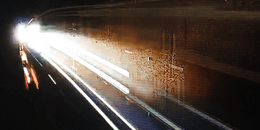
The song actually started life as a highly transformed cover of the 70’s Wire single “Dot Dash” – performed under the name “Dip Flash” (included here as an extra track) as part of Iain Sinclair’s London Orbital, a night at the Barbican London on 25th October 2002, celebrating London’s M25 motorway (AKA The Orbital).
With almost drum and bass rhythms and impenetrable guitar trips the next track, “No Warning Given” is also one of those perfect Wire melodies dissected over its rhythmic shuffle. Continuing on their reconstructing of song corpses, “Desert Diving” actually started life as a version of the Chairs Missing track “Heartbeat” as performed live at the Garage, London during Wire’s series of concerts there in May 2000. The original (minimal) version of “Our Time” – which rides on the perfect loping Wire groove with shimmering guitars and deadpan vocals – and the alternate mix of “Desert Diving” are included as an additional tracks alongside the previously mentioned “Dip Flash”.
Both a chance to revisit the past and still a portal to a future. Read & Burn 03+ is both memory and a future nostalgia and a constant template of what can be done with rock music and is now almost a decade later than 23 years too late…