
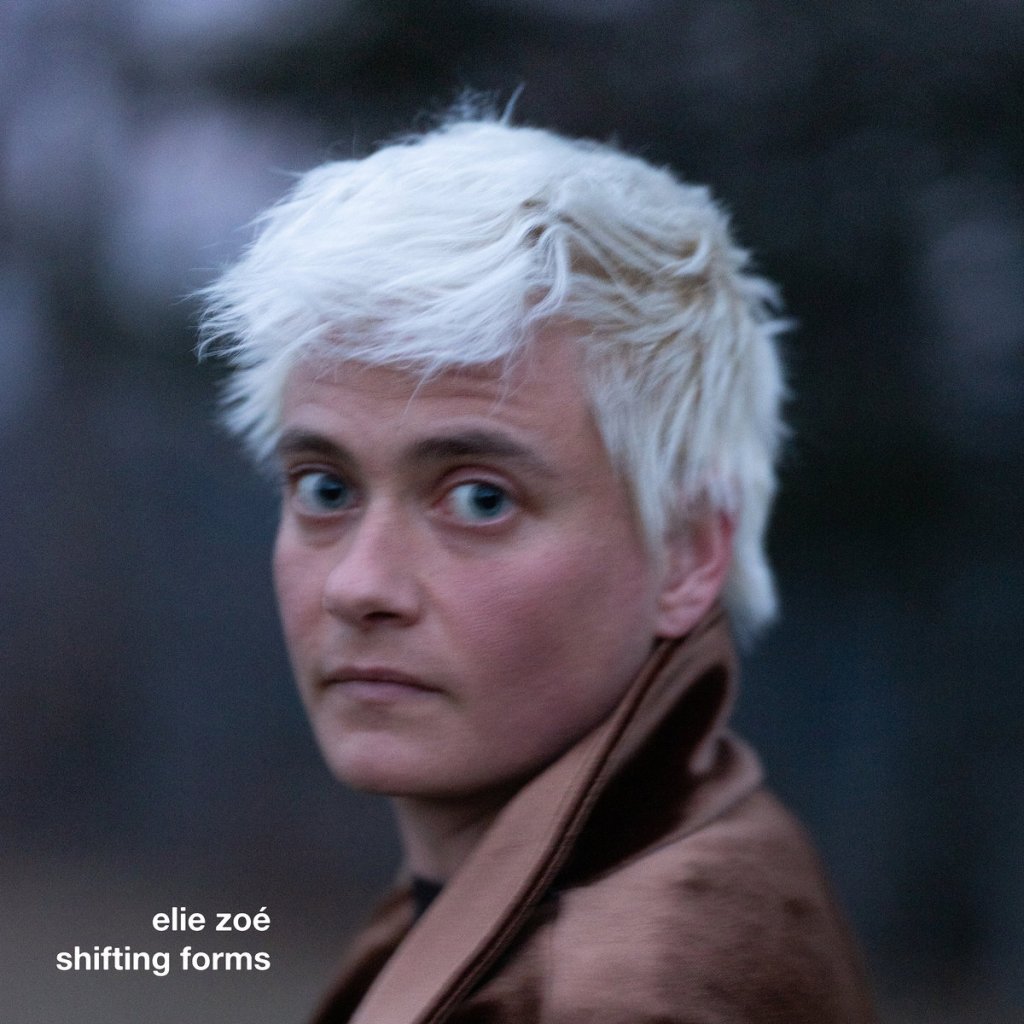
elie zoé’s “shifting forms” arrives like a quiet revolution born from transformation, vulnerability, and the courage to rediscover one’s own voice. It’s their fourth full-length album, yet it carries the spirit of a debut, the sound of an artist stripping everything down to its essence only to rebuild it into something fresh and more authentic. This material doesn’t chase perfection but instead honors process, change, and the fragile beauty of impermanence. “shifting forms” transcends the idea of a conventional singer-songwriter album. It blurs the lines between indie rock, folk, and alt-pop, crafting an otherworldly soundscape. The production, handled in collaboration with Louis Jucker, is full of textures that breathe and shift in real time. Guitars resonate and dissolve, pianos glow softly in the mix, and the rhythm section moves like a heartbeat, grounding each track without ever weighing it down. Everything is placed with intention, as if nothing here exists by accident. elie’s voice represents an emotional core of this material, a voice rediscovered, redefined, and reborn. Their vocal delivery here is intimate and ethereal, balancing fragility with strength. It’s not about technical precision but about presence, with every note feeling inhabited. elie’s tone glides between gentle sighs, melodic murmurs, and airy, resonant phrases that hover over the arrangements subtly and gracefully.
While the lyrics emerge from introspection, the themes reach beyond the self—toward nature, transformation, and interconnectedness. You can feel that influence from anthropology and biology in the writing, but it never becomes academic. Instead, elie uses these ideas to explore what it means to exist in transition, to live between names, between selves, between definitions. It’s a meditation on boundaries that blur, dissolve, and ultimately reveal new shapes. The interplay between musicians gives the record a unifying energy despite its introspective tone. Luc Hess’s drumming is spacious and expressive, shaping the groove and detail without overpowering the songs. Louis Jucker’s instrumentation, oscilloscopes, synths, organs, and strange ambient noises add an otherworldly texture that complements elie’s grounded presence. And when Sara Oswald’s cello enters, it deepens the emotional gravity, pulling the music closer to the listener. Together, they craft an expansive soundscape worth repeating over and over again. The production captures that intimacy perfectly. There’s a warmth in the room tones, a softness in the edges that makes you feel like you’re in the studio, watching the songs take shape. The arrangements breathe, letting silence and space become instruments themselves. It’s a record that levitates all around, reflecting the patience of someone relearning how to inhabit their own body and sound, resulting in a set of marvelous compositions that feel alive, capable of shifting shape each time you listen.
elie zoé isn’t hiding behind metaphor or production. This is music made by someone who’s walked through uncertainty and emerged with a clearer sense of being. You can hear that self-acceptance in every melodic turn and lyrical phrase. It’s a record about change, but also about belonging, finding comfort in flux, finding beauty in what’s undefined. shifting forms feels radical in its refusal to be pinned down. It embraces transformation not as loss, but as possibility. It invites the listener to inhabit liminal spaces, to feel the in-between, the becoming. This is elie zoé at their most open, their most human, and their most creatively liberated. It’s an act of renewal, a sonic embodiment of rediscovered identity. Head to their Bandcamp page for more information about ordering this indie gem on CD.
 Thoughts Words Action