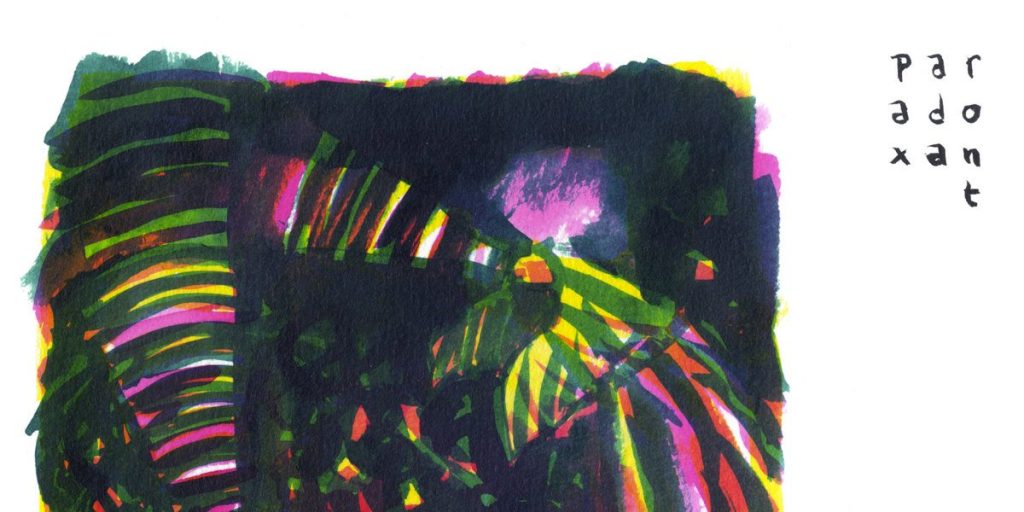

Deux, the second album by Brussels-based Paradoxant, arrives as an ear-appealing burst of warm static from a different frequency, jarring, inviting, cerebral, and deeply handled. It is avant-pop with a soul, experimental pop with a conscience, and electronic indie with heartbeats inside the circuits. Paradoxant is the creative vessel of Antoine Meersseman, a multi-instrumentalist whose career arc, from indie pop glory in BRNS to mountain shepherd in the French Alps, is as curious and human as the music he makes. With Deux, Meersseman has found a rare artistic equilibrium, joy and thoughtfulness in tension, instinct and intellect in harmony. The album represents a continuation of his vision and logical extension. It’s as if, by stepping away from music as a “career,” he found the space to love it again. And love, in this record, shines from every synth squiggle and flute flutter. Though rooted in the experimental, Deux never loses touch with accessibility. Paradoxant’s secret lies beneath the layers of oddity, instrumental tangents, rhythmic spasms, and unexpected timbres. Every song is concise and every structure, even at its most eccentric, follows the familiar verse-chorus pattern. However, what happens within that structure is anything but expected.
This is music that delights in contradiction. Grooves stutter and bend, melodies shift keys when least expected., and textures clash, merge, and dissolve. The arrangements feel like dreams, structured, defying logic while remaining deeply emotionally resonant. In a single track, one might hear Eurodance echoes melt into medieval harmonies, or post-punk rigidity give way to blissed-out electronic swells. Yet every strange twist and moment feels like a sonic excess grounded in musical intention. There is something humble about this sonic extravagance. It never veers into self-indulgence. Rather, it feels like the work of someone truly enjoying the act of making music. Meersseman’s joy is noticeable. It is in the playful textures, the oddball instruments, and vocal distortions that feel more like winks than affectations. This comprehensive collection of vital qualities is utterly contagious and it forces you to spin this wondrous material all over again. But Deux is not a solo exercise. Paradoxant, now officially a trio, benefits from its expanded lineup. Romain Benard on drums adds organic layers to Meersseman’s electronic pulses, grounding the chaos in tactile rhythm. New member Lou Wéry is a revelation, her synths shimmer, her flute soars, and her voice, though used sparingly, adds surprising softness to the mix. Together, this unit creates tightly composed and spontaneously alive music.
The supporting cast is just as crucial as the main band members. Guitarist Clément Marion, saxophonist Ambroos de Schepper, bass clarinetist Ben Bertrand, and opera singer Amelle Wick bring a chamber-pop weirdness to the whole affair. Each guest appearance feels intentional, even as the instruments themselves seem lifted from different universes. But that’s the magic of Deux. It turns genre clash into genre fusion. What should not work together, works brilliantly. Meersseman has an ear for contrast, not just in sound, but in spirit. This is an intimate and vast album. Its lyrics, delivered entirely in French for the first time in Paradoxant’s history, are succinct and poetic, full of emotional weight despite their brevity. Meersseman does not explain his lyrics. He invites interpretation. He trusts the listener to engage, not just to consume. This restraint, rare in an age of oversharing, gives the album a literary quality. The lyrics are like haiku for a fractured world, both personal and universal. Sincerity makes Deux truly powerful. This is not art made to impress, but art made with care and tenderness. Deux offers authenticity without self-importance. Meersseman is not trying to save the world with his music, but he is trying to reconnect with it, and in doing so, he helps us do the same.
There’s a message here, quiet but resonant, slow down, step back, and rediscover joy. For all its sophistication, Deux is not an intellectual exercise. It is a sensory one. You don’t need to understand its references to appreciate its energy. You don’t need to decipher its lyrics to feel their weight. This is music that speaks through its texture, shape, and momentum. It asks you not to solve it, but to feel it. Paradoxant doesn’t simply blur the lines between genres, they render those lines irrelevant. Deux is simultaneously pop and experimental, but never alienating. It’s indie, but it doesn’t cling to aesthetic minimalism. It is maximalist in emotion, color, and curiosity. And above all, it is deeply human. The record’s brevity only heightens its impact. Each entry feels like a sketch drawn in full color, quick, vibrant, and impressionistic, resulting in a collection of sonic postcards from a life lived with intention. There is no excess, even when the sounds themselves feel wild. There is discipline within the playfulness. Paradoxante made an approachable and adventurous experimental pop album, and it rewards deep listening and casual enjoyment. It’s an album you can dance or daydream to. The kind you play loud in the car or whisper through headphones at night. Antoine Meersseman may no longer wish to make music “professionally,” but with Deux, he has made something better, personal, purposeful, and quietly profound. It’s a redefinition of what it means to create, collaborate, and care about sonic art. That makes Deux one of the most important and beautiful releases of the year.
 Thoughts Words Action