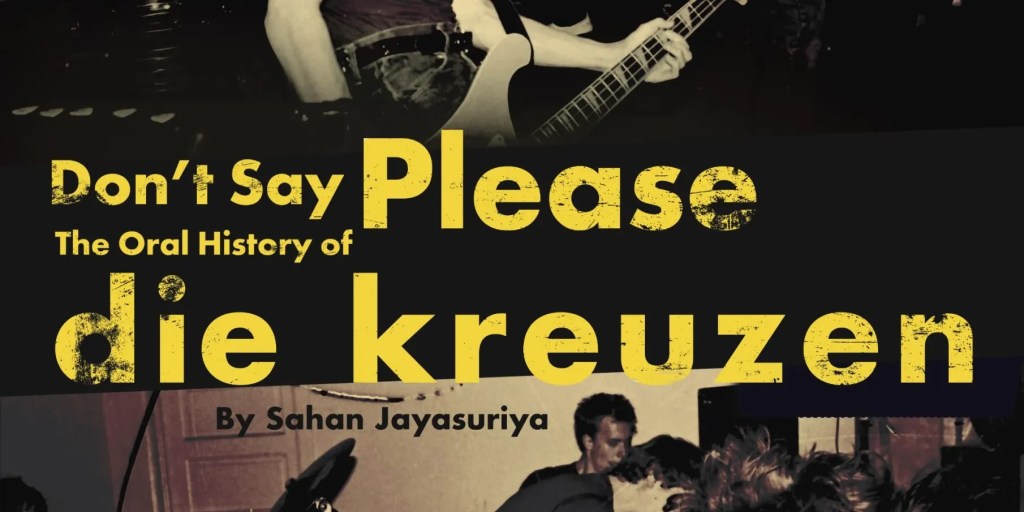
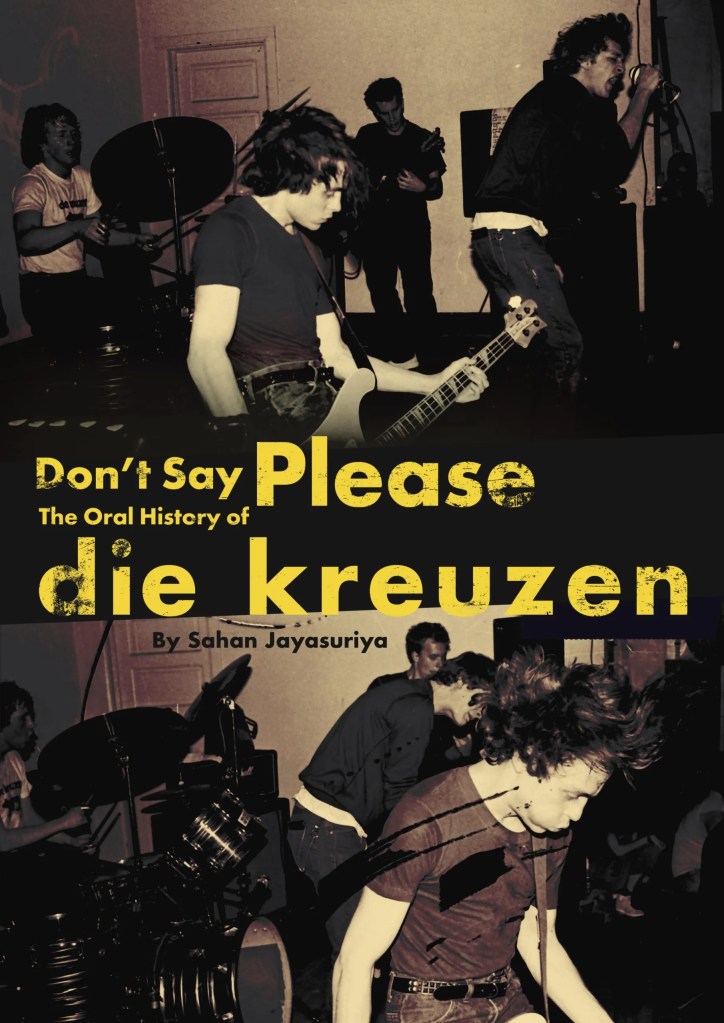
Let’s be honest, if you grew up in the eighties or nineties worshiping at the altar of the independent underground, the name Die Kreuzen carries a weight that most hall of fame acts couldn’t dream of. They were the ultimate musician’s band, a group of four guys from Milwaukee who didn’t just participate in the American hardcore scene, but they essentially broke its spine and rebuilt it into something unrecognizable. For years, their story was scattered across old zines, liner notes, and the hazy memories of people who were lucky enough to be in the front row at the Starship, but with Don’t Say Please: The Oral History of die Kreuzen, Sahan Jayasuriya has finally given this band the definitive, brick-heavy monument they deserve. It’s a long-overdue archaeological dig into the Rust Belt shadows where the future of alternative music was actually forged. To understand why this book is so important, you have to understand the sheer anomaly of Die Kreuzen. Emerging from an industrial Milwaukee that felt light-years away from the hype of the coasts, Dan Kubinski, Keith Brammer, Brian Egeness, and Erik Tunison formed a unit that was almost terrifyingly proficient. Jayasuriya, a veteran Milwaukee music scribe who clearly has the DNA of the city’s scene under his fingernails, approaches the subject with the perfect balance of a fan’s obsession and a journalist’s precision. He spent a decade on this thing, and it’s vividly hearable on every page. The story drops you right into the disaffection of the Midwest, where the wreckage of punk was being fused with a strange, metallic haste and the kind of atmospheric dread you’d usually find on so many underground records.
The beauty of the oral history format, when done correctly as it is here, lies in its lack of a filter. Jayasuriya lets the band members speak for themselves, and the chemistry and occasional friction are more than notable. You get the sense that Die Kreuzen didn’t really care about being punk in the stylistic sense. They were punk in the philosophical sense, meaning they were completely bored by rules. The book tracks their evolution from the self-titled LP, which remains one of the fastest, most precise documents of hardcore ever pressed to wax, through the psychedelic, dark-pop explorations of October File and Century Days. It’s a fascinating look at a band that refused to stand still, even when standing still might have actually made them some money. When you’re reading reflections from the likes of Steve Albini, Thurston Moore, and Butch Vig, you realize that Die Kreuzen wasn’t just a blip on the radar, but the radar itself. These are the architects of the nineties alternative boom, admitting that they were taking notes while watching Die Kreuzen play to thirty people in a basement. Hearing Neko Case or Lou Barlow talk about the band’s tremendous impact adds another layer that you don’t usually get in rock docs. It’s one thing for a fan to say a band is great and another thing entirely for the producers of Nevermind and the leaders of Sonic Youth to explain how this specific Milwaukee band changed the way they thought about melody and aggression.
Jayasuriya’s writing, or rather, his curation, captures the relentless grind of the 1980s touring circuit. There’s a certain nerve to the stories of traveling in cramped vans, playing for gas money, and dealing with audiences that didn’t always know what to make of Brian Egeness’s increasingly complex guitar work or Dan Kubinski’s otherworldly vocals. The book doesn’t shy away from the reality that the band called it quits just as the mainstream was finally beginning to catch up to the alternative sound they helped invent. There’s a bittersweet quality to the final chapters, a sense of what if, but it’s tempered by the band’s total lack of regret for their uncompromising stance. They did exactly what they wanted, and they did it better than almost anyone else. Visually, the book is a feast. For the true fans, the inclusion of rare photos, flyers, and lost ephemera acts as a visual timeline of a scene that was often too fast and too loud to be properly documented. You can see the transition in their eyes and their gear, moving from the raw energy of the early eighties into the more sophisticated, brooding presence they occupied by the turn of the decade. Jayasuriya has scoured the archives with a level of dedication that borders on the religious, unearthing photos that feel like they should have been on the walls of a museum long ago.
What I appreciate most about Jayasuriya’s approach is that he doesn’t treat Die Kreuzen as a museum piece. He treats them as a living influence. He understands that their sound, that jagged, beautiful, heavy, and melodic mess, is still echoing in the music of today. Whether it’s in the DNA of modern post-hardcore or the way heavy bands now feel comfortable embracing noise-pop, the fingerprints of Die Kreuzen are everywhere. Don’t Say Please is the definitive map to finding those prints. It’s a semi-casual yet deeply knowledgeable examination of a brutal and visionary career. If you’re a Die Kreuzen fan, you probably already have ordered this one. If you’re a student of underground history, you need it to understand how the dots connect. Sahan Jayasuriya wrote a love letter to the idea that being unclassifiable is the highest compliment a musician can receive. Die Kreuzen never asked for permission to change the world, and they certainly didn’t say please. This book is the loud, proud, and perfectly executed proof of their genius.
 Thoughts Words Action