
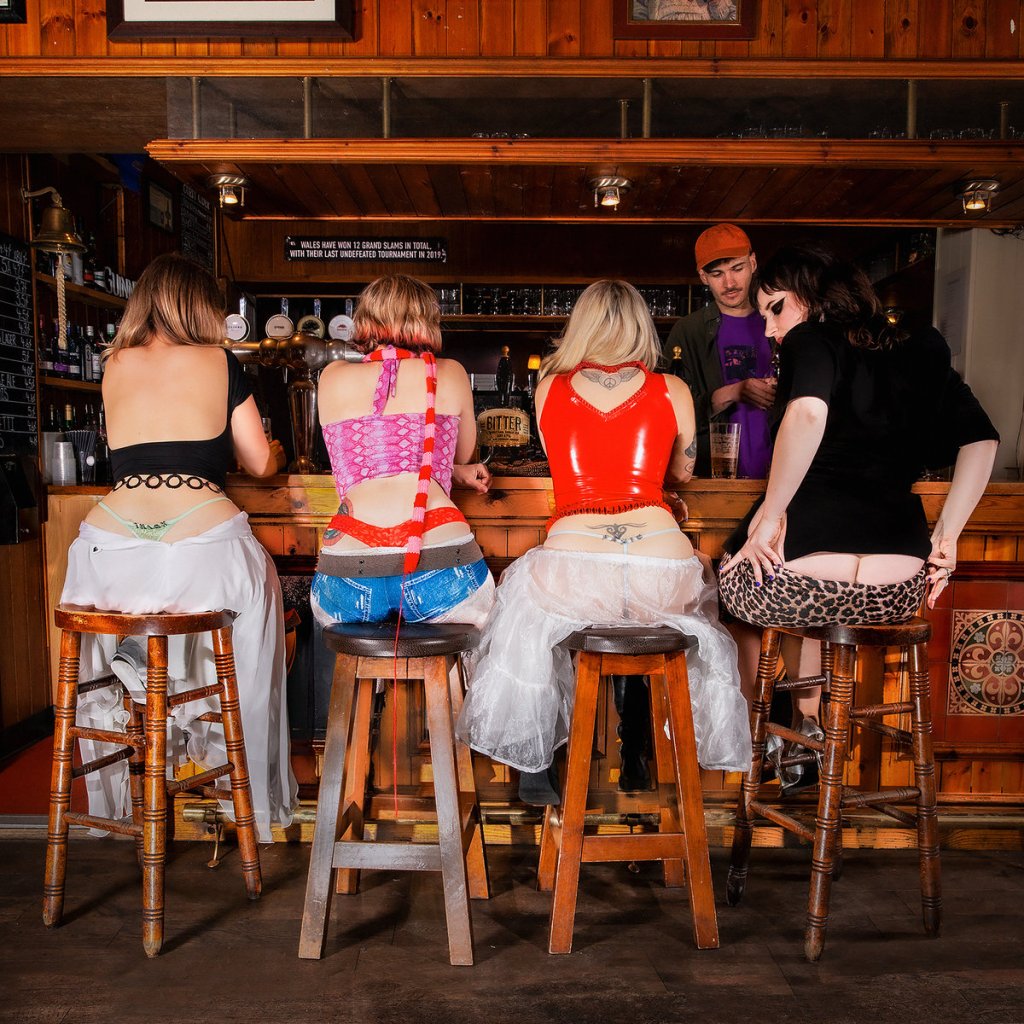
London’s punk underground has long been a seething crucible of chaos, wit, and protest, and with their self-titled debut album, Panic Shack emerge as a siren call for the next generation of disaffected, loud-mouthed, brilliantly self-aware misfits. Across eleven tightly wound, gloriously scrappy tracks, this band twists, slaps it, laughs at punk rock legacy, and reimagine it on their terms. If you’re looking for something tame, look away now. Panic Shack is a rowdy, unfiltered thrill ride that grabs you by the collar and refuses to let go. It’s a sonic brawl somewhere between a riot grrrl zine come to life and a midnight garage show where the beer’s cheap, the floor’s sticky, and the amps are too loud, but in the best way possible. With an aesthetic and energy comparable to Lambrini Girls and Amyl and the Sniffers, Panic Shack also channels the raw socio-political urgency of Crass, while never taking themselves too seriously. That’s the sweet spot they occupy, defiantly political but definitely unserious, unafraid to wield wit as a weapon, sarcasm as armor, and pure noise as release. It’s punk rock music reveling in the chaos of its refusal.
The album is propelled by some of the most infectious vocal work to come out of the UK punk scene in recent years. Whether it’s shout-along choruses, sassy spoken word jabs, deadpan snark, or full-throttle melodic leads, the vocal arrangements are a standout throughout. There’s a playful brutality in how these vocals bounce off each other, at one moment like a war cry, the next a cheerleader chant from hell. It’s this vocal interplay that truly distinguishes Panic Shack from the crowd. They perform them like they’re in a knife fight with convention. Sonically, the band swerves confidently across the punk spectrum, from scrappy, garage-tinged riffage to angular post-punk dynamics. You’ll notice the tautness in the guitar work that speaks to years spent devouring DIY punk, yet there’s also a sense of calculated freedom, like they know exactly how far to push before letting it all implode. The guitars roar with righteous fury, but they never descend into sludge. Instead, they slice and scratch with precision, balancing rawness with hooks so infectious you’ll be humming riffs for days.
The bass guitar deserves equal praise because it does far more than simply anchoring these songs. The low end on Panic Shack is immense, nuanced, and alive because it simultaneously grooves, pulses, and menaces. There’s a careful dance between bass and guitar that elevates each track, giving the album depth and dimension without sacrificing its scrappy immediacy. It forces you to pay attention to each song. And then there’s the explosive, inventive, and energetic drumming, with all those fills, accents, nuances, syncopated snare hits feeling more than intentional. From dynamic stop-start breaks to tight, percussive grooves, the percussion injects a sense of controlled chaos, a constant heartbeat that drives the songs with a mixture of fury and finesse. Panic Shack’s refusal to be pigeonholed into a singular genre or subgenre makes them even more impressive. They flirt with post-punk minimalism, dive into garage-rock grit, nod toward indie’s melodic sensibility, and then swing back with sneering defiance of good old punk rock. And yet, the album never feels confusing or unfocused. Instead, it feels like a perfectly curated playlist from someone who loves punk rock music from the bottom of their heart.
Lyrically, the album lives in that gloriously messy intersection of the personal and political. There’s sharp, biting commentary on everything from gender roles to digital dystopia, but it’s delivered with a wink and a punch. There’s no preaching. Panic Shack are here to scream, laugh, rage, and maybe dance a little, all at the same time. It’s catharsis set to power chords. That’s perhaps what makes this album so vital, it doesn’t look backward. Panic Shack aren’t interested in replicating 1977. They’re not stuck in the golden days of CBGBs or recycling three-chord tropes. Instead, they take the spirit, defiance, anger, and joy of those eras and rewire them for the present. This is punk rock for people exhausted by false promises, bad bosses, broken systems, and online nonsense. It’s for everyone who’s ever felt talked over, ignored, or patronized, but it’s also for anyone who still wants to believe that music can be fun, dangerous, and liberating all at once.
This isn’t an album that needs multiple listens to sink in; it grabs you from the first second and doesn’t let go. Every song feels like a moment, statement, or release, yet beneath the noise and fury, there’s serious craftsmanship. These songs are tight, smart, and intentional. There’s structure beneath the sweat and snarls, and that’s what gives this record its staying power. By the time the final notes ring out, it’s clear that Panic Shack have delivered one of the most exciting punk rock debuts in recent memory. They’ve crafted an album that’s as harsh, relevant, furious, and fun. It’s a mission statement from a very promising band. If you like your punk unpolished, unforgettable, confrontational, inclusive, and loud, this album is a must.
 Thoughts Words Action