
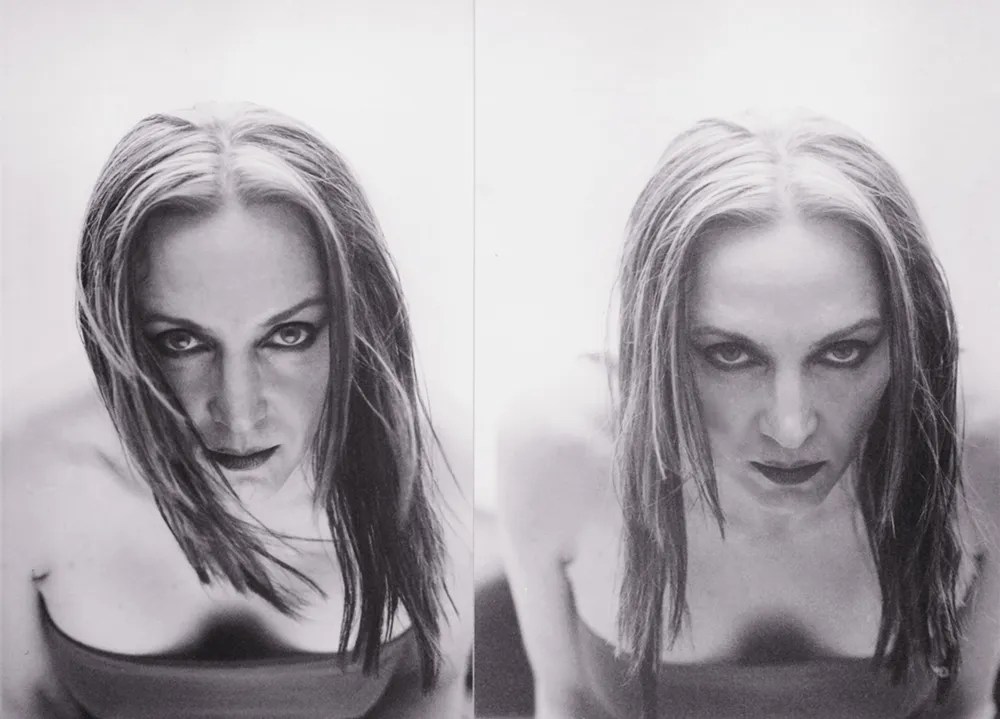
Only a few artists possess the spiritual and sonic intensity of Jarboe. A unique voice in experimental music, she has traversed a path from the raw power of Swans to a deeply personal solo career rich with vulnerability, mysticism, and emotion. With the recent reissue of her 2000 album “Disburden Disciple,” we caught up with Jarboe to explore the layered beauty of that record, its lyrical and visual aesthetic, the inspirations behind its creation, and the significance it holds for her today. Along the way, we also touched on creativity, transformation, and a few unexpected delights.
Order “Disburden Disciple” on vinyl HERE
Hello, thank you for taking the time to answer these questions. How have you been?
Hello Djordje,
Thank you.
I’m looking forward to walks in the nearby park now that warm weather is here. I live in a house surrounded by trees and wildlife.
(It’s a different “wildlife” from my years living in the Swans rehearsal space on Avenue B and East 6th Street in Manhattan!)
Disburden Disciple is being released on vinyl for the first time, 25 years after its original debut. How does it feel to revisit this album now, with the clarity of hindsight?
Yes, revisiting this album is a personal reflection. ‘Disburden Disciple’ holds memories of events that led to the creation of it. I have found that the more personal I am in my music, the more it resonates and is a universal experience for my audience.
The remastered version features new artwork and updated sound by George Emmanuel. What was it like hearing these songs through a fresh sonic lens after all these years?
After hearing the vibrance of George Emmanuel’s remastering for my album, ‘Sacrificial Cake’ – I knew the remastered ‘Disburden Disciple’ would also have vibrant life.
The album explores intense emotional and psychological themes, from metaphorical dismemberment to romance and resurrection. Were there particular life experiences that inspired these narratives?
Absolutely. I explore themes of obsession within the depths of (perhaps a reckless) passion in various forms. “Pure War,” for example, references the war of the heart. However, it utilizes recordings of military tanks and various chaos to intensify the theme. I made field recordings when I was traveling and brought them into the mix.

The opening song Bound and its new video reference a performance that fuses choreography and rock theatre. How do you see the relationship between physical performance and sound in your work?
For the shows that included “Bound” there was choreography for both the band members and additional “puppet masters” actors.
In other past performances, I have broken the barrier between performer and audience by leaving the stage entirely and gone into the midst of the audience to sing. It all depends on how I want to present the performance for a particular set. The European tour of 2022 was presented like a rehearsal. The guitarist, P. Emerson Williams and I set up and broke down gear in front of the audience and shifted song arrangements in an improvisation nightly – such that every set was different in some way. I wore work clothes instead of different stage clothing and sat at the computer shifting audio tracks as I do when composing.
Disburden Disciple moves through a range of styles, from 70s rock grooves to maniacal piano and haunting ambient textures. What guided your sonic choices when composing the album?
The “worlds” in the stories I was conveying determined the style of the music. There are deliberately eclectic styles as a result. “Bound” goes from a retro funky groove to a rock ending and was physically portrayed on stage as rock theatre. I was literally kneeling and physically bound on the edge of the stage during the performance.
“Kiss Of Life” is a reference to the Gothic and with Vampiric overtones. “Under” with the maniacal piano was created by taking multiple live recordings of the piano and chopping them together to make them even more maniacal. “Dear 666” which is a song about the abused sarcastically seeing themselves as a martyr while being addicted to the abuser.
“Forbid” addresses societal expectations and the symbolic death of the former persona as a swan encircles in a pond on a hill overlooking the grave and then takes to the air. For this song, there is a romantic element of violin. “Scarification” is tribal with drums and images of sacrifice in sexuality with passion illustrated as an altar of fire…


Your music often dissolves the boundary between artist and audience, becoming an immersive portal. What do you hope listeners will feel when they engage with this record in 2025?
I invite listeners to free their imagination and engage with the “worlds” presented by the ‘Disburden Disciple.’
You’ve described your creative process as “controlling a world.” Can you talk more about how you build those worlds, emotionally, sonically, and conceptually?
I’d describe the process as “audio architecture.” My 2020 album entitled ‘Illusory’ was created with meticulous editing and numerous field recordings from travel and then adding ambient components. For example, I recorded my voice on location in a cathedral but not separated from sounds like a tour group and cell phones in that location. I later added voice and instrumentation to that field recording in the studio. Mixing all of this meant careful editing of many audio files.
At other times, the story of a particular “world” is by sitting at the keyboard and working on a melody or chord progression. Words happen after the music. Alternately, words happen first and that determines an audio environment. As for emotionally, that is where a voice from the range of voices I use comes forward.
Your work spans so many disciplines: music, visual art, literature, and performance. When creating Disburden Disciple, how did these mediums influence each other?
It is creative compulsion that drives me to explore different forms of expression.
I’m a voracious reader of books with diverse subject matter. I will watch films I am attracted to multiple times in analysis.
I’ve found enlightenment in art museums and galleries in various countries. A favorite is the Museum of Old and New Art in Tasmania which I visited the two times I performed at Dark Mofo.
I’d love to experience The Alchemist restaurant in Denmark, the Odd Nerdrum Museum in Norway, and the Arvo Pärt Centre in Estonia.
Plays, dance performances, classical concerts, live jazz…
All of the above is a stimulus that opens the portal
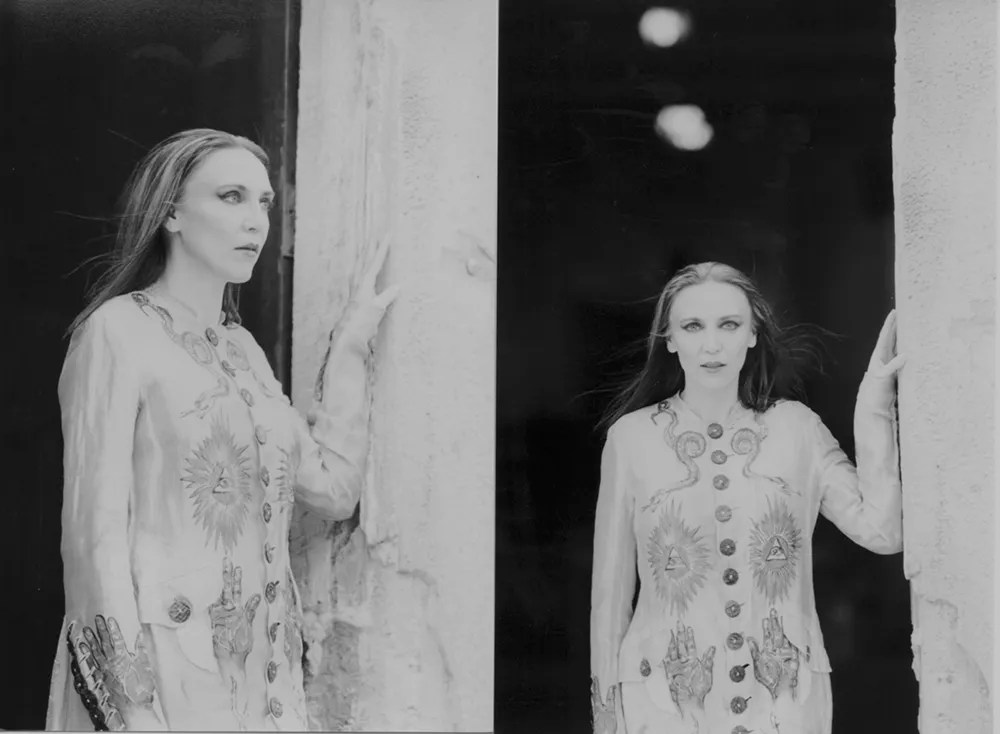
With a career that began in the underground cassette scene and evolved through Swans and into avant-garde solo work, what personal shifts were happening for you around the time this album was first released?
‘Disburden’ is the followup to ‘Anhedoniac’ – which is the first album I recorded post Swans. ‘Disburden’ then, speaks of being a “disciple” of purging the burden of identity.
You’ve always been a deeply independent artist, often self-producing and self-releasing your work. How important is that autonomy to the essence of Disburden Disciple?
Working without external expectations and making my own decisions is essential.
The characters and emotional landscapes in your lyrics often feel mythic or archetypal. Do you draw from literature or spirituality when writing?
To develop a particular theme for an album, I’ve studied different belief systems. A powerful moment was the Kalachakra initiation in NYC in 1991 from the Dalai Lama at the Paramount inside Madison Square Garden.
Finally, with Sightings and other projects on the horizon, what creative paths are currently calling to you, and how does Disburden Disciple connect to where you’re going next?
I’m currently working on a technique I’ve not attempted before in the context of track flow between different songs. It’s definitely an experiment and I will see where it takes me.
Every album is an education. Every step in creating an album is exploring possibility.
 Thoughts Words Action