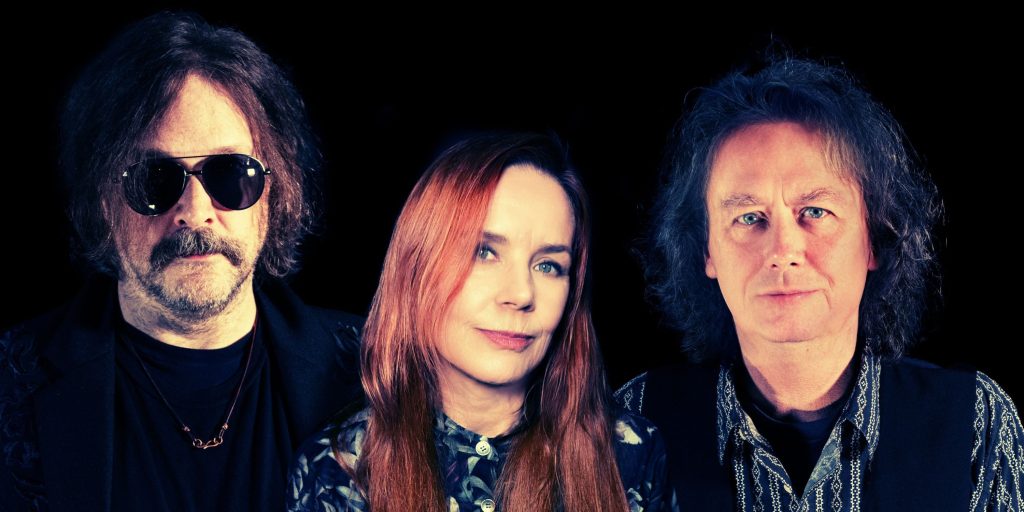
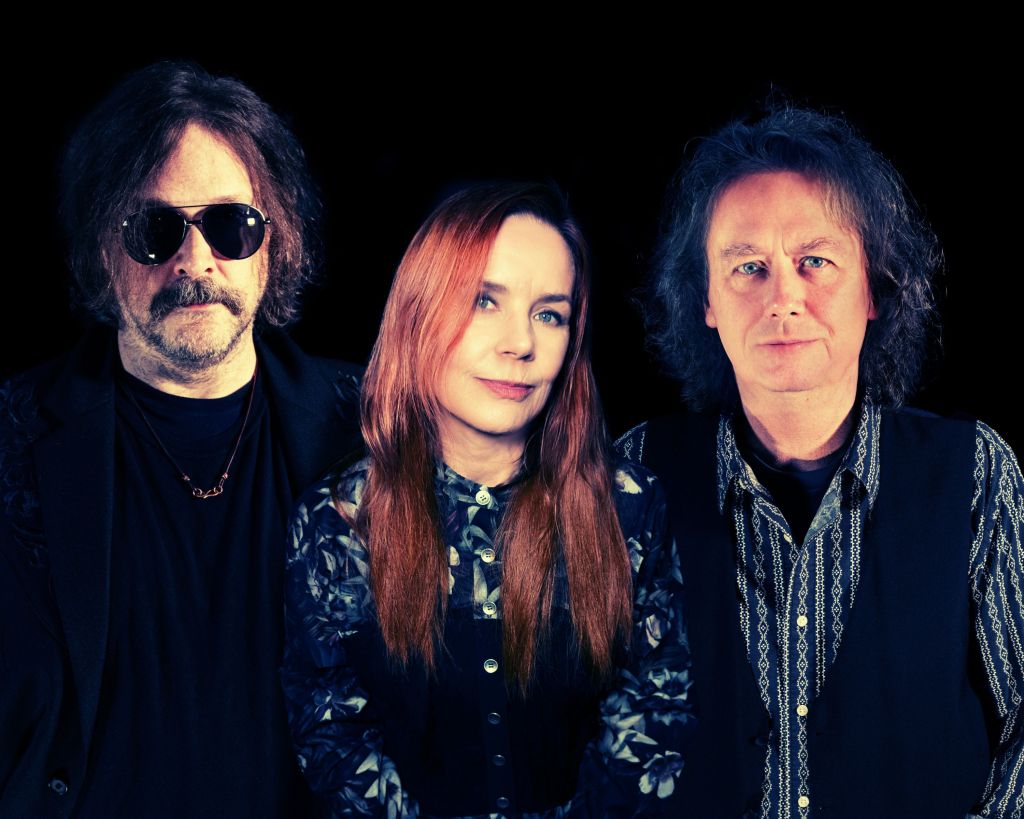
In this interview, we catch up with the legendary post-punk/gothic rock band Strange Boutique to talk about their long-awaited comeback and the making of their new album, Let The Lonely Heart Sing. After years of silence, the band returns with a sound that honors their ethereal legacy while exploring fresh emotional territory. We delve into the inspirations behind the new material, their songwriting and recording process, and what it means to reconnect with their audience after so many years.
Pre-order “Let The Lonely Heart Sing” on vinyl HERE
After more than three decades, what compelled you to return to Strange Boutique and record Let the Lonely Heart Sing now? Why this moment in time?
Monica: After our reunion show in 2019, with such a warm response, and Dennis Kane playing guitar in such a fantastic way that would have made Fred proud, it seemed natural to write some new songs. We started writing not long after that show, and released the Jet Stream e.p. in 2021.
Dennis: I think it just fell together organically, really. It just made sense. After the DC show in 2019 and with “Drown” blowing up on TikTok, I think we were energized to write and record new music.
The cicada featured on the album artwork is rich in symbolism. Can you elaborate on how the themes of resurrection and transformation are reflected in the music itself?
Monica: Having the band itself resurrected after so many years, but with a new feeling and energy says it all. Living in DC through the punk scene, the cicadas were all around us every Summer. But the 17-year cicada, the sounds were different. I called the sound “The song of future ghosts” because the cicadas had this spectral hum that filled every tree in the city. This Summer when we return to the stage, DC will have another Cicada event! So it all fits perfectly.
Much has changed in the world, and in music, since your last release. How did you blend your original sound with the realities and aesthetics of 2025?
Steve: For me, it was important that whatever we did retained the spirit and vibe of the early Strange Boutique records. But, we also wanted the new songs to sound fresh and reflect who we are in 2025. So, yes, there’s a nod to our past, but our eyes and ears are focused on today. We were committed to live performances, we brought in drummers and a string section instead of using drum machines and synths. The human element felt necessary.
Monica: The ability to be able to do an album long-distance is great, but the aesthetic of the band is pretty much the same. We used organic instrumentation for the whole thing, so it was a matter of sending wav files back and forth, rather than recording in the same room. We wrote as we would have, though.
Dennis: Music has changed! But, I think good music will always be in fashion. Seeing younger bands getting into post-punk, dream-pop, goth… it’s pretty cool. And they’re making good music that’s fresh but sounds familiar, you know? So I think we fit right in, sonically and aesthetically.
Your track “Drown” has found renewed popularity, especially among younger listeners. How does it feel to see your early work rediscovered and re-contextualized by a new generation?
Steve: It feels humbling, exhilarating, baffling and absolutely amazing.
Monica: “Drown” is an interesting piece, full of pain of unrequited love and feeling totally out of sorts, so I can see how it would resonate with people who are now the same age I was when I wrote the lyrics. BUT, I’m unsure how much of the song actually gets played, I’ve seen it just used for the fascinating rhythm of the music itself. I think it’s amazing to be (re) discovered again! It makes sense, when I was in my 20’s, I was always looking at music and fashion from the past as reflection of who I was or wanted to be.
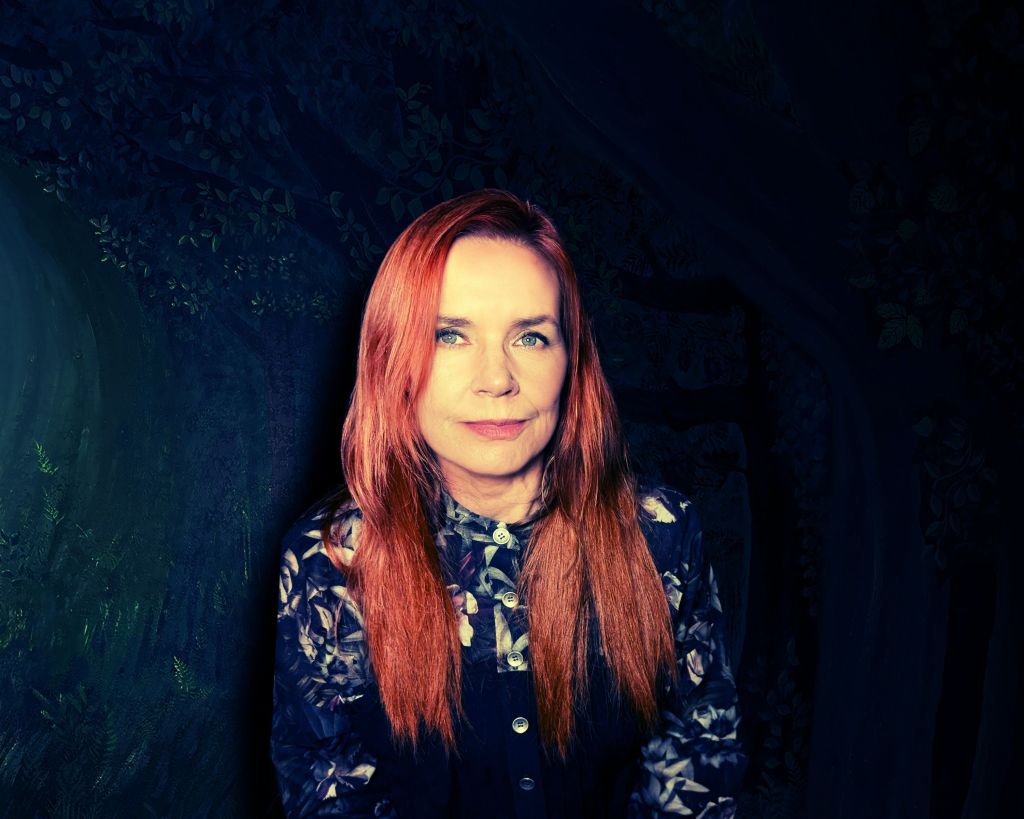
Strange Boutique was an essential part of DC’s underground scene in the late ’80s and early ’90s. How has that scene shaped you, and do you see echoes of it in today’s post-punk revival?
Dennis: Personally, as a fan, I felt like it was a long deserved acknowledgement of the band’s awesomeness! As a member of the band in 2025, it’s quite humbling and exciting.
Monica: Oh, being a punk rock girl is still who I am through and through. I do pretty much all my solo music myself, put my music, books and art out, and have the freedom to do my own thing. I see many underground bands, playing actual instruments, using SM in a cool way to promote themselves, bypassing the need for record labels and just making music, which is wonderful.
Dennis: I was a fan of the band back in the day. They were very inspiring and integral to me getting into bands and the larger post-punk, goth scene in DC. So, I can say unequivocally, Boutique shaped the early stages of my career. How crazy that the circle has closed and now I’m playing with them! I am beyond humbled to step in for Fred – boots I can never hope to fill – but I like to think that maybe I can stand next to them? He was a massive influence on me back in the day and I’m blessed to play those influential parts!
You describe the new album as exploring ‘ghostly themes of love and loss, youthful wonder, echoes of the past.’ Were there specific personal or collective memories you drew from while writing?
Monica: “The Night Birds” was written after the death of my father, my stepmother was grieving terribly, she felt him in the house… “Jet Stream”is for Fred as well as the memory of my mother’s death when I was 5 years old, “Zoid in Dreamland” is about the change from one plane to the next… the ghost looking from the outside in, kind of the other side of the”The Night Birds”. “Twelve Chimes” is for my husband, Steve Niles – we found each other after 26 years, being punk rock kids in DC, and then reconnecting after we both went through divorces. It’s about feeling grateful for real love as our lives continue into the next phase… And “Under Surface” is about the next generation, knowing that many kids are not giving into the need for social media, perfection of image and the loss of their creative minds.
Can you describe the creative dynamic between you, Monica Richards, Steve Willett, and Dennis Kane, especially after such a long hiatus? What changed, and what remained constant?
Steve: While the process has changed from songs being fleshed out in a rehearsal room in the early days to songs now being built between our various home studios, I think the constant has been the musical connection between Monica and me. Monica hears something in my bass lines and song sketches that has always defined the Strange Boutique sound. We’ve been so fortunate to have 2 really talented and intuitive guitarists. While Fred and Dennis each have their own distinctive style and sound, they both have a keen feel for melody and texture that not only work around Monica’s vocals but give her melodies to wrap her lyrics around. On the new record, Dennis’ guitar work and string scores really added an incredible depth to the album.
Dennis: Steve and I played in a few different projects over the last 20-ish years, so we had established a method of writing and recording together – establishing that trust and vulnerability you need to make music. I think Monica is a natural artist in that she can work into these realms quite easily and contribute a very strong personal artistic voice… I mean, it doesn’t hurt that she and Steve have a history of working together! But She and I didn’t have that history and yet, we locked in very quickly.
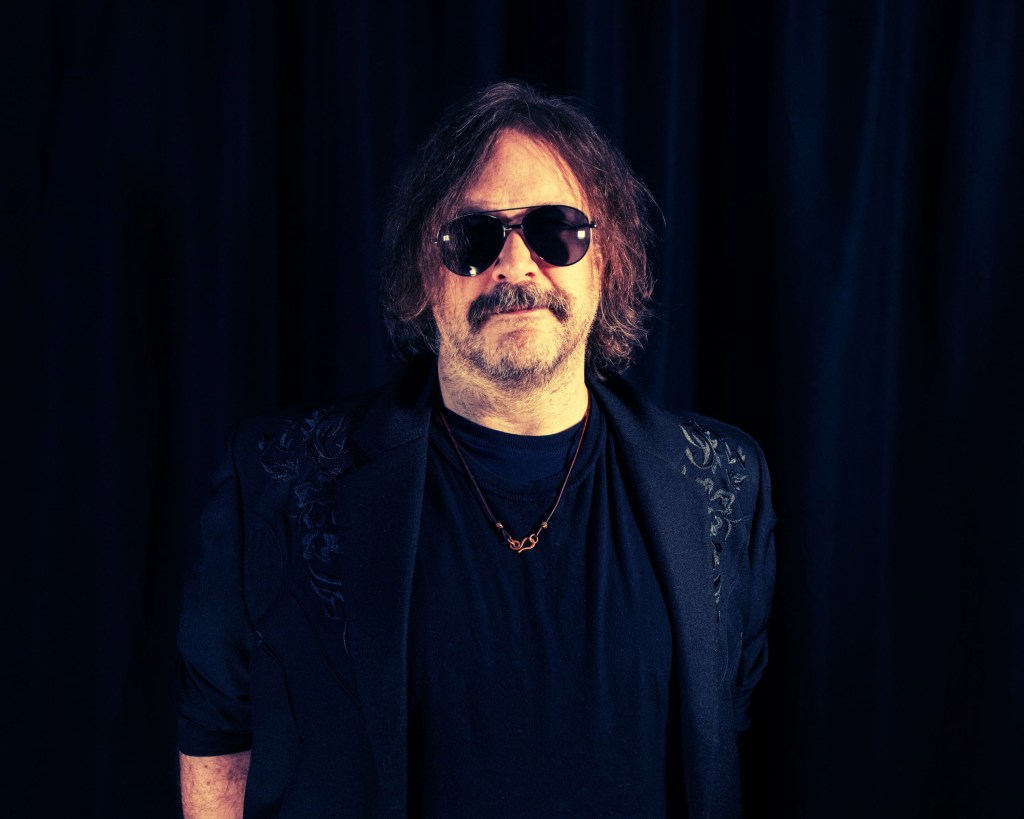
The use of a live string quartet adds a new emotional layer to the album. What inspired the decision to incorporate classical instrumentation, and how did it influence the overall sound?
Steve: Although we had used cellos on a few earlier tracks, those parts were simple melodies playing “spare” guitar parts, rather than a string section playing parts written for strings. Knowing Dennis had experience scoring string sections for some of his solo work meant we had a new element we could play with. I asked Dennis to score strings for Under Surface to add some color and depth to what was initially a very minimal arrangement. Once that door was open, adding strings to a couple other tracks seemed an obvious next step. Dennis’ arrangements brought those songs to life and gives the album a wider, lusher sonic character.
Dennis: Steve had the idea and I ran with it. I have strings on my solo music and have scored strings for others’ recordings. I think it was inevitable. If Steve didn’t push it, I would have at some point!
Washington DC has played a profound role in your identity, both musically and personally. How has the city itself informed this album, sonically, emotionally, or spiritually?
Monica: DC is a beautiful city, and I didn’t appreciate it as a kid. It wasn’t until I had toured all over the place that I could come back and see it with fresh eyes. DC is such a unique place, from the museums I used to skip school to go hang out in, the amazing and unique clubs that I saw so many great bands in, (and then had the honor to perform in).
Dennis: I think at the time Boutique were around (and Madhouse & Beefeater, etc…) there was kind of an exciting, creative energy in DC. It pulled and held people together. Scenes that grew from going to Boutique shows back then were responsible for many friendships I still have. We’re all still tied to that creative energy that inspired us early on, though a bit more geographically scattered. DC’s got a soul that never really leaves you.
Steve: DC can be a very isolating city with a transient population centered around politics. But, there’s always an undercurrent of energetic optimism from the community that isn’t a part of the political landscape. That scene and community is always thriving in the shadows. So, I guess it’s made us feel at home existing on the fringes. Sonically, I think our ties to the early DC punk scene lent us an energy and edge that doesn’t exist in a lot of darker, melancholy music.

The title Let the Lonely Heart Sing feels melancholic and defiant. How do you interpret that phrase within the broader emotional landscape of the album?
Steve: Melancholic and defiant, .. YES. You are on point 100 percent. When I heard first heard Monica’s vocals for “Whistle, And I Will Come To You”, the lyric “Let the lonely heart sing” resonated immediately. Monica and I had spoken about wanting to find a sense of hope and optimism in such a chaotic world. So, giving a defiant and hopeful voice to the melancholy at heart struck a chord.
Dennis: That was a lyric that came along towards the end of the recording. I remember thinking – “ah, that’s what this record is about!” Kinda pulled it all together for me.
Steve Willett took the lead on creative direction for this record. Can you speak to the vision he brought and how it shaped the album’s arc?
Monica: Steve actually had some old music riffs from the 90’s, which he brought back into motion. You can hear that especially in “Zoid in Dreamland”, which to me sounds like classic SB. His bass sound is so unique, all he has to do is play and SB comes to life!
Dennis: Steve’s super power is his steadfastness. He kept the production of this record going and headed straight towards the goals he and Monica set out, early on. Making records is hard!
Strange Boutique’s music has long intertwined gothic sensibilities with mystical and world music influences. What sources of inspiration, literary, cultural, or spiritual, guided you this time?
Monica: You know, we were called “Doom and Gloom’ back in the 80’s! I still often go to the Romanticism era (“Zoid…”), and great stories. “Whistle and I will Come to You” is an M.R. James ghost story, based on something dark and very ancient unfortunately unearthed by the protagonist, but in 2010, they made a short film version that was more of a love story. I kind of merged both… “Radium Kiss” is about the Radium Girls, who died terrible deaths licking their brushes back in the 1920’s while painting Radium on the numbers of clocks. I reimagined them as terrifying Loreleis at the bottom of the ocean, forever glowing. So… basically, classic Strange Boutique themes.
Faith and the Muse marked a significant chapter in your artistic journey, Monica. How has your experience with that project shaped your return to Strange Boutique?
Monica: I was simply the lyricist and singer in the original Strange Boutique. In FATM, William took all my odd musical ideas seriously, and we wrote all the music hand-in-hand. But I still had SB very much in my heart. I had Fred play on my first solo album, Infrawarrior, which was amazing. After my split with William, I was working on my third solo album, Kindred, in 2013, and Steve Willett and I were chatting. He had some musical ideas I liked and I also asked him to play bass on that album. So we began working together again then. I think this really caused a shift when we reunited to perform in 2019, a new respect for each other as songwriters and artists, to be sure.
In an era increasingly shaped by digital platforms and ephemeral content, what does it mean to you to release a tactile, physical album in beautiful formats like marbled vinyl?
Steve: It’s important to offer people a way of connecting with the music that is far more tangible than streaming. I have thousands of LPs and CDs, and also listen to music on streaming apps. For me, when I buy a CD or LP, from some group or artist that is on the fringes of the mainstream, I feel a connection with that music that’s different than if I just stream it. And, if that LP or CD is some cool color or has artwork that catches my eye and adds to the character of the whole package, … then that’s even better.
Monica: You know, I went through the end of the CD era, which was so rough. FATM was JUST going to national distribution, and suddenly orders from stores stopped. Then a few years later, full digital piracy took hold. Luckily, I’ve always had a wonderful fanbase that has been willing to continue to support me, and I’ve been able to crowdfund my solo albums. And seriously, the revival of vinyl has been something I didn’t think would happen! I am thrilled about it.
Dennis: Physical media is an important physical representation of peoples’ art. We live in an age of ephemera and it is what it is, but I absolutely feel a connection to the humans who made the music when I’m looking at a record sleeve. It’s like, for that time the record is playing, the millions of other bands kinda evaporate and you can focus on that sound and vision and perspective. I think it’s still important to have that experience.
You’ll be performing at the Black Cat once again, a venue deeply tied to your history. What significance does that stage hold for you, and what can fans expect from this homecoming performance?
Steve: Wow, … it’s an odd situation. While we were active in the early 90’s, the 9:30 Club felt like our spiritual home. The Black Cat didn’t open until Fall of 1993. So, we did one “Goodbye to 9:30″ show in the Summer of ’93, and then to make our farewell show something unique, we booked a night at the new club in town in the Fall. That night was bittersweet and I think we all left the stage emotionally drained and feeling as if we’d closed the door on Strange Boutique. A one-off reunion show 10 years later had a different feeling, … more of a welcome home than a goodbye, it was euphoric and joyous. Of course, we had no idea that would be the last time we’d ever take the stage with Fred Smith, our original guitarist. So, while we’ve only played there twice, … both nights hold a special place in our hearts. We’re so excited to play live again, this band has always thrived on stage and felt at home in front of an audience. For the upcoming show, we’ll be playing a lot of material from the early records as well songs from the new record. There’s no doubt our 3rd night at the Black Cat will be a memorable one for us and the audience.
Dennis: The Cat is my forever home. I’ve been playing there and hanging out there since 1993 and for 8 years, I worked there. That stage is where I met and married my wife. The staff are my family. The Black Cat is in my DNA at this point. I think fans can expect a killer show that mixes the older material and the newer material seamlessly.
 Thoughts Words Action