
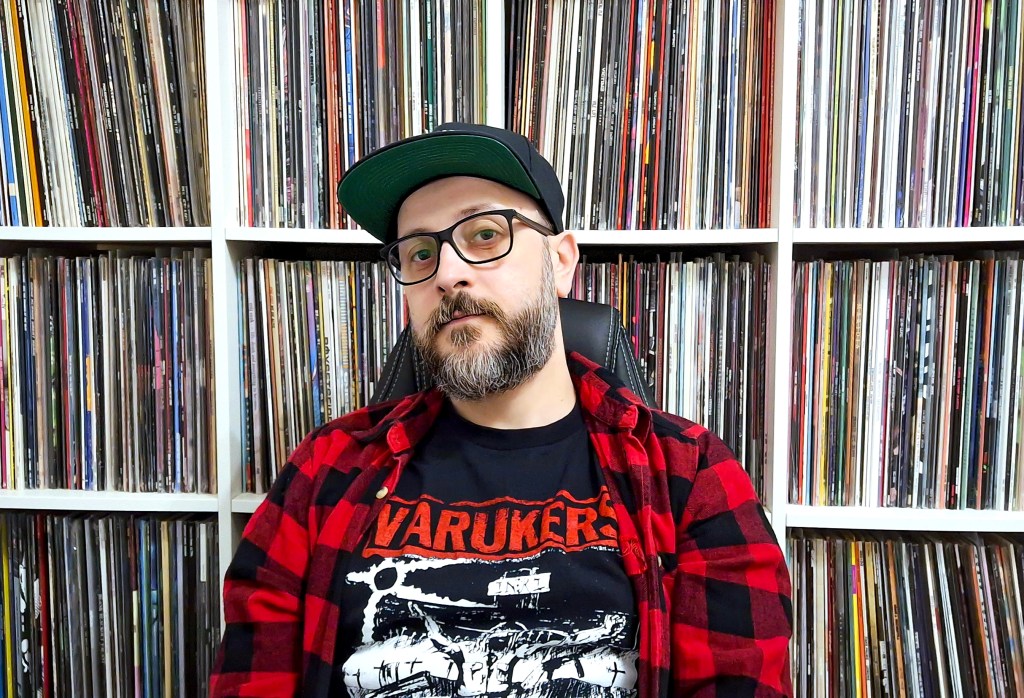
Since its founding, Geenger Records has built a reputation for curating bold, uncompromising music that defies commercial trends while fostering a tightly knit community of artists and listeners. Our conversation with Djordje Miladinović delved into the label’s guiding philosophy, its evolving catalog, the role of physical and digital formats, favorite releases, current industry dynamics, and what lies ahead for Geenger Records in an increasingly complex musical landscape.
Disclaimer: This interview was originally curated by Maja Đurić Naumović for Krik Kulture, a zine that unfortunately lost its founding before the release of its first issue. In light of this, we were kindly asked to publish this conversation here on Thoughts Words Action.
Geenger Records has been a respected presence in the independent music scene for years. Can you take us back to its inception, what inspired the formation of the label, and what was the founding vision?
Djordje: First of all, I wanna say a big THANK YOU for letting me showcase the label’s activities on your platform. According to what I learned by working for Geenger Records over the years, the label was started in 2010 by Danijel Sikora Six when he decided to quit Moonlee Records over some creative differences with the remainder of the crew.
Our intention was and always will be to promote bands and artists, whether they are up-and-coming or household names, with a clear focus on ex-Yugoslavian, or should I say, Balkan countries. Of course, we also carry some international names, but in smaller, dosed portions.
Behind every independent label is a community of passionate individuals. Who are the key people behind Geenger Records today, and how do your roles complement each other?
Djordje: Danijel Sikora is a founding member and the owner of the record label. Currently, the remainder of the crew consists of Nenad, Žarko, and myself. Each one of us has several roles and our activities usually rotate depending on the artists or bands we’re currently working with. It’s needless to say Six usually takes the greater portion of the duties while the rest of us are helping out with some details, whether scouting for new bands, working on the promoting strategy, doing visuals, operating on social media, or any other piece of work related to record label.
Geenger Records has cultivated a diverse and fiercely independent catalogue. How would you describe the label’s curatorial philosophy, what makes a band or a record “Geenger-worthy”?
Djordje: We’re always looking for certain qualities in artists and bands. First of all, their music needs to stand out from anything we heard before. It’s pointless to release the same old formula, repeatedly produced by so many bands. In my humble opinion, bands who somehow push their boundaries and break the rules of several music genres at once always have bonus points in our headquarters. Since we’re all musicians, we are also looking at how the material has been composed, arranged, recorded, and produced as well. Bands who nurture DIY ethics and praise underground music genres are always our top priority, but we all have versatile music tastes, so there are also bands on our roster who are not part of the DIY underground scene.
The COVID-19 pandemic proved a seismic disruption for the music world. How did Geenger Records navigate those uncertain months, and what adaptations have remained part of your operations today?
Djordje: Those were tough times, especially when it comes to vinyl production and digital music distribution. With all those delays in record pressing plants and the mess created by overcrowded digital music distributor’s servers, we used to wait for months until we could properly publish fresh music. Thankfully, we gradually got back to the same old publishing routine when the pandemic ceased.
In a post-pandemic music industry still undergoing rapid transformation, how has Geenger recalibrated its mission and workflow to stay relevant and effective in 2025?
Djordje: To be quite honest, everything seemed rough in the beginning because no one knew what to expect in an almost post-apocalyptic situation, but we got back on our feet almost immediately. Years have passed since the pandemic and we’re just working on different strategies in order to create an environment where all our artists and their music will thrive.
Looking at your current roster and catalogue, what are some of the most exciting recent or upcoming releases you’re particularly proud of?
Djordje: Although I cannot confirm or announce any new releases at the present moment, there are some recent records that deserve attention. Here are some of the recent records you should check out: Kiper – Aksiom 12″ EP, Peach Pit – 2018-2023 LP, Reckoning – The Maze Of War LP, Neven – Zakon Ljubavi 7″, Dead Man’s Bells – Steadfast, Cold Burn – Dream Is Over EP, Citizen X – Distant Sound EP.
With so many records under your belt, one might imagine some stand out more than others. Are there any past Geenger releases that hold a special place in your heart—artistically, emotionally, or historically?
Djordje: Every member of Geenger Records has his personal favorites. Here are some of my picks: Šumski – Ostrvo Ledenog Kita LP, Kiper – Aksiom LP, Kevlar Bikini – OPT OUTism LP, Urlik – Urlik LP, First Flame – Beneath The Surface LP, Dead Dog Summer – A Place Of Someday LP, Reflection – Different Paths, etc.
From a band’s perspective, partnering with a record label can be transformative, or disappointing. What does Geenger Records strive to offer its artists beyond pressing records and digital distribution?
Djordje: Every band has its vision, ideas, desires, and expectations of what could or should record labels do with their material, but sometimes, their expectations are either a bit too high or totally unrealistic. The artists and bands must know that traditional record publishing has been long gone. Today, record labels serve more as consulting and PR agencies that are using their contacts and resources, and advising bands about possible opportunities in order to further promote music.
Running an independent label in 2025 comes with both new tools and new challenges. What are the biggest hurdles today and what keeps you going?
Djordje: As Six said in some of his previous interviews, “after so many years spent in publishing and promoting, the record label becomes something that grows on you and you get used to the new reality.” There are no hurdles, just new smaller problems and challenges that come as highly valued lessons for future projects. Can’t stop, won’t stop!
As streaming becomes more dominant, what physical formats are Geenger’s listeners gravitating toward? Are vinyl and cassette still viable in your experience, or are new preferences emerging?
Djordje: As a music collector with decades’ worth of experience, I can say that vinyl records are currently the most valued music carrier. People want something tactile, a physical format that can last for years. Physical releases tend to create memories that later in life evoke nostalgia, so newer generations recognized that feeling while the longstanding collections got a new chance to collect vinyl records as they’d done decades ago. Compact discs are less valued than before, but there are still some collectors using this situation to grab them almost half price while the tapes are long forgotten yet there are also longstanding cassette labels roaming underground circles and publishing tapes regularly. From a label perspective, music enthusiasts currently demand vinyl records of digital releases, so we aim to please.
Vinyl saw a remarkable resurgence in the last decade. Do you believe the format still has a future, or are we reaching a saturation point in its cultural and commercial appeal?
Djordje: Almost fifteen years to be more precise and yes, vinyl culture is thriving right now. We’re slowly reaching the tip of the iceberg and gradually approaching that saturation point due to the uprising prices. Sadly, vinyl production costs have rapidly skyrocketed since the pandemic alongside logistics and custom costs, so who knows, maybe vinyl enthusiasts will lose interest at some points, but those days are nowhere near.
What advice would you offer to a young label founder starting out today, in an age where anyone can upload music, but few manage to build lasting ecosystems?
Djordje: Do some research and pick your artists and projects wisely. Always develop new strategies for vinyl and digital promotion. Develop a good and lasting relationship with distributors, record shops, and other labels. Cooperation is the key!
What are some of the most significant changes you’ve observed in how underground and alternative music is discovered and consumed in recent years?
Djordje: Those things change regularly and the music industry continuously faces challenges in that field. It mainly depends on the music genre but vinyl enthusiasts usually hunt records via Discogs, Bandcamp, distros, and record shops while digital music consumers check out new releases, artists, and bands via social media, YouTube and Spotify.
Independent labels have long functioned as cultural curators. Do you see Geenger Records playing a role in shaping or preserving subcultural identities in Eastern Europe and beyond?
Djordje: It’s hard to see that from a label employee perspective, but from a music journalist perspective, I can see how Geenger Records changed the underground and indie music landscape on the ex-Yugoslavian territory. Although many record labels are operating for decades here, for the first time someone connected the eastern and western Balkans in that way. Our goal is mutualism and cooperation between bands and hopefully, we’ll further develop and nurture that ethos in the future.
Collaboration has become key in the independent music sector, whether through collectives, co-releases, or shared platforms. How important are these alliances to Geenger’s ongoing story?
Djordje: It all depends on the nature of the particular project or artistic vision. As I said before, vinyl production became pricey over the years, so some greater projects demand funding from multiple record labels. That way, we also broaden our distribution and promotional impact. Having partners not only in the Balkans but across the entire Europe makes Geenger Records releases available to the greater portion of music enthusiasts, and that’s only one of our goals as a record label.
Is there a particular musical genre or movement you’re excited about right now, something you feel is underrepresented but bubbling beneath the surface?
Djordje: Well, alternative and indie music scenes are thriving right now. Also, there’s a Midwest emo, post-hardcore, grunge, and shoegaze resurgence going right now and all those newer bands sound amazing.
In an era dominated by short-form content and fleeting attention, how do you maintain a deeper connection between your releases and the audience?
Djordje: Those are things you can’t really control. You could have the best possible band on your roster, but it all boils down to how the crowd will react to their music. Bands who work hard on their music and sound convincing will always have a special place in the heart of the scene, and that’s a difficult task to achieve nowadays.
If you could change one structural aspect of the music industry today to benefit independent labels and artists, what would it be?
Djordje: Lower the costs of vinyl and merch production, shut down major labels, bring back independent venues, and bring back relevance to blogs, magazines, and tastemakers.
What has been the most surprising or unexpected lesson you’ve learned working for Geenger Records, something you wish someone had told you at the beginning?
Djordje: Always expect the unexpected. Years of experience and knowledge sometimes mean nothing in the music industry and it all depends on how the music will resonate with the auditorium. Give a chance to new bands and music genres, even if you think they may not fit your catalog because results might be positive and even surprising. It’s important to follow your heart but listen to your head.
Looking toward the next five to ten years, what are your hopes and ambitions for Geenger Records, not just as a label, but as a cultural force?
Djordje: Who knows, things are always unpredictable but we tend to keep things well under our control. We’ll continue to do what we do best, and that’s promoting bands and publishing music. The rest depends on the music enthusiasts and consumers who are also important parts of the underground and indie scene.
 Thoughts Words Action