
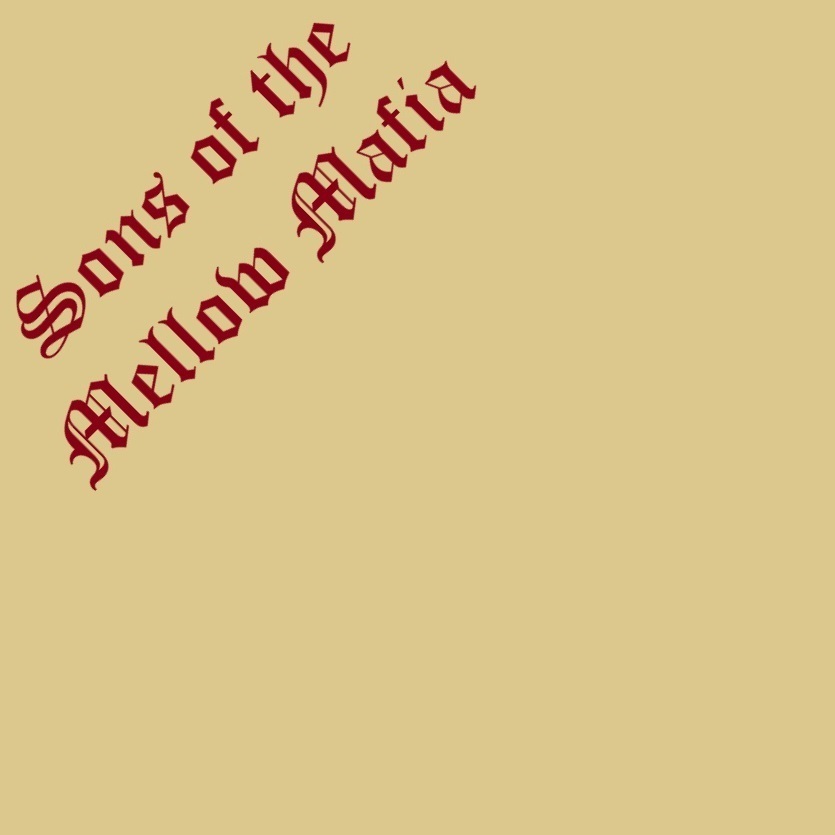
I recently had the pleasure of speaking with David from Sons Of The Mellow Mafia, a project that instantly stands out for its rich blend of sounds and heartfelt vision. Though currently a studio endeavor, it carries the spirit of a band meant for the stage. With harmonica, mandolin, upright bass, piano, and drums at its core, the music drifts through jazz, folk, blues, Americana, and pop, creating both grounded and timeless music. In our conversation, David shared the story behind the project, its inspirations, and the hopes of one day bringing Sons Of The Mellow Mafia to life on stage.
Thank you for taking the time to answer these questions. How have you been?
Good, thank you – and tired. I’ve been doing a lot of gigs lately (not with Sons of the Mellow Mafia, but with bands I play with in New England). The next few months are looking to be a little lighter, so it will be a good opportunity to focus on getting the word out about this album.
You recently released your self-titled debut album. What are the reactions so far?
Pretty positive, I’d say; I’ve gotten some nice reviews and the musicians, who hadn’t heard the finished product, all seemed happy with how it turned out. It’s only been out for two months, so hopefully it will reach many more people in the near future.
The album draws on jazz, pop, and Americana. How do you approach blending genres without losing a clear identity?
I think with instrumental music, it can be easier to cross and fuse genres. You don’t have the lyrics as a prompt, and even though lyrics can be open to multiple interpretations, they tend to guide listeners in more of a specific direction than instrumentals, so the delineation between styles doesn’t feel as clear. I also think that all genres have things in common; a good melody can transcend genres. Think about how many classical music themes have been incorporated into pop songs or other styles. Or how many rock songs have been given a classical treatment.
Many of the instrumentals are designed to capture moods like celebration or nostalgia. Can you walk us through how you translate emotions into sound?
Sometimes I use a theoretic idea as a prompt. (For me, music theory is a helpful tool – not, as it is for many people, something to be dismissed or avoided or worshiped as an end in itself). An example of this is “Agent of Change” which I wrote in response to the Uvalde school shooting. I used minor harmonies, which are darker, for most of it, but I ended on an ambiguous chord that’s neither major or minor, implying that the “change” can still be made. Sometimes I might sit down to write as a way of processing feelings but not have a specific idea of what I’m trying to do; I’ll just see what happens. “October 9th” and “Inflection Point” were written respectively after the Gaza war started and after Roe vs. Wade was overturned, and in both cases, I didn’t have a specific idea of what I wanted to write; I was just improvising and I had the fortune of coming up with material that became a finished piece. Sometimes I’m inspired by existing source material. “Uncle Funny Plays with the Bass” (inspired by a comment made by my nephew) takes quotes from “Crocodile Rock” by Elton John, “Don’t Stop Me Now” by Queen and “Go All The Way” by the Raspberries and blends them together.
Which song from the debut do you personally connect with the most, and why?
If I had to pick one, it’d be “Uncle Funny Plays With the Bass.” I don’t have kids, but I have two nephews and I am their inappropriate uncle. As I mentioned in the last question, some of the music had a more somber inspiration, so having lighter, more fun ones like “Uncle” is a nice contrast.
The Mellow Mafia of the ’70s was known for its studio mastery. How does that legacy inspire or challenge you as a band today?
The Section were a collective of studio musicians who played on a lot of adult contemporary, soft rock and album-oriented rock sessions in the 1970s and 80s. They were nicknamed the “Mellow Mafia.” I’d say the way they’ve inspired me is by their tastefulness and understatement. When I was first starting out, like many musicians, I was drawn to flash and pyrotechnics, and while I still do enjoy that sort of thing, I’ve also grown in my appreciation of musicians who can play something simple and make it their own without feeling gimmicky. I find the overall sound of those albums appealing. Some might say they’re too slick or polished, and I do think that raw, unrefined music has its place too, but when I was writing and recording these tunes, I tried to channel the Mellow Mafia.
Your songs are unpredictable yet cohesive. What does your typical songwriting or composing process look like?
It varies. Sometimes I hear a melodic idea or riff and build a tune around that; sometimes there’s a concept that I find interesting that I try to capture musically. One common theme to a lot of what I write is trying to make the more out of less. Often I’ll come up with a fairly simple idea and try to find new ways of developing it. “Komorebi” is built around a repeated phrase in the mandolin, but each time it is heard, different textures happen with it – the bass starts out arco and the drums do fills, and then they start playing a groove. “Shade from Burned Oaks” has a triplet figure that repeats a lot throughout the tune, but over different harmonies, with the melody notes being adjusted. A challenge that all composers and songwriters face – from the Renaissance to today – is finding the place where there is enough variety to keep the listener interested, but also enough repetition and familiarity to make the piece feel coherent.
Are there particular tracks from the album you enjoy playing live more than others? What makes them special in a performance setting?
I haven’t played any of them live yet; this was conceived as a studio project and for now, I’m happy to keep it that way. However, I think “Limestone Jesus” would be a fun one to play live – there’s a lot of improvisation and interplay, and it has the potential to make for a really fun, high-energy performance.
Some listeners describe your music as mellow on the surface but full of hidden energy. Do you intentionally build that subtle duality into your work?
Yes and no – some people might say that energy is in the eye (or ear) of the beholder. Energy can take different forms. It’s easy to equate energy to loudness, but that’s not always the case. As an acoustic band, we can only get so loud, so energy is found elsewhere. Energy can be created by omission; when you take stuff out and then put it back, it becomes more impactful. Just by removing an instrument for a period of time, you create change, which is a form of energy. A lot of music tends to be the same volume or tempo or feel through its duration. In my tunes I try to create an interesting contour; almost like a story. “Uncle Funny” has a loud introduction with a strong rock beat, but then it settles down when the main melody comes in, and it builds back up. “Seafarer” starts off pretty quietly and builds steadily to the end. “Breonna” starts off pretty quietly, builds to a high point at the end of the melody, drops back for the bass solo, builds through the harmonica solo and drops back again.
Which artists or bands had the strongest influence on the way this debut album sounds?
I refer to the music as “Yacht-Mericana” – influenced by the sound of 1970s/80s jazz/rock, while also having a folk/Americana type feel with the all acoustic instrumentation. I’m a big fan of yacht rock (Steely Dan in particular) so that genre has influenced my writing and playing, and I also grew up listening to a lot of folk, blues, bluegrass and other acoustic genres. I have musicians on both sides of my family, and they cut their teeth in the New York City folk scene of the 1960s. But I also listen to a lot of classical music, and though it hasn’t directly influenced this album, the decisions composers make can be instructive to consider. Why did Beethoven have the clarinets double the violins here but not there? Why does Mozart ask the cello to play “pizzicato” the first time and “arco” the second? Why does Philip Glass repeat the same thing 43 times in one work but only 42 times in another?
Were there any songs on the album that surprised even you during the recording process, maybe going in a completely different direction than expected?
Not drastically; once I decided to record remotely and take the approach of building a track up from the ground rather than having everyone in the same room and playing off of each other, I became pretty specific in the sounds I was looking for. The closest to going in a different direction from how I expected would probably be “Breonna” which I had originally recorded in a studio. It had a jazzier feel that I wasn’t sure would translate well to the remote recording process, so when I decided to record it remotely I suggested we take more of a pop/rock/country type approach. But it turned out that by the time we recorded it, we were all used to playing off of each others’ tracks without being in the same room, so the jazzier feel seemed to work.
Your music rewards repeated listens with new details. Do you consciously weave layers into your arrangements with that in mind?
I try to. As a listener, I like to have my cake and eat it too. On the first listen I want to be drawn in by a good melody, groove or some other hook, but I also want to be able to notice things on repeated listens. As a writer, I try to write music that I myself would want to listen to, so I strive to make it relatable but also unpredictable. Do the same thing over and over again it’s boring; do a new thing every time and there’s no cohesion, so I try to take the same musical material and present it in different ways. An example is “Seafarer” where I start by playing the melody on the bass with a bow, over the same harmony. Then the melody is played on the harmonica, and the harmonies change a little. At the end, the melody comes back in a different key and with a stronger beat. In “Komorebi” the changes are more subtle but they’re still there – bowed bass lines with cymbal splashes, then a groove with a steady rock beat leading into the solos.
Can you tell us about the track that was the most challenging to compose or record, and how you overcame that?
“Inflection Point.” It’s one of the more jazz-flavored tunes on the album, and jazz is tougher to record remotely than other genres because it often depends on the type of interplay between the musicians that can usually only happen when they’re in the same room. I also decided to have the piano recorded first, which in hindsight wasn’t a great way of doing it. There was also the self-inflicted issue of forgetting the beats per minute and sending the musicians click tracks that were not the correct tempo. How was it overcome? Patience and accepting some imperfection in the final result. This was one of the later tunes to be recorded, so by the time we got to it, we already all had a good feel for the remote recording process and had more of a sense of how to play off of each other even though we were not together, so that helped.
Sons of the Mellow Mafia feels cinematic at times. Do film scores or visual storytelling influence your writing?
Yes – I originally imagined myself going into writing film music when I was studying at Berklee but then my priorities changed, shifting toward live performance. But film music remains an influence on me; it’s probably most obvious in “Buck Jones”, which is named for a cowboy actor. The tune is influenced by film scores such as “Magnificent Seven” and the music of Aaron Copland.
Beyond the moods you set in the debut, what other emotional or conceptual territories are you eager to explore in future projects?
Some of the new stuff I’ve been writing, which I hope will eventually become the second album, has more of a classical influence. There’s a tune I wrote that’s a homage to Chick Corea, and it quotes from a guitar solo by the composer Francisco Tarrega in a way similar to how Chick used “Concerto de Aranjuez” by Joaquin Rodrigo in his famous tune “Spain.” There’s another one that’s an adaptation of a Tchaikovsky theme. I’m also continuing to explore minimalism; there are a few tunes like “Komorebi” that are based around a repeating idea with varying textures.
If you could describe your debut album in three words, not genre terms, but pure feeling, what would they be?
Sentimental ear worms.
That’s it. Thank you so much for your time. Is there anything you would like to say to our readers at the end of this interview?
Thanks for reading, thanks for listening and enjoy!
 Thoughts Words Action