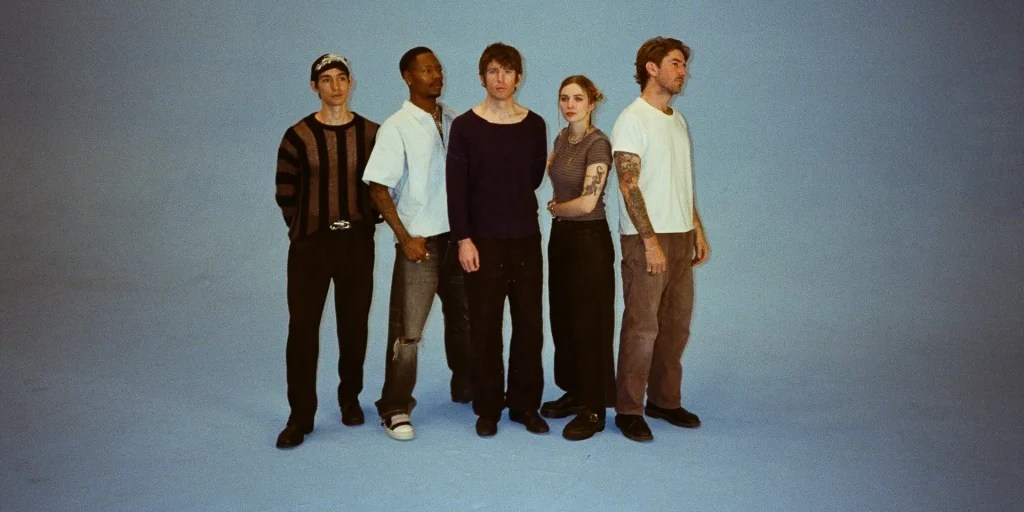

Few bands have reshaped the sound, image, and cultural presence of a genre quite like Turnstile. Emerging from the deeply-rooted Baltimore hardcore scene, Turnstile has not only revived the essence of hardcore punk but also launched it into new realms, blending it with elements of alternative rock, indie sensibilities, and arena-sized ambition. They didn’t just change the sound, they changed the perception. In doing so, they rewrote the rulebook for what hardcore music could be in the 21st century.
A New Voice From Baltimore
Founded in 2010, Turnstile was born from the remnants of other Baltimore hardcore acts, notably the band Trapped Under Ice, with drummer Brendan Yates stepping out as a frontman. Rounded out by guitarist Brady Ebert, bassist Franz Lyons, guitarist Pat McCrory, and drummer Daniel Fang, the band channeled the unrelenting energy of their local scene into something undeniably infectious. Hardcore punk has always thrived on energy, urgency, and a no-frills aesthetic. But Turnstile’s early EPs like Pressure to Succeed (2011) and Step 2 Rhythm (2013) showcased a group that was eager to stretch that definition. While rooted in the aggression of traditional hardcore, their sound already hinted at something different, groovier riffs, dynamic breakdowns, and a sense of rhythm that leaned as much into funk and alt-rock as it did hardcore.
Nonstop Feeling: Bridging Hardcore And Alt-Rock
By the time Nonstop Feeling dropped in 2015, Turnstile was no longer just a buzzed-about local act—they were the band hardcore fans couldn’t stop talking about. The album was a revelation. It offered everything hardcore demanded, breakneck tempos, pit-ready anthems, shout-along choruses, but wrapped it in production choices and songwriting flourishes typically reserved for alternative and indie rock records. Tracks like “Drop” and “Can’t Deny It” exploded with aggression, but others like “Blue by You” introduced unexpected textures, dreamy interludes, and even R&B-influenced grooves. Suddenly, a hardcore band was making music you could dance to. Critics were split at first. Purists feared Turnstile was watering down hardcore’s raw purity. But they missed the point. Turnstile wasn’t diluting the genre, they were expanding it.
Fashion, Aesthetics, And Breaking The Mold
Turnstile’s impact wasn’t just sonic. The band challenged visual and cultural norms within hardcore as well. Traditionally, hardcore’s visual palette consisted of gritty, DIY zines, black-and-white photography, and militaristic fonts. Turnstile, however, presented themselves with color. Their album artwork, stage design, and merchandise were vibrant, surreal, even psychedelic at times—far more akin to an indie rock or shoegaze band than a classic hardcore outfit. They embraced fashion as expression, not as uniform. Band members wore bright colors, nail polish, bucket hats, loose silhouettes,choices that positioned them closer to a 1990s alt-rock revival than the traditionally masculine, uniformed world of hardcore. This reimagined aesthetic gave fans permission to express themselves more freely. Hardcore became more inclusive. Turnstile opened doors.
Time & Space And The Major Label Gamble
Signing with Roadrunner Records in 2017 was a seismic moment. Historically, hardcore bands signing to major or semi-major labels drew skepticism. But Turnstile’s Time & Space (2018) proved the band wasn’t selling out—they were leveling up. The album, produced by Will Yip, was polished but not sterilized. Its 13 tracks moved like a bullet train, with only a few exceeding two minutes. The band infused their hardcore foundation with flavors of grunge, funk, and even dream pop, especially on tracks like “Moon” and “I Don’t Wanna Be Blind.” Experimental interludes like “Bomb” (featuring Diplo) were jarring, sure, but they were also bold. Turnstile’s willingness to take risks on Time & Space demonstrated their intention: they didn’t want to be just another hardcore band. They wanted to be the future of hardcore. They wanted to bring it to Coachella, to late-night TV, to audiences that had never heard of Minor Threat or Judge.
And they did.
GLOW ON: A New Era Of Hardcore, Alternative, And Indie Fusion
If Time & Space cracked the door open, GLOW ON (2021) blew it off the hinges.
Hailed by critics as a landmark album—not just in hardcore but in contemporary rock at large—GLOW ON was a masterpiece of contrast. It was heavy and delicate, violent and euphoric, raw and beautiful. Produced again by Will Yip, the album was Turnstile’s most sonically adventurous yet, merging blistering riffs with shoegaze-style textures, indie pop hooks, and even synth-laden interludes. Songs like “Mystery” and “New Heart Design” drew in fans of alternative rock and indie music, while “Blackout” and “Holiday” still fed the hardcore faithful. GLOW ON felt like a culmination of everything the band had hinted at before, but now fully realized, fully committed. The success was staggering. The album charted. It made year-end lists across the globe—from Pitchfork to NPR. Turnstile appeared on The Tonight Show and performed at festivals traditionally reserved for pop, indie, and alt-rock acts. Their audience diversified overnight. At their shows, you could spot hardcore lifers moshing beside indie attendees in Doc Martens and vintage tees. For the first time in decades, hardcore had become cool to the masses.
Never Enough: A Reawakening Or A Farewell?
On June 6th, Turnstile released Never Enough, their most introspective and genre-defying work to date. Coming after the explosive success of GLOW ON, expectations were high. But instead of simply amplifying the vibrant formula that had propelled them to global recognition, Never Enough pivoted inward, pulling back the stadium lights to explore the shadows.
From the very first track, it was clear: this was not GLOW ON 2.0.
Never Enough is a record built on tension and release. While still rooted in hardcore’s DNA, aggression, brevity, catharsis, the album leans further into alternative, post-punk, and indie experimentation. It echoes the nervy minimalism of early Interpol, the melodic dissonance of Snapcase or Fugazi, and even the ambient detours of Radiohead. Songs unfold rather than explode. The edges are less jagged, but the emotional punch hits deeper. Lyrically, Brendan Yates turns the lens inward. The anthemic optimism of Never Enough gives way to disillusionment, isolation, and vulnerability. It’s not a bleak album, but a contemplative one. One that asks what happens when the dream you chased becomes your day job. When hardcore isn’t just an escape, but a structure.
Tracks like “I Care” and “Look Out For Me” layer shimmering guitars with subtle rhythmic shifts, while “Ceiling” merges ambient synths, more art-rock than pit-ready. Still, the spirit of Turnstile remains: even in their quietest moments, there’s a pulse. Production-wise, Never Enough marks their boldest departure yet. Will Yip returns as a collaborator, but there’s a looseness here, analog textures, tape hiss, and moments of near-silence. It feels handcrafted rather than polished. Reception was predictably split, some fans already felt the absence of big choruses and mosh-worthy riffs. Others hail it as their most mature and necessary album to date. In hindsight, it might prove to be Turnstile’s Kid A, a brave deviation that redefines legacy rather than repeating success.
Critically, Never Enough demonstrates Turnstile’s fearless commitment to growth. It proves they weren’t content being “just” the face of hardcore’s renaissance. They want more, artistically, emotionally, sonically. Whether Never Enough signals a new chapter or the end of an era remains unclear. But its message is resolute: Turnstile will never be boxed in. Not by genre, expectation, or success. And maybe that’s the point. For a band that’s always thrived on change, Never Enough is exactly what it needed to be, a reminder that evolution isn’t linear.
Redefining Hardcore’s Cultural Impact
Turnstile’s impact wasn’t limited to charts and festivals. They changed how the world thought about hardcore. For years, hardcore was niche, underground, even intimidating to outsiders. It was a club with strict rules—unwritten but enforced. Turnstile rewrote those rules: You can be emotional in hardcore, you can groove instead of rage, you can wear pink, you can have fun, you can sound like The Smashing Pumpkins and still scream like Ian MacKaye.
By doing all this, Turnstile became a gateway band, not unlike At the Drive-In, Refused, or even Nirvana in their time. For many, GLOW ON was their first exposure to hardcore—an album that pulled them down a rabbit hole of Minor Threat, Gorilla Biscuits, Snapcase, and beyond. They didn’t just influence fans. They influenced bands. Within a year of GLOW ON’s release, a new wave of bands emerged—hardcore bands that weren’t afraid of melody, weird time signatures, or genre cross-pollination. Artists like Soul Blind, Militarie Gun, Scowl, and Zulu were suddenly being discussed in the same breath as Turnstile. The boundaries were shifting.
Hardcore, Indie, And The Future Of Cross-Pollination
The term “hardcore” now encompasses more than it did even a decade ago. Thanks to Turnstile, it can mean groove, experimentation, even beauty. The genre’s modern face is one of openness, creativity, and evolution. Turnstile’s crossover success also provided a blueprint for other hardcore and post-hardcore bands to explore alternative routes without losing credibility. Bands like Angel Du$t (also from Baltimore), Drug Church, and Touché Amoré now find themselves on mixed-genre lineups alongside indie and alternative staples. Labels like Run For Cover, Pure Noise, and Triple B are cultivating rosters that reflect this genre fluidity. Meanwhile, Turnstile’s own rise has sparked broader industry recognition. They’ve played with everyone, linking hardcore’s past to alternative’s present. In a music world defined by playlists and genreless listening, Turnstile is the perfect storm: aggressive yet accessible, innovative yet rooted, wild yet refined.
Why Turnstile Matters More Than Ever
Turnstile matters because they remind us that evolution is not betrayal. That growth is not dilution. That hardcore music, a genre born from resistance, rage, and rebellion, can also be expansive, joyful, inclusive, and forward-thinking. They proved that a band can break rules without losing their identity. That you can scream and still smile. That you can build a community not just on anger, but on celebration.
In an era where algorithms divide music into neatly labeled categories, Turnstile’s very existence is a protest. They are hardcore. They are alternative. They are indie. They are everything at once—and proudly so.
The Glow Goes On
If Nonstop Feeling introduced a spark and Time & Space added fuel, then GLOW ON was the fire that lit a path forward. And now with Never Enough, Turnstile has redefined what it means to be a hardcore band in the modern age, not by rejecting the past, but by embracing the future. The band’s journey from basement shows to festival headliners is more than a success story. It’s a cultural shift. One that suggests hardcore can be as multifaceted, inclusive, and wide-reaching as any other genre. The glow, it seems, is here to stay.
 Thoughts Words Action