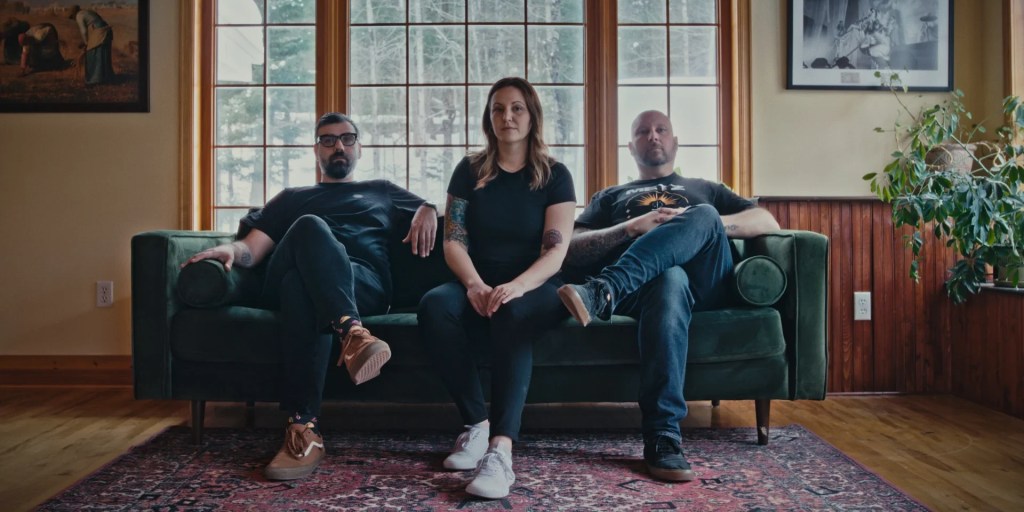
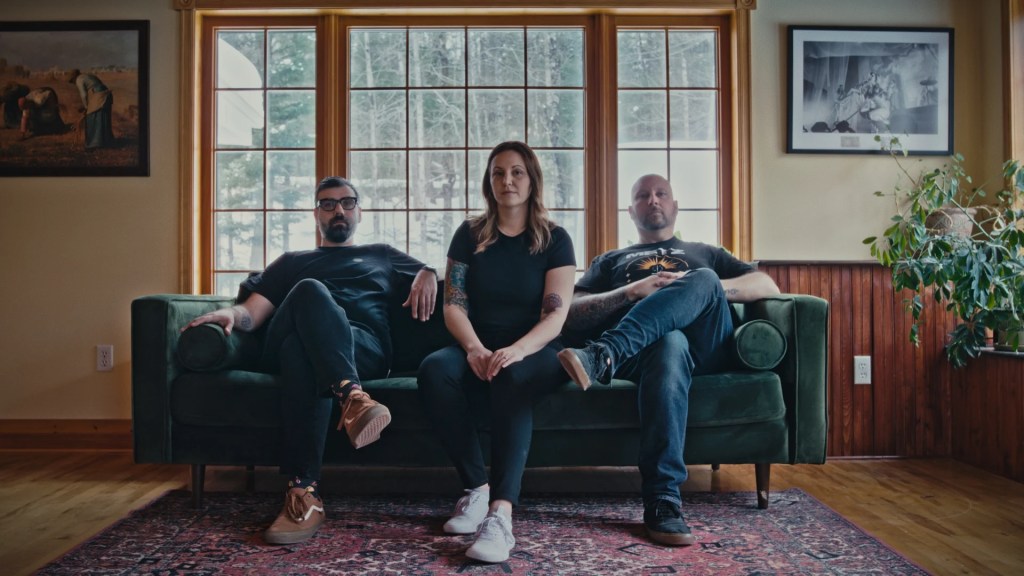
In this exclusive interview, we catch up with Chris from The Last Mile to talk about their latest album Holding On To Hope. Known for their fierce blend of hardcore and punk, the band continues to turn heads with raw energy and heartfelt songwriting. We spoke about the inspiration behind the new record, their creative process, and what fuels their explosive live performances.
As an album title, Holding On To Hope simultaneously resonates with defiance and vulnerability. What does “hope” mean to you in the context of today’s world, and how did that concept guide the tone and content of the record?
Chris: Not to be too dystopian, but it’s so hard to find hope in today’s world. I see hope in the people protesting around the world at the injustices and genocide being perpetrated by people in power, I find hope in my friends’ children, who, we all know, are going to have a very hard time, but their parents are doing their best to raise strong, intelligent, emotional humans that can persevere and hopefully prosper and make the world a better place. I found hope in the overwhelming support Lou Koller, the singer for Sick Of It All, received when he was diagnosed with cancer. Normally whenever something like that happens, there’s a faction of people online who will denounce it but this was a rare situation where a good person received 100% support from everyone. They were/are an important band to so many people with both their music and lyrics and also as an example of how to conduct yourself as an artist. In terms of the record, for me, there are fleeting moments of hope in songs like Farewell For Now, which is a love letter to playing music and the relationships that are made by this amazing experience, Anything is for anyone who has been shit on in their life. Life is unnecessarily hard and we lose track of what is really important to us, individually and as a society. This song is hopefully a reminder to people to block out the noise and just try to lead a fulfilling life that is true to yourself. I find hope in the little victories. My mom had been ill for a few years and Stephanie and I were taking care of her and whenever she had a good day, it felt like there was a chance that things could change. You have to take things as they come. I have a tendency to worst case scenario things in real time so when something good happens, those thoughts disappear and I can focus on what’s important to me. You have to find hope wherever you can.
Your sound walks a tightrope between hardcore and punk, uncompromising, but also anthemic and emotionally driven. How did you balance between these qualities while writing and recording this album?
Chris: It’s not something intentional. I’ve always played in bands that blur lines between styles. I think it’s a reflection of the collective influences of the members. I may bring a straight up hardcore song to the band and by the time it’s finished, it will sound nothing like what I had originally heard in my head. And to be honest, we write songs without thinking of the end result of an album. Because of that, the main issue we have is trying to figure out what order the songs should be in, on the record. I’ve said it before, the songs are an honest reflection of what is happening at that moment of its creation and we tend to write from an emotional and personal point of view rather than hypotheticals. I would love to say that there is an intentional reason for the sound of our band, but it’s just us.
The record explores weighty themes, grief, caregiving, gender inequality, and emotional repression, without ever feeling self-indulgent. How do you approach writing about personal and political issues without losing the immediacy that punk demands?
Chris: I would like to believe that people can see through the bullshit. There is nothing special about us, as individuals. We live, we work, we love, we are happy, we are sad, angry, you name it. We are just extremely fortunate to have an outlet where we can say what’s on our minds. Sometimes it feels like you’re screaming into the void, but what we say is honest and 9 times out 10 a lived experience. I think that because we are constantly writing partial lyrics or song ideas, what is expressed is visceral and often times raw. I think that intensity keeps the immediacy of the song at the forefront. As for not feeling self-indulgent, I don’t really know how to answer that because the songs that I write, represent me and how I’m feeling. If they resonate with someone else then that is an incredible thing. That’s one of the things that I love about music; the connection that a certain melody or lyric can have with you. The deep connection that can come from feeling like you’re not alone. Life is hard and it’s easy to lose yourself if you’re not careful. Music is salvation for so many people, myself included.
Jesse Gander has worked with you before and has an impressive resume of bands that bring intensity to the tape. What does your creative chemistry with him look like in the studio, and how did it evolve on this album?
Chris: I’ve been friends with Jesse since the mid late 90’s. his band, DBS and my band at the time did a ton of touring together and we have been great friends ever since. He has mixed every release we have done but this was the first time we had the chance to actually record with him. We flew out to Vancouver to record in his studio, Raincity Recorders, and it was absolutely amazing. Jesse is incredibly talented in many facets of life, but as an engineer and producer, he has a gift for getting the best out of the people he works with without it ever feeling overbearing or a problem. Because he has no ego, he would suggest an idea, often times we would try it, and if we didn’t like it, that was it, it was done. He would never push too hard, he wants to let the band be the band and not be what he thinks the band should sound like. We were very well prepared for the studio so we were able to take the time to set everything up so that it sounded amazing and then we would just start recording. When we record, we all play in the same room, like at a practice and the way Jesse’s studio is setup, you can’t really see him so it really makes it seem like it’s just the four of us playing, which is really nice.
Mastering at The Blasting Room with Jason Livermore adds another layer of pedigree to this release. What did that final step bring to the sonic character of your album?
Chris: We’ve actually had amazing mastering engineers for each of our previous releases but working with Jason has always been a bucket list person for all if us. Luckily, the drummer who played on our first record, Josh Carothers, and Jason are best friends. I was talking to Josh one day about Jason and he just messaged him and the message literally said, “Jason, you have to master my friends record,” and he replied “ok, tell them to send it to me.” He was so easy to work with and was such a nice person. His skill is in recognizing the subtle things that will make your record sound incredible. Mastering is such an interesting ability to make an already great sounding album sound better without changing the sound of the record. Jason made the record sound better. I know that’s oversimplified but it’s the truth. It just sounds better.
You’ve played alongside an incredibly eclectic mix of bands, from NOFX to La Armada to Petrol Girls. How have those live experiences influenced your growth as songwriters and performers?
Chris: It’s equally an incredible thing to watch the crowd sing along and lose their mind to their favourite bands as it is to watch a band that no one knows blow people’s minds with their live show. As much fun as it is recording and putting out records, we all believe that where a band needs to be at their best is on stage. We’ve had the privilege of sharing the stage with some of the best. I think, for me, the most influential band in recent years has been Comeback Kid. We did a small tour with them in Colombia last year and the energy they play with is unmatched. It’s even more incredible to know they’ve been doing this for 25 years. We put on an energetic live show but I feel like they made us step up our stage performance. I don’t know if these live performances have influenced our songwriting. Not consciously, at least. It would be cool to intentionally write an arena anthem or a song that is guaranteed to be a sing a long, but as I’ve said throughout this interview, we just write what comes to us, we don’t force anything to try to be like anything.
There’s an unfiltered rawness encapsulated in this record, yet the arrangements are clearly considered. Can you take us inside your songwriting process? Do songs tend to come from jams, individual writing, or something else entirely?
Chris: Musically, I write the songs then bring them to everyone and it’s at that point where they really come to life and become fully formed. The lyrics often come later. Sometimes I’ll have a complete song lyric written out and try to form a song around them but that’s rare. I am constantly writing partial lyrics when an idea pops into my head and when we have songs, I will revisit them and work off of them or put some together. I’ve been in a lot of bands over the years, and I perform as a solo artist. Over the years I realized that I am a good songwriter but only to a certain point. To make a song I’ve written the best it can be, I need input from creative people I trust. Our band is full of extremely talented musicians and people. I feel very fortunate to be able to create with these people. Mike is a classically trained musician and has an amazing ear for melody and harmony, Stephanie is a monster bass player, great lyricist, and a phenomenal singer, and Emilien is just a savant on the drums. No one has any ego when it comes to writing. We will always try someone’s idea and decide from there. Often times songs will come together quickly and then when we go to record them, we will make adjustments on the spot. That is Mike’s gift. If a song is taking too long and it’s just not coming together naturally, it will often be left and potentially revisited at a later date. It has to come together with relative ease.
You’ve managed to preserve a grassroots energy while pushing your sound forward. As the band continues to evolve, how do you stay grounded in your DIY ethics?
Chris: DIY ethics are not a hard thing to maintain. That being said, I personally started playing shows in the early mid 90’s and any modicum of success was seen as “selling out” so maintaining your DIY cred was of paramount importance. Things have changed a lot since then. And my view on the parameters of DIY have as well. I still believe that everyone should be treated fairly, I believe that being part of an alternative community is a political stance, and anything you can do on your own, you should, but it’s ok to accept help. I know so many “DIY” bands with booking agents and management that play the role more than live by the ethos. We had some help from a booking agent for three shows on our last European tour and to be honest they were far from the best shows of the tour. Nor were they the best paying shows of the tour. A couple of the promoters that we dealt with just booked the venue and did nothing else. They did it just because the booking agent promised them that if they helped us with a show, they could do the XYZ bigger band show on their roster. They had no interest in us as a band, or any of our politics and just took the financial hit because they knew they would make money off the bigger show. That kind of attitude sucks to me. I would rather play a DIY show knowing that everyone involved was actively part of this show happening because they wanted it to happen. DIY shows strengthen local scenes, allow bands from all over the world to play, to meet other bands and people, and share ideas and contacts, etc. I love being a part of the DIY community. Yes, we get to do bigger shows but we will always remain tied to the DIY scene. When we played with NOFX, we took that moment to shine a light on our local scene. Between two songs we spoke about how it’s very cool that people are willing to shell out tons of money to see legacy bands but that our local scene was worth checking out, needed support, and we named a ton of local bands, podcasts, and venues. I have no idea if anyone was listening but we had a much bigger platform than we are used to and wanted to try to help the diy community.
Festival appearances in both North America and Europe have exposed you to very different punk cultures. Have those contrasts taught you anything new about your own music or how you connect with audiences?
Chris: I don’t know if it’s anything new but we have realized very quickly that we can play any type of festival. We have played full on pop punk fests, Hardcore fests, extremely mixed bill festivals, and I always find it really inspiring to see open minded people who support music in general. I think stylistically our music can resonate with people who listen to many different types of music. Connecting with people is very important to us. We always try to create a rapport with the audience. Communication and expression of ideas is as important as the music, to me. I do find that crowds in Europe and Central & South America are more open minded than crowds where we’re from. I don’t know if it’s because we’re so spoiled with so many bands and so many shows but a lot of people are kind of blasé about bands and participate passively. And we’re from Canada, I can’t even imagine the amount of shows there are every night in most major cities in the US. I feel very fortunate to play in a band that can play at many different types of festivals.
Many tracks on the album seem to reflect not only on trauma but on resilience. Was there a moment in the writing or recording process where that catharsis felt particularly real or necessary?
Chris: I think there was only one really cathartic moment, for me. We were supposed to have a guest vocalist for the end of Broadstrokes but in the end it didn’t work out. We were back in Montreal at this point, my mother had just passed away and I was an absolute wreck. I was so sad and so angry. I wrote the lines and we went to our friend Patrick’s studio to record them and I just screamed every ounce of pain into the mic as if my life depended on it. I literally screamed until I couldn’t even speak anymore. I literally put everything I had into it. It was exactly what I needed at that moment.
With such a powerful, high-intensity live shows, how do you ensure the recorded versions of your songs still feel visceral and immediate?
Chris: That is always an issue. If you feel like we captured our live sound on the record, thank you, that means a lot to us. So many bands have great live shows but really stale recordings. They sound amazing, and the songs are the same, but the life just isn’t in them. One thing we do is that we record live, the four of us in a room, playing together. Always. This way, the subtle nuances from a smile or glance or the energy of everyone playing together, like at a practice or a show, is there. It lends the human factor to it. I think that a lot of bands seek perfection in their recordings at the expense of the feeling. The reality is that no one will notice the minutia. Yes, there are little things here and there on any recording that we play on that will bug us, but to the average listener, they’ll never hear it. You have to make peace with it haha. With exception of the drummer, if you make a mistake, you keep going. Sometimes you’ll get the most amazing take of a song but at one point, a guitar missed a note. With digital recording, it’s easier than ever to fix these mistakes. But the base track that we fix is the one that held the energy. We try our best to play on recordings like we do live.
What do you hope this album says about The Last Mile right now, not just musically, but philosophically and emotionally?
Chris: Great question. I hope it resonates with people in the fact that life is hard. It is really hard, but you’re not alone. Living in the past is a great way to not live in the present. Marketing has us grasping for what we used to love to distract us from the horror that is the current world. And it’s working. I hope that people realize that it’s ok to feel your feelings and it’s ok to share them. Talk to your friends, talk to a professional, please just talk to someone about it who has your best interest at heart. I hope that people find joy in the songs. I hope they find meaning or understanding. We want to be a light in these dark times for ourselves and anyone listening to our music. I understand how important music was and still is to me. I have serious doubts if I would still be alive without music. We are no different from anyone else going through life. We are just lucky enough to have found each other and an avenue to express ourselves in a positive way. We are trying to make our world a better, safer, encouraging and loving space. I hope people get that and can create that for themselves.
Looking ahead, do you see The Last Mile branching out into even more collaborative or cross-genre territory, or is the goal to keep refining the core of what you’ve already built?
Chris: We are always open to anything. We all listen to so much different music in our own lives and we play different styles of music outside of The Last Mile. Mike plays for many different artists, I release music as a solo artist and have appeared on quite a few other artists albums, Stephanie and Mike had a post punk band together before Mike joined TLM, and Bertrand plays in a pop punk band, in France. I feel like each of our records has been a progression from the last one and we’re all really happy with that. Releasing the same record over and over is something that I never understood. None of us do. I think the core is us and we will keep building on that but as I said before, one of our greatest traits is that there are no boundaries to what style of music we “have” to play. Whatever happens next hasn’t been written yet.
 Thoughts Words Action