

Best known for his deep involvement in the ska scene as a musician, podcaster, and writer, Wasserman returns with Soul Salvation: A Gen X Love Letter To The English Beat, a heartfelt tribute to one of the genre’s most influential bands. In our conversation, we delved into the making of the book, his lifelong admiration for the English Beat, and why their sound, melding punk, pop, reggae, and soul, was more than just music. We explored the band’s lasting impact not only on ska but also on musicians across genres, from Eddie Vedder to Pete Townshend, who found inspiration in their politically charged grooves and emotionally resonant songwriting. With Wasserman’s sharp insights and infectious passion, this interview is as much a celebration of the English Beat’s legacy as it is a look into what keeps ska’s soul alive.
Order the book HERE
“Soul Salvation” blends memoir with oral history. At what point did your personal love for the English Beat evolve into the impulse to document their legacy?
Marc: My connection to the English Beat was always deeply personal, and that bond grew from being a devoted listener to realizing that their music had become a soundtrack to my life. As a teenager in the early 80s, their albums were a bridge between my inner world and the external chaos that defined the era. But it wasn’t until I began my involvement in the American ska scene, that I truly understood the impact their music had on a larger cultural level. The music of the English Beat wasn’t just about listening—it was a form of identification, a way to navigate the complexity of adolescence and the political upheavals of the time. By the time I began writing Soul Salvation, it was clear that their legacy wasn’t just a part of my personal history; it was a crucial chapter in the larger story of how music shaped youth culture in the U.S. and beyond. The impulse to document their legacy grew from a desire to preserve not only their artistic contributions but the emotional resonance their music had for an entire generation – Generation X. It wasn’t just about the records they made; it was about the connections they forged through their sound, the sense of solidarity they created in listeners like me, and the way they expanded the boundaries of what popular music could represent. That impulse to document their story came when I realized how significant the band’s music was not just in terms of its innovation, but in how it helped foster a community of people who felt seen and heard, much like I did.
The English Beat’s Special Beat Service seems to have served as both soundtrack and spark for a generation. Why do you think that particular album struck such a deep chord with American listeners?
Marc: Special Beat Service arrived during the height of the Reagan/Thatcher Cold War era, when American youth were searching for authenticity, identity, and change. What made this album resonate so deeply was its ability to balance personal reflection with political insight, set against the backdrop of infectious, genre-defying music. For American listeners, Special Beat Service wasn’t just another album—it was a reflection of the confusion, optimism, and frustration we were all feeling. The English Beat’s diverse mix of pop, punk, latin and reggae rhythms, as seen in tracks like “Save It For Later” and “I Confess,” allowed listeners to experience both catharsis and clarity. These were songs that weren’t afraid to delve into the messy emotions of growing up, while still being jubilant, making them both a mirror and an escape. The music spoke to our collective desire to break free from the status quo, to demand more from life, and to find solidarity in our struggles. For many, it wasn’t just the sound that struck a chord—it was the way it reflected their own battles and aspirations. The English Beat managed to articulate something deeply American about the desire for reinvention, while still staying true to their British roots. And that, I think, is why Special Beat Service became such a powerful force for so many listeners—it captured the universal feeling of needing music to speak your truth when words alone couldn’t.

You feature voices like Eddie Vedder and Pete Townshend. What do these artists’ reflections reveal about the English Beat’s ripple effect across genres?
Marc: The reflections of artists like Eddie Vedder and Pete Townshend speak volumes about the deep and wide-ranging impact the English Beat had on musicians across genres. The band’s influence was profound not just in the ska and reggae movements but also in rock and alternative music. Eddie Vedder, for instance, often cited the English Beat as an inspiration. He has spoken about seeing the band live during the 1982 US Festival and was so moved by them that he wrote the Pearl Jam song “Better Man” which is based on the same chord structure as “Save It For Later.”. What I find so compelling is how Vedder connects the emotional weight of Special Beat Service and “Save It For Later”—its rawness, its social critique—with the angst and depth that defined the early ‘90s grunge scene. For Vedder and many others, the English Beat represented a sonic pathway that combined rebellious energy with deep introspection, an ethos that would later be mirrored in the music of Pearl Jam. I think it speaks volumes that during the summer of 2024, Vedder contributed a previously unreleased solo version of “Save It For Later” to the soundtrack of the critically acclaimed TV show “The Bear.” And so, 42 years after its release in 1982, the song and the English Beat continued to tug at the heartstrings of viewers and listeners again.
Similarly, Pete Townshend’s reflections point to the way the English Beat redefined the boundaries of rock music. As one of the key figures in British rock, Townshend saw in the band’s fusion of genres not only a musical innovation but a philosophical one. Townshend performed the song live for the first time with his backing band the Deep End at the Brixton Academy in November 1985. In Townshend’s hands, the power of the song seemed to meet its destiny. Townshend may have been the right artist at the right time in his career to sing the song as it was written to be sung. The song soon became a regular staple of Townshend’s live set and he released both studio and live versions of his rendition which included David Gilmour of Pink Floyd on guitar. If you’ve never heard Townshend’s version, I urge you to listen to it immediately. It might change your life and it might make you cry.
There’s a deep archival rigor to Soul Salvation. What was the most surprising thing you uncovered during your research?
Marc: The most surprising thing I uncovered during my research for Soul Salvation was the depth of the internal conflicts the English Beat experienced during the creation of Special Beat Service. These tensions weren’t just about creative differences—they were about the emotional toll the band was enduring in the process of trying to balance commercial success with artistic integrity. As I mention in the Soul Salvation podcast, what fascinated me was how much the friction within the band led to some of their most groundbreaking work. The album’s experimental sound—blending new wave, reggae, and punk—was as much a product of those struggles as it was of their desire to push musical boundaries. It became clear that the turmoil within the band led them to abandon their comfort zones, which ultimately gave birth to a record that captured both the exhaustion and the creative liberation they were feeling. It was a reminder that sometimes the most innovative work comes from a place of friction and discomfort. The discovery of these hidden struggles, revealed just how much of their personal lives shaped the public legacy of their music. It was a humbling realization that the English Beat’s greatest strength wasn’t just in their sound, but in their vulnerability and willingness to confront their challenges head-on.
As a Gen X fan reflecting on a distinctly British band, what do you think American audiences heard in the English Beat that perhaps British ones didn’t or couldn’t?
Marc: American audiences connected with the English Beat’s music in a way that was deeply personal and relationship-oriented, which stood in contrast to the more confrontational, politically charged songs that initially resonated with British listeners. In the early days, British audiences were drawn to tracks like “Stand Down Margaret” and “Big Shot,” which directly addressed political figures and societal issues, and served as songs of resistance against the establishment. For them, the English Beat’s music was a rallying cry, an urgent call to confront the issues of the time head-on.
However, when Special Beat Service came along, American audiences found something different in the English Beat’s sound. While the band retained its political edge, the album’s themes shifted to explore more personal, intimate subjects—relationships, emotional complexity, and the struggles of everyday life. Songs like “Save It For Later” and “End Of The Party” offered a window into vulnerability and introspection, which resonated deeply with American listeners, many of whom were grappling with their own sense of disillusionment and yearning for connection. In this sense, Special Beat Service felt like a mirror to American youth culture in the ’80s, where personal relationships and identity struggles were at the forefront.
British audiences, having already embraced the English Beat’s more direct, politically charged messages, were less inclined to gravitate toward the album’s more introspective themes. In contrast, American listeners—especially Gen Xers—saw Special Beat Service as a soundtrack to their own emotional lives. The shift from the confrontational tone of earlier hits to the more personal focus of this album marked a profound connection for American fans, who were drawn to the deeper, more relatable themes of love, self-doubt, and emotional complexity that permeated the record. It also didn’t hurt that the band made compelling and visually attractive videos for “Save It For Later” and “I Confess” that regularly aired during the height and popularity of MTV in America.

Jay Boberg’s foreword gives rare insight into how the band was marketed in the U.S. How do you see the role of labels like I.R.S. in shaping what we now call alternative music?
Marc: I.R.S. Records was a visionary label, and their work with the English Beat exemplifies why they played such a pivotal role in the alternative music scene. Boberg and his team at the label understood that the English Beat wasn’t just another 2 Tone band—they were a part of something much larger. I.R.S. saw the potential for the band to bridge cultural and musical divides, and they knew that the band’s appeal wasn’t limited to one particular audience. By marketing the English Beat in a way that embraced their eclectic mix of genres, I.R.S. set the stage for what would become the alternative music explosion of the ’80s and ’90s.
The label’s willingness to take risks with genre-defying artists like the English Beat proved that the mainstream music industry could embrace non-conformity without compromising the authenticity of the artist. Their approach was revolutionary because it wasn’t just about selling records—it was about recognizing the power of music to challenge the status quo. Through their work with I.R.S., the English Beat became a foundational part of the alternative music movement, helping to shape the sound and ethos of what we now think of as alternative rock.
How did writing Soul Salvation differ from your process with SkaBOOM!, a book that spotlighted a more underground, American story?
Marc: Writing Soul Salvation felt like revisiting a deeply personal chapter of my life, whereas SkaBOOM! was about uncovering a story that had been largely ignored. SkaBOOM! was an exploration of the American ska scene, which was, at the time, underrepresented and still very much in its infancy. My goal with that book was to give voice to a scene that had been overlooked by mainstream media. With Soul Salvation, the story was different. The English Beat had already made their mark on history, but what I wanted to do was capture the full emotional and cultural significance of their music. While SkaBOOM! focused on documenting and preserving the stories of American ska’s grassroots movement, Soul Salvation was more about reflecting on how a band from a different country had such a profound effect on me and on American culture. It was a more introspective process, and in many ways, it was a way to pay tribute to a band that had meant so much to me personally.
You describe the book as part memoir. What was it like revisiting your younger self through the lens of a record collection?
Marc: Revisiting my younger self through my record collection was a cathartic experience. I started working on the book shortly after my mother passed away in 2021 and I was reflecting on a specific time in the early 80s that coincided with me falling in love with music and coming of age. The English Beat’s albums, in particular, had such a profound impact on me. Each of the band’s albums was a snapshot of a moment in time—an emotional and personal marker of where I was in my life. They weren’t just records I played—they were companions during some of my most formative and challenging years. Listening to them again, as I reflected in Soul Salvation, helped me understand how deeply they influenced my sense of identity and my connection to the world around me. The records became a way to revisit the struggles and joys of youth, and it was almost like reconnecting with an old friend. It allowed me to see how far I had come, both as a person and as a writer, and it deepened my understanding of why this music was so crucial to my own journey.
Many fans see the English Beat as a gateway into a wider world—ska, soul, punk, reggae. Do you think that cross-genre approach made their message more accessible or more radical?
Marc: The English Beat’s cross-genre approach was both an act of accessibility and radicalism, and I believe it was this very fusion that gave their music its transformative power. What made the English Beat so compelling wasn’t just that they could blend ska, soul, punk, and reggae—they didn’t just mix genres for the sake of experimentation, they used this blend to create a platform for deeper, more complex messages. As I explore in Soul Salvation, their ability to make genres like punk and reggae feel seamlessly intertwined made their message more accessible, but it also made it more radical. For fans, it was a gateway to new sounds and new ideas.
The fusion of these genres made the band’s music feel both fresh and radical. Punk rock was about breaking free from norms, and reggae was about unity and resistance to oppression, and these themes were deeply radical. By blending them, the English Beat spoke to people from multiple cultural backgrounds, giving each listener something to connect with. Their music became a point of entry not just into different musical styles but into a new way of thinking about unity, race, and identity. In a sense, their approach was an invitation to break down the barriers between genres—and by doing so, between people. And that was revolutionary.
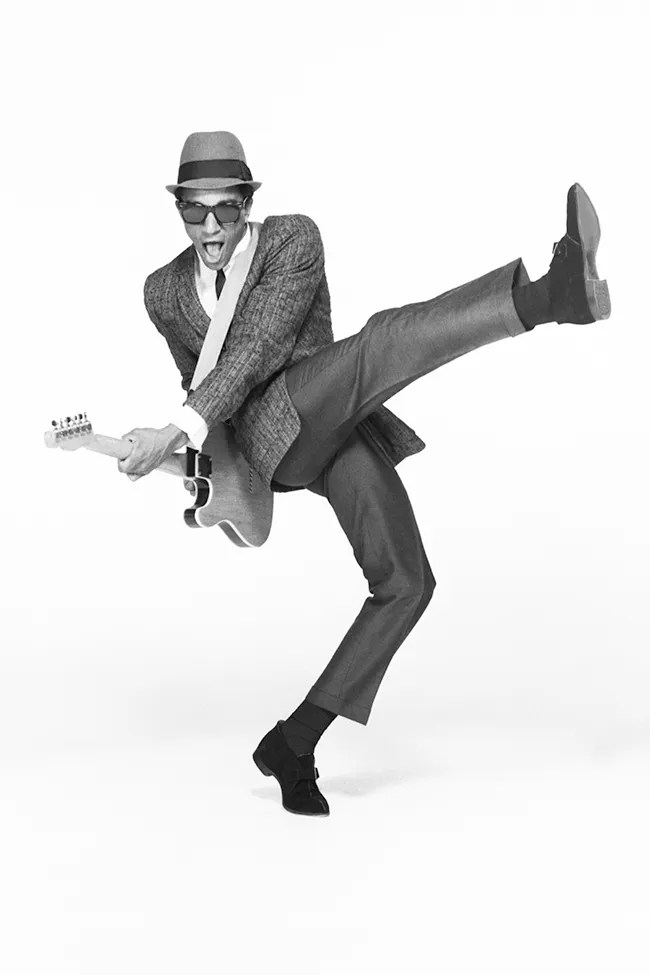
The English Beat helped lay the groundwork for the American indie explosion of the ’80s. What do you think today’s musicians could learn from their ethos?
Marc: What today’s musicians can learn from them is the importance of staying true to their unique vision, even when it challenges the status quo. The English Beat didn’t try to fit into one box. They didn’t tailor their sound to the mainstream—rather, they let their influences guide them and created something new by melding genres in ways that hadn’t been done before. Their success came from their authenticity and their refusal to be confined by industry expectations.
Moreover, their work was always grounded in a sense of social responsibility. The band used their platform to speak on issues of nuclear disarmament, equality, and political engagement, making their music not only emotionally resonant but politically charged. Today, musicians still have the power to shape the conversation around important social issues, and the English Beat’s example reminds us that music can be both a deeply personal form of expression and a tool for broader societal change. Musicians today should remember that it’s not enough to simply make music—it’s about using that music to challenge, uplift, and inspire others.
You’ve dedicated much of your writing to elevating ska and reggae’s American lineage. Why do you think so many of those stories remained untold for so long?
Marc: The stories of American ska and reggae have been overlooked for a variety of reasons, but at its core, it comes down to a lack of recognition for the cultural contributions of these genres in shaping the broader American musical landscape. As I discuss in SkaBOOM!, American ska and reggae have always existed in the shadow of their British counterparts, where the 2 Tone movement captured much of the international spotlight. But the truth is, the American scene was just as vibrant, and just as influential, but its story was often sidelined.
Part of the reason these stories remained untold is the way that mainstream culture often marginalizes genres that emerge from subcultures or from communities that are underrepresented in the broader media narrative. While reggae and ska flourished in places like Jamaica, they had a unique evolution in the U.S. that was shaped by local scenes, often outside the limelight. The American version of ska wasn’t just about the music—it was about the DIY spirit, the cultural exchange between different communities, and the ways in which marginalized voices found expression through these genres. But because these scenes were so local and underground, they didn’t receive the same attention as the more commercially visible British counterparts.
Additionally, there was a certain racial tension that influenced the reception of these genres. In the SkaBOOM! podcast, I talk about how ska in America was at times pigeonholed or dismissed because it didn’t fit into either the mainstream rock or the urban black music categories. But these were stories of perseverance, of musicians and fans creating something that was uniquely American, blending influences from reggae, punk, and the African-American experience. These stories were left untold because they didn’t conform to the mainstream’s expectations of what “acceptable” music should be, but by documenting them, I’ve been able to highlight the beauty and resilience of these communities and the music they created.
As someone who’s both a fan and a historian, how do you balance reverence with objectivity when writing about music that changed your life?
Marc: Balancing reverence with objectivity is a delicate dance. As I reflect on in the Soul Salvation podcast, writing about the English Beat required me to look at them not only through the lens of my personal connection to their music but also as a historian documenting a broader cultural phenomenon. My deep love for their music and the ways it shaped my life could have easily clouded my judgment, but I knew it was important to present a fair and honest account of their journey. This is something I kept in mind throughout both Soul Salvation and SkaBOOM!.
I had to remind myself that while I had an emotional connection to the music, I needed to step back and see the larger context. This involved diving into interviews, researching the political and social impact of their work, and acknowledging the complexity of their challenges. The English Beat wasn’t perfect, and neither were their creative decisions. There were conflicts within the band, moments of doubt, and struggles to maintain artistic integrity in the face of commercial pressures. As much as I revere their legacy, I had to honor the whole story—the messy, beautiful, imperfect truth that made their music so human. The goal was to provide an honest portrayal of their artistic evolution while still capturing the deep emotional connection I had to their work.
There’s something inherently political in both ska and the English Beat’s music. Did the current moment shape how you approached telling this story?
Marc: Absolutely. The political urgency in ska, and especially in the English Beat’s music, feels just as relevant today as it did during their time. The English Beat’s music, with its themes of unity, resistance, and social justice, speaks directly to the issues we are facing today. The socio-political climate in America right now may be even more challenging than it was 40 year ago, but the need for solidarity and understanding is timeless and more important than ever.
Writing about the English Beat in the current moment was particularly poignant because their messages of hope and unity resonate with the ongoing struggles for racial justice, LGBTQ+ rights, and economic equality which are currently under attack. As I wrote the book, I found myself continually reflecting on how their music had given people a voice during the 1980s, and how that voice still speaks to us now, especially in moments of social and political turmoil. The English Beat didn’t just create music—they created a space for people to come together, to question the status quo, and to imagine a better world. In today’s climate, their music feels as urgent as ever, and I made sure to emphasize that in my writing.
In curating this oral history, were there any interviews that felt especially emotional or transformative for you as a writer?
Marc: Yes, there were several interviews that had a profound emotional impact on me, but two in particular stand out for me. One of the most significant was with Frank Gargani, a photographer whose work captured some of the most iconic moments of the early Los Angeles music scene, including one of the first American ska bands, The Untouchables. One of the most powerful moments in our conversation was when Frank spoke about his iconic photograph of The Untouchables’ guitarist, Clyde Grimes, which later became the cover image for SkaBOOM!—the visual centerpiece of the book. Frank described how he captured that moment of intense focus from Clyde, a perfect embodiment of the spirit and energy of the ska movement in the U.S. Clyde’s presence in that photograph felt like a snapshot of the emotional rawness of the time—young, defiant, and determined to express something profound through music. What struck me most was Frank’s reflection on the scene itself—the atmosphere in Los Angeles at the time, the underground nature of the early ska shows, and how these images were never just about the music but about the passion and camaraderie that came with being part of something new and rebellious. His ability to capture the intersection of personal emotion and public performance made me realize how much the visual documentation of the movement was as important as the music itself.
The second transformative interview I had was with David Wright, who had a fascinating and deeply personal journey with the English Beat. David reflected on his early days with the band, when he was the tour manager, and how he was brought in during a time of transition, when the English Beat was seeking to evolve and refine their sound. What I found particularly fascinating was how David’s experience as a tour manager gave him a unique perspective on the band’s dynamics and their emotional journey. As the tour manager, he had a front-row seat to the internal struggles and creative tensions within the band. By the time he transitioned into the role of keyboardist, he brought a deep understanding of the band’s chemistry and what was needed to capture the emotional intensity of their sound.
David’s contributions were crucial to Special Beat Service because his piano playing added depth and texture to the album’s sonic palette. He was instrumental in creating the lush, atmospheric soundscapes that helped elevate tracks like “End Of The Party” and “I Confess.” But beyond his musical contributions, David also provided an emotional grounding for the band during a particularly tumultuous period. His recollections of working with the band during this time gave me a clearer picture of how the band navigated the pressures of success while trying to stay true to their artistic integrity.
What do you hope younger readers, those who weren’t around for Special Beat Service, take away from Soul Salvation?
Marc: I hope younger readers take away a deeper understanding of how music can serve as both a reflection and a catalyst for cultural change. Soul Salvation is about more than just a band or an album—it’s about the way music can connect us to our emotions, our identity, and the world around us. For those who weren’t around for Special Beat Service, I want them to understand that the English Beat’s music wasn’t just something to dance to—it was something to live by. The themes of love, resistance, and unity in their music were a call to action then, and they remain just as powerful today.
In a world that feels increasingly fragmented, I hope readers can appreciate the way the English Beat brought people together through their music. Their ability to combine infectious rhythms with deep social and personal messages made them a beacon for those seeking solidarity, especially in a time of social and political upheaval. My hope is that younger generations who discover Soul Salvation will not only learn about the music, but also about the power of art to unite us and inspire change.
 Thoughts Words Action