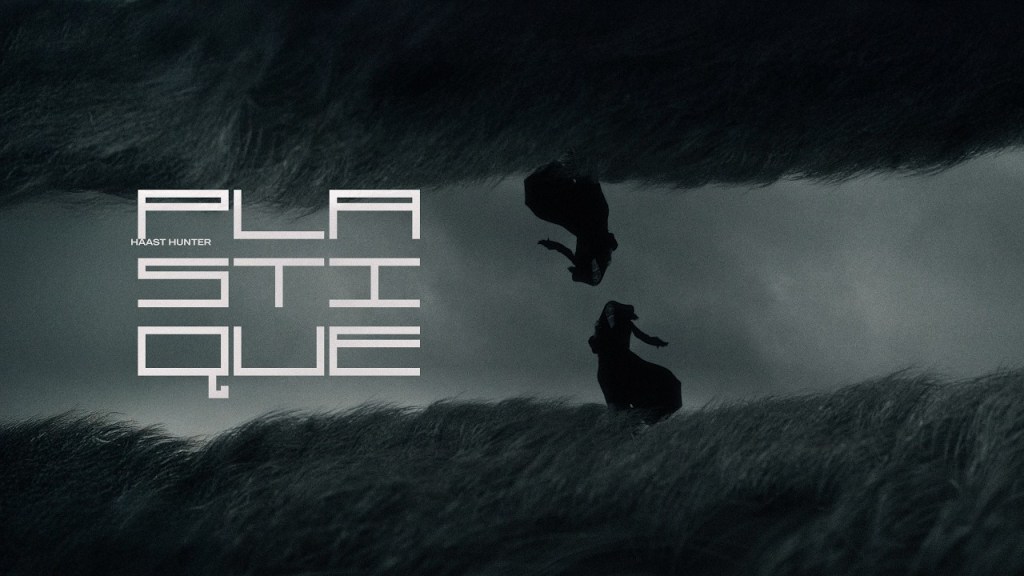
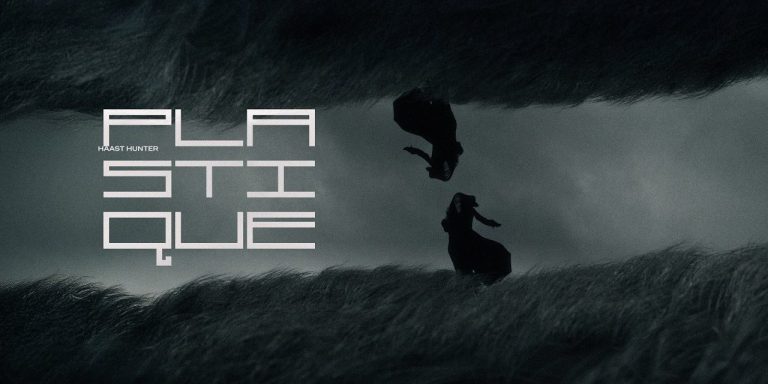
Last month Gwenno announced her new album Utopia due out July 11 via Heavenly Recordings. Following the success of lead single “Dancing On Volcanoes”, which was featured in the likes of NME, Clash, Brooklyn Vegan, Under The Radar, Dork and more, today Gwenno shares “War”, the second track to be taken from her much-anticipated trilingual fourth album. “War” picks up a poem written by Welsh artist and poet Edrica Huws (Vingt-Et-Un) around the start of WWII and reimagines it inside a deep and hypnotic piece of dub heavy piano music. As ever, Gwenno’s vision is masterful, jumping Huws’ poem 80 years into the future to sit right at the heart of the daily chaos of the 21st century we’re living through. As the mesmeric track flows on, Huws’ words sound as perceptive today as they would have done when they were written. The track comes accompanied by a hypnotic b/w video featuring cinematography by Claire Marie Bailey.
Commenting on the track Gwenno says: “I’ve loved this Edrica Huws poem for a really long time. She was an artist and poet, and she wrote this at the start of the Second World War. It kept resonating with me over this period where we’ve really normalized the idea of war, and actually at times have perhaps been quite enthusiastic from our sofas. I think her poem is really worth something in an age where we’re obviously tumbling towards something catastrophic. Those words have really reminded me of that very small window you have before it happens — the chance to be considerate, and more vigilant, and aware. It’s the elegance of her writing, the calmness of her writing, the wisdom.”
43 years into her life, Gwenno Saunders has been many people. The disaffected Cardiff schoolgirl; the teenage Las Vegas dancer; the singer in indie pop group The Pipettes. There was a turn in a Bollywood film, a nightclub tour, a stint cleaning floors in an East London pub. Long before she would become an acclaimed solo songwriter in both Welsh and Cornish, a winner of the Welsh Music Prize, a nominee for the Mercury, a Bard of the Cornish Gorsedh, there were the days of Nevada, London, Brighton; of Irish dancing, techno clubs, messiness and chaos.
Utopia, Saunders’ fourth solo album, is an extraordinary exploration of all of these selves. If the singer regards her first three solo records — 2014’s Y Dydd Olaf, 2018’s Le Kov and 2022’s Tresor as “childhood records”, rooted in her upbringing, her parents, her formative identity, then Utopia captures a time of self-determination and experimentation. These are songs of discovery, of the years between being someone’s daughter and becoming someone’s wife and someone’s mother. They range from floor-fillers to piano ballads, via contributions from Cate Le Bon and H. Hawkline, and encompass William Blake, a favorite Edrica Huws poem, and the Number 73 bus. It is her finest work to date.
There is a sense of revelation to Utopia, a feeling markedly different to that of previous records. Having released three albums in Welsh and Cornish, Utopia is Gwenno’s first album recorded predominantly in English, and presents a very different side to her life and songwriting.
“I feel as if I’ve written a debut record, because it’s a different language and it’s a different part of my life,” she says. “It’s about that point where I go out into the world on my own, which people generally write about first, and then get on with their lives. But it’s taken me so long to digest it — I needed 20 years just to make sense of things, and I realized the starting point of my creative life isn’t Wales, it’s actually North America.”
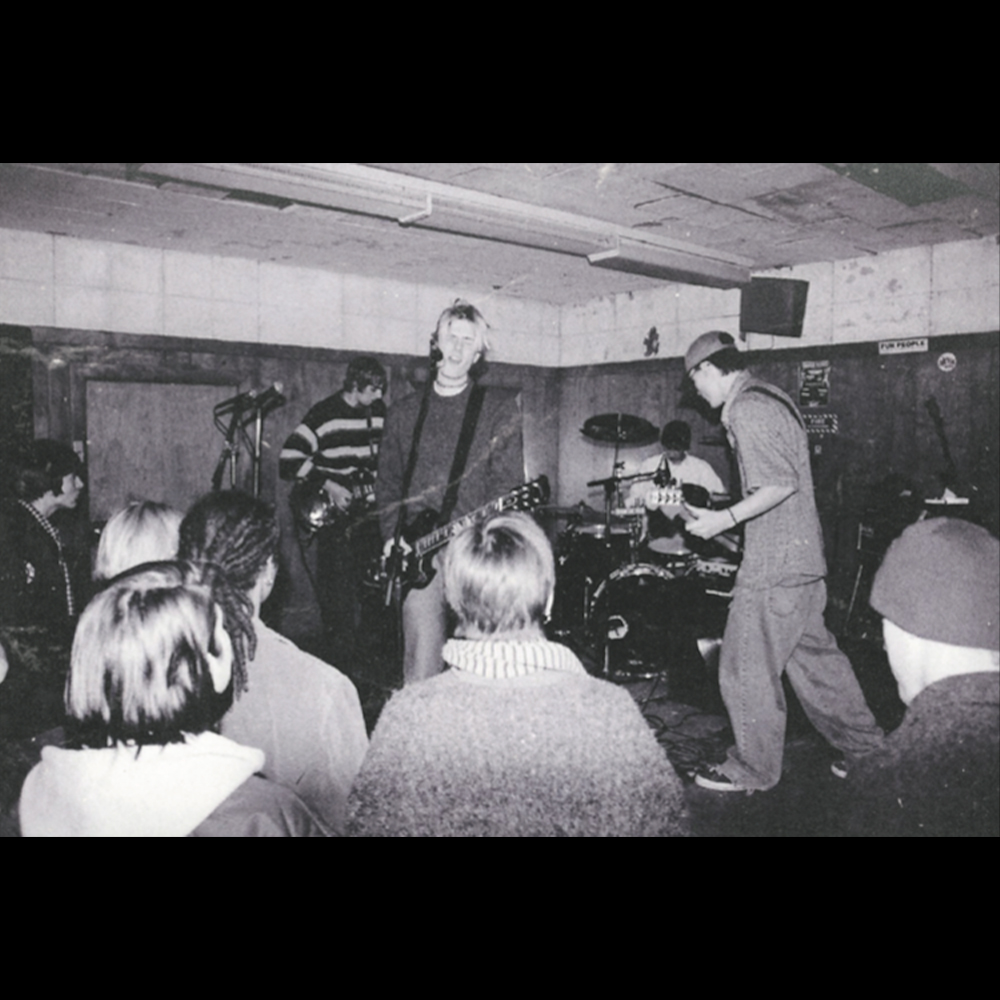
Saunders was a teenager when she left school to take the lead role in Michael Flatley’s ‘Lord of the Dance’ show in Las Vegas. For two years, she lived in an apartment complex with her fellow performers. They were seven miles from the strip, 40 teenagers with nothing much to do. There was a pool and a gym; drink, drugs, eating disorders. “Then every Saturday we’d go to this techno club called Utopia and just get completely spangled until Monday, when we had to go back to work,” she says.
She named the record Utopia in part to honor the wonder of those nights and that time, but also to nod to the fact that each of the album’s 10 songs belongs to its own place and time. “In the original Greek, ‘utopia’ doesn’t mean the ideal place, it means ‘non-place’,” she says. “And that’s the point of the record as well.”
When she returned from Vegas to the UK, via a stretch in Europe, Saunders moved to London. “I didn’t know anyone or anything, I would just hassle people and answer adverts in The Stage magazine, and go to really silly auditions,” she says. “I was looking for people to hang out with and make tunes.”
She thinks now of that time — of Irish dancing in a Bollywood movie, and attempting to make club hits melding techno and Celtic music, as a distinct part of the early Noughties’ aesthetic. It was the days of musical mash-ups and the clumsiness of the early digital age. It was butterfly tops worn with sparkly low-slung jeans. “It was really disparate things being stuck together in the tackiest way possible,” she says.
This was a period of long nights out in the subterranean bars of Dalston, cigarettes and bottles of Efes, dancing, DIY gigs, the sense of the city sprawled out before you. In the thick of this time, Saunders joined the Brighton-based band The Pipettes, recording two acclaimed albums and acquiring a reputation for their spirited live sets, complete with coordinated costumes and all-male backing band.
Utopia began quite differently to its predecessors. First came the realization that in order to capture this specific time in her life she would need to use English. “I think the way I’ve managed to write in English is by acknowledging that I can’t translate a lot of memories,” she says. “I’ve found that idea really important to explore. I think if I’d just stayed in Wales, and I hadn’t lived anywhere else or experienced any other culture then it would be really different. I would’ve made records in Welsh, but I left home at 16.”
Up until this point, Saunders’ songs had also always started electronically. On Utopia, she began each song on piano — the one exception is album closer, “Hireth”, written on harp. In part, she saw her return to piano — an instrument she has played since childhood, as a reflection of her shifting relationship with sound. But it was also a way to develop her songwriting, to explore the idea that songs that “perhaps can’t be made by a machine, that can only be made by human experience, have a far more potent value.” She took a similar approach to recording — the album set down in her living room, live, with her band, and produced once again by her long term collaborator, Rhys Edwards.
To look back over this period of her life has been a strange sensation for Saunders. “I feel compelled as a songwriter to keep digging it all up,” she says. “Everything’s a diary entry for me. And in writing about all of this I’ve remembered the chaos of myself.”
It is an album that spans 25 years. “All of adulthood,” she points out. “You get to this point and you go ‘God, that quarter of a century went fast.’ But I want to acknowledge it, and respect it and say, for better or worse, all of that happened.”
Discover more from Thoughts Words Action
Subscribe to get the latest posts sent to your email.