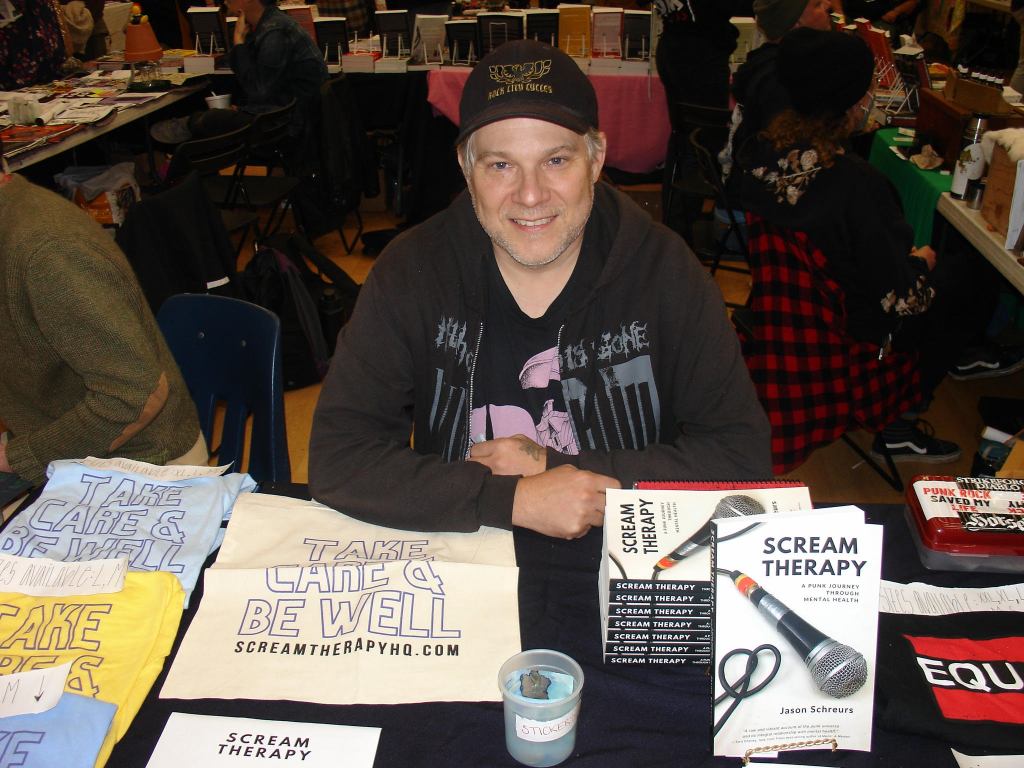
I recently had the chance to sit down with Jason Schreurs, author of “Scream Therapy: A Punk Journey Through Mental Health,” for an eye-opening conversation about the powerful intersection of mental health and punk rock. We discussed the personal journey that led to the book, the healing power of screaming and community, and how punk continues to be a lifeline for so many navigating their own mental health struggles. From raw stories to radical self-expression, Jason offers a perspective that’s both deeply personal and universally resonant.
Order “Scream Therapy” HERE
Check out “Scream Therapy” podcast HERE
You describe punk rock as a form of therapy, screaming not as an act of chaos, but of catharsis. When did you first make that connection between punk and mental health?
When I was a kid, I was drawn to the darkness of heavy metal. It appealed to the emotions I felt around a troubled childhood: screaming against abuse, neglect, abandonment. I still love metal to this day, but when a friend introduced me to punk and hardcore, something else clicked. It was loud and fast and angry like metal, but it seemed more unapologetic, more purposeful, more productive. (Not to say metal doesn’t also have progressive messages.) The punk screaming soothed me; metal had the guitar licks, and the thrashing, and the growling and grunts. Punk had vocalists who were exorcising real demons, not the imagined ones that metal bands sometimes sang about. At the time, I didn’t know that listening to punk and metal was connected to my mental health. It felt like a form of survival, but it wasn’t until later in life that I realized how much they were linked.
In “Scream Therapy,” you write about being diagnosed with bipolar disorder later in life. How did that late diagnosis reframe your understanding of your past and your identity within the punk scene?
My bipolar diagnosis came at the age of 46, and I’m a bit bashful to say that I had never heard of bipolar before that, other than a word that was thrown around sometimes as a sort of slag, like, “Oh, you’re so bipolar!” (Truthfully, I never quite understood what the slag meant either.) Through my life, I always felt like a weirdo, an outsider, a freak, and I was behaving in ways that I didn’t understand, some very destructive. When I was diagnosed, I realized that punk rock had saved me all of those years from something worse. It gave me a purpose, it gave me a focus. I immersed myself in listening to punk, writing about it, putting on punk shows, working with bands. It was my escape, but also a creative outlet that I need to cope with my internal struggles.
Much of the book centers around the stories of others in the punk community. What was the most surprising or humbling insight you encountered while listening to their experiences?
The first person I talked to for the podcast said, “Punk rock saved my life,” and the validation rocked me. Those words kept coming up, and it became clear that what I had been feeling my whole life—the darkness and isolation and shame—was okay. I could manage it. Other people understood and shared similar experiences. I felt privileged that punks were willing to share their stories with me, no matter how painful. They trusted me without knowing me, just because I was a fellow punk rocker who shared that punk bond.
You’ve called yourself a “punk rock weirdo.” Has reclaiming that label helped you embrace your mental health journey in a way that traditional frameworks could not?
Being a weirdo isn’t a negative trait. It opens up doors for new types of creativity. It allows for perspectives that are quashed and discredited in “normal” society. Being a weirdo came with permission for a certain kind of liberation—anything was possible. I’m handling my mental health condition my way. Even by calling it a condition, rather than a disorder, or disease, or sickness, I’m flipping the narrative around mental health. New perspectives were attainable and celebrated within the punk scene.
There’s a thread in your work about challenging traditional psychiatric models. What do you think punk has to teach mainstream mental health practitioners?
Empowerment. We are in charge of our mental health. If we want to take meds, it’s not because a psychiatrist throws spaghetti at the wall and hopes the best, it’s because we advocate for ourselves until we find meds that work. We’re not guinea pigs for mental health establishment. If we want therapy, we don’t feel obligated to take a traditional route (unless that’s what we want). We can apply the morals and ethics we learned in the punk scene to our mental health. Punk de-pathologizes mental health and finds a different route. The mainstream mental health system wants to diagnose (label), medicate, and fix. Punk teaches us to support, advocate, act, and manage. There is no cure; there is only living life the best we can. Punk is about struggle, embracing emotional pain, and recognizing it as something to live alongside instead of conquer. And, in there, hopefully some kind of management and periods of light and triumph.
How did your background as a journalist shape the way you approached such a personal and vulnerable topic?
It taught me how to write to deadline and keep motivated. Music writing and other kinds of journalism were constricting, even thought I found a way to challenge those stifling boundaries. With the freedom to write how I wanted and what I wanted, the book came smoothly, despite the difficult subject matter. People ask it was hard to write about such personal topics—for instance, my childhood abuse. No. It was a relief and a form of survival to get everything out. It was an enormous relief to tell my story, and sharing the stories of others was a privilege and honour. Also, I was being creative, which was something I needed and it filled me up. I was crafting a book—creating a piece of art—and I was careful not to forget that through the process.
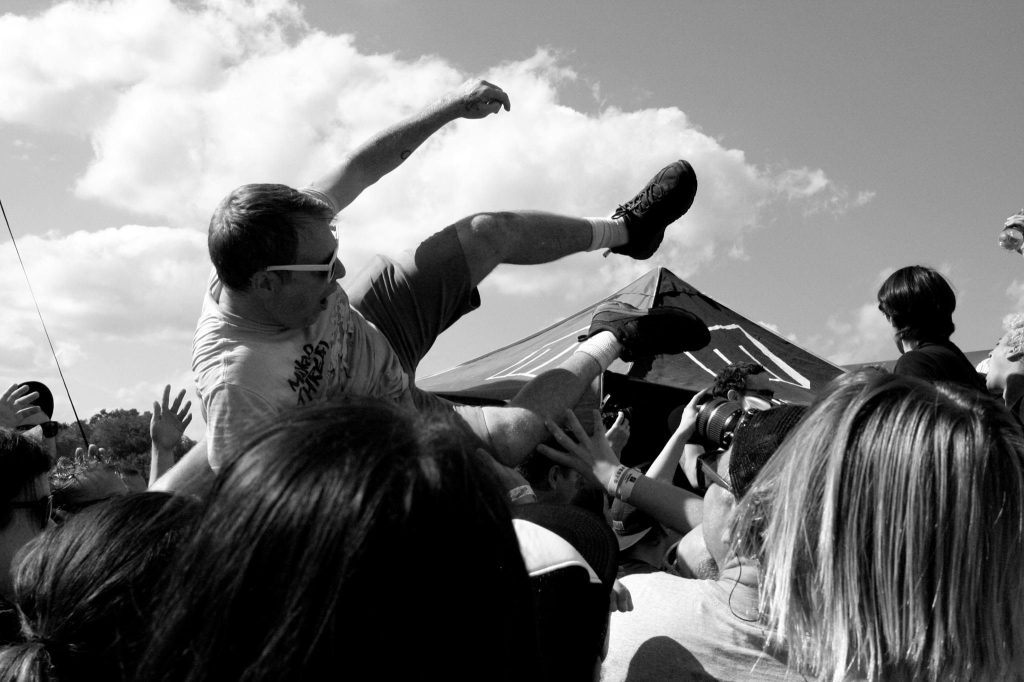
You’re not just an observer of the scene, you’re deeply embedded in it. How has your own participation in punk music helped you through the darker moments of life?
I was giving back to the scene and that gave my life more meaning. At first, I attended shows with my friends and felt punk’s positive power. I discovered early on that the scene was made up of people who were selfless and wanted to keep it alive and thriving. I decided to get involved. The easiest way was to start writing about the scene, because I was a writer, then I expanded into organizing shows and distributing and releasing records. When I wasn’t doing punk stuff, or whenever I took a break, I noticed my mental health was compromised. My behaviours became erratic and withdrawn in cycles of highs and lows, tell-tale signs of bipolar, and I didn’t understand why. Punk helped me cope, distracted me, and gave me feeling of belonging and purpose. I don’t know how much my health would have deteriorated without it.
The book features voices from people living with trauma, addiction, poverty, and discrimination. Why do you think punk continues to be a refuge for those pushed to the margins?
We all need support and people who understand. That could be listening to music that speaks to us, that makes us feel like we’re not alone, or that could be working on a big punk festival with your friends. It could be a walk with a friend who is struggling, or it could be forming a support group to allow people to share with and support each other. Punk isn’t just a music scene, it’s a way of life. It extends beyond the music style and into the lives of people who want to approach things in a non-conventional way, sticking your neck out in order to find a better way to address mental health.
You live in the qathet region of British Columbia, far from what many consider punk’s epicenters. How has your location influenced your relationship with community and creative survival?
I’ve come back to qathet (formerly Powell River) three times now. I hated it when I was a teen. I had to order punk records and skateboards through the mail. There were no shows. Everyone here was either a mill worker, logger, or hockey player. We got harassed constantly for being punks. We dressed differently, we skateboarded, we listened to loud music. We were the enemy. Some parents thought we were the antichrist. When I came back in ’95, I opened a record store. I sold mostly mainstream stuff and rock t-shirts. But there were a small number of teens and young adults who were open to punk and metal and hardcore. I remember the first time I sold a Minor Threat CD to a kid (who’s still one of my best friends) and the accomplishment and joy I felt. I remember thinking it might change his life. Turns out it did. The second time I came back home in my late 30s, I caught word that people in the punk scenes in the city had moved up here. That was such a thrill. When I found out one of the people was John Wright from Nomeanso, I felt like my town had finally “made it.” Seriously though, I knew this new crowd of punks was something I could work with. There were more people to come out to shows, more bands were starting up, and the town felt way less conservative. That has only gotten better over the years. I’m planning a punk and metal festival this summer, and I have no doubt it will be a raging success. I also got back to playing in bands, which is probably the ultimate form of expression and creative purge. Screaming your head off and thrashing on an instrument about things you care about is one of the best things in the world.
“Scream Therapy” encourages people to find their own creative tribes. In an increasingly fragmented world, how do we start building those kinds of authentic, healing communities?
Love and compassion. It’s the only way in a world full of hate and divisiveness. Treat others how you’d like to be treated yourself. It seems so obvious, and it’s crucial right now. Put down your phones, stop gossiping about your neighbours, go to a punk show, experience something real. Punk is a place of solace, but also somewhere to find inspiration to do bigger and better things. Activism is one route; loving people unconditionally is another. If you can enjoy chaos, anger, inspiration, and togetherness, with not only your friends, but also those new the scene, love is the key. That’s the way through the despicableness. No heads in the sand, just eyes on the horizon. Punk is a place of solace, but also somewhere to find inspiration to do bigger and better things. Activism is one route; loving people unconditionally is another.

Fugazi is your desert island band. What is it about their ethos or sound that continues to resonate so deeply with you?
Their ability to do things their own way that wasn’t driven by capitalism. It’s so admirable. They paved the way for bands to strive for a do-it-yourself ethic that supersedes the need to bend to a commercial industry. They created a scene where people could stick to their roots or aim for something outside the DIY world, as long as it was on their own terms. A lot of bands that admired Fugazi signed to major labels. Some got the shaft, others found a larger audience and exposed more listeners to bands like Fugazi. Every punk band did the best they could, and are doing their best, and the music lives forever. As for Fugazi’s music, I might go down a rabbit hole here. I can’t think of any other band who are able to take a political stance without sounding “rah, rah, rah.” I can’t think of any other band who are able to play music that is so unconventional while being so approachable. I can’t think of any other band who are able to lock in rhythmically, while let letting freedom and unpredictability flow alongside structure. No other band can make my heart pump and my rump shake like Fugazi does.
What role do you think vulnerability plays in both punk music and in mental health conversations? Are we getting better at embracing it?
Being vulnerable is super hard. You have to flex the muscle constantly. In punk, I think it’s always been there since in some fashion. Listen to Ramones and Black Flag. They weren’t holding back about mental health. But the hard conversations are always a struggle. A lot more bands are singing about depression and anxiety and emotional pain, which is amazing. Even if one person is helped by those songs, it’s a victory. And I think a lot of people are. There’s been a shift, but with that awareness comes complacency. It’s easy to launch a mental health campaign or sing a song that encourages people to speak about mental health. The problem is that puts the onus on the one who is dealing with the crushing weight of depression or suicidal ideation. We need to reach out to those who are struggling or in crisis. We need to let people know they are not alone. A billboard on the side of the highway isn’t enough. The punk scene is one place where those conversations can happen.
As someone who’s interviewed countless punks for your podcast and book, do you see any generational differences in how punk fans and musicians engage with mental health today?
Not really, it depends on the person. A lot of people who have been dealing with mental health issues for a longer time have found acceptance and perspective on their conditions, but sometimes it seems like younger punks are more likely to speak their truth with their friends and even onstage. Both of those observations feel like generalizations though. What I’ve found, despite people’s age, is that punk provides a safe container to speak about mental health issues or about emotions in general. The punks I’ve come across don’t talk about weakness, or being damaged. In fact, there is a strength in being open about their struggles.
Your book dismantles stereotypes of punk as merely angry or nihilistic. What do you hope readers outside the scene will take away about its complexity and heart?
Readers of the book who aren’t punks have told me about their misconceptions and how the book and podcast have been able to dispel some of the myths they use to believe about punk rock and metal—that it’s just a bunch of angry people slamming into each other in a most pit. After reading and hearing the stories of punks, they’ve learned that we are people who are willing to speak out and be open and honest, and that’s something that they can admire and aspire to. I hope everyone understands that angry music doesn’t make angry people, in fact it’s quite the opposite. I think a lot of people outside the scene have a sense of that. Maybe they just need to talk to a punk and see what’s up.
If “Scream Therapy” could scream one message into the world’s ears, what would it be?
We’re all equals, we’re all in this together. And in the immortal words of Philly hardcore band Paint It Black: “Live fast, but don’t die young. Slow down, but never, ever stop.”
 Thoughts Words Action