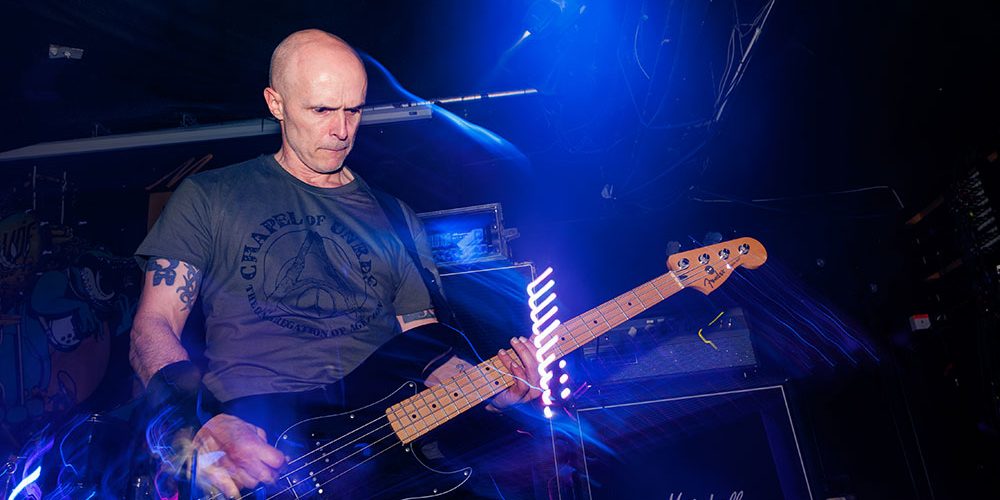
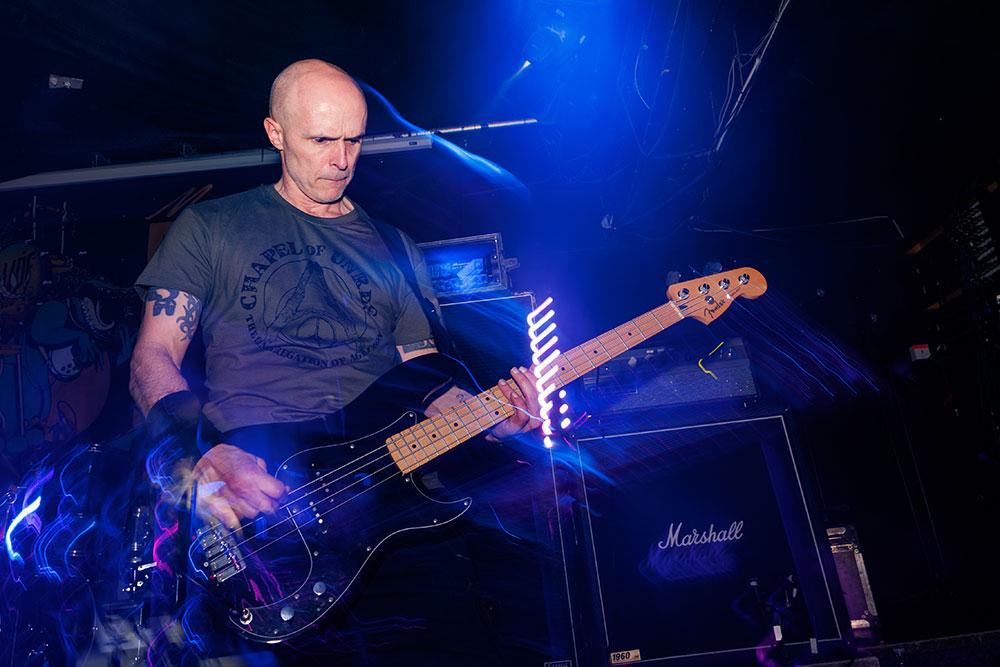
Today, we are honored to welcome Ian Glasper, a distinguished author, journalist, and musician, for an insightful conversation about his latest book, “A Country Fit For Heroes.” Known for his profound research and passion for the punk and hardcore scenes, Ian has carved a niche for himself as a chronicler of the subcultures that have shaped modern music history. His new book delves into the punk scene in the UK during the 1980s, highlighting the bands, the ethos, and the societal context that fostered a unique and rebellious musical movement.
You can order his new book via Earth Island Books: LINK
What initially drew you to the DIY punk scene of the 1980s, and what made you decide to dedicate a book specifically to this era and style?
I think it was mainly because I was in several aspiring punk bands that no one gave a shit about, and you kind of had to do it yourself, because no one else was going to do it for you. One of my first bands, Decadence Within, were massive Subhumans fans, and we really wanted to play with them, but there was no way someone was just going to ring us up and offer us a support slot – we had to ring them (i.e. the Subhumans) and book them to come and play near our hometown ourselves… and of course we were one of the support bands!
The whole anarcho punk thing was very empowering too. When you wrote to a band like Subhumans, or Crass or Flux, you actually had one of the band members writing back to you… not their manager, or the person who ran their fan club, but one of the actual band. And there were no airs or graces, which made you realise there was no real line between them and you – they were music fans just like you were, and you were a musician, just like they were. That whole ‘pay no more’, DIY ethic was so liberating, and it meant anyone could have a go.
And it’s stuck with me for my whole life. I’m still in a DIY punk band to this day. For me, it’s the only real form of punk, and that’s why I wrote ‘A Country Fit for Heroes’… like the blurb on the back says, it’s a love letter to the obscure.
Can you walk us through your research process for “A Country Fit for Heroes”? How did you track down and gather stories from such a wide array of obscure bands?
Like so many of my books, it started with some brainstorming, and a big list of bands on a piece of paper. That piece of paper usually lasts the whole gestation period of the book, as I add to it, cross bands off it, and make notes of dates when I’ve sent bands messages, asked for photos etc. I often put a shout-out on Fakebook to see if people have favourite bands that fit the bill that I might have missed, and lots of people make suggestions that I’ve never heard of, which is great, so that list is a work in progress right up until the day I hand the book over. And then you start trying to contact those bands, and inevitably you hit a dead end with some of them, but you keep putting feelers out, and asking friends of friends of friends…
What were some of the most surprising or unexpected discoveries you made while researching the bands featured in this book?
There were a few bands I stumbled across that I’d never heard of before in my life, who turned out to be fucking brilliant, like Dead Rose, Annex UK, Warzone, Sanctuary, Dogmatic Element and Awake Mankind – to name but a few – and it sort of validates the book, because it’s doing exactly what I wanted it to do… exposing people (including myself) to new music that they missed first time around.
With so many bands to choose from, how did you determine which ones to include in “A Country Fit for Heroes”? Were there any tough decisions or bands you regret not being able to feature?
There were no tough decisions, to be honest, because as I get closer to reaching capacity, I manage the band count tighter and tighter, as I would hate to tell someone they were in, and then have to tell them they weren’t. That said, there are a lot of bands that didn’t make the cut, but that was down to them, not me – they either didn’t get back to me in time, or declined to appear etc.

What aspect of documenting the underground music scene do you find most rewarding? Is it the research, the writing, or perhaps something else?
Wow, that’s a difficult question. The most rewarding part is seeing the finished book, I guess, because that means it all came together in the end, and it’s great to see it realised. I love the research, and the interviews, but the transcribing and writing can be a bit of a chore sometimes. Tracking down an elusive band and finally getting an interview in the can with them is extremely fulfilling… there are a few bands in this book, not least of all Death Sentence and Mania, who I have been trying to catch up with for the best part of twenty years – I wanted to include them in my first book back in 2003, and it’s taken me this long to track them down.
How does “A Country Fit for Heroes” build on or differ from your previous books like “The Day the Country Died” and “Burning Britain”?
It’s deliberately similar to those two books in approach and format, and also my third book, ‘Trapped in a Scene’. That’s my Eighties trilogy really, and this is a companion piece to those books, filling in the gaps, going even further down the rabbit hole, telling a few stories in great detail that were maybe only hinted at in those volumes from another perspective.
Are there any particular stories or interviews from the book that stand out to you as especially memorable or impactful?
One of my favourite chapters is about No Defences, an anarcho punk band who were about to release an LP on Crass Records, but circumstances conspired against them and it never came out, at least for several decades until Sean Forbes released it on Demo Tapes Records. You can see why they would have been a perfect fit for Crass, because they were very serious, with a lot to say for themselves, and it was great to hear their story.
Actually, another poignant story for me was from the band Birth Trauma. Their guitarist Archie was telling me that he was going through a very tough time, and he happened to see his old band mentioned in my book ‘The Day the Country Died’. How that happened was very fortuitous, and too complicated to go into here, haha! But anyway, seeing his band mentioned in the book boosted his spirits and put him back in touch with the old band members, and he even had a few CDRs of their demo done and some T-shirts made, which he sent to the old members as gifts. It turned out that one of them was really ill, and he sadly died a few months later, but he’d been overjoyed to get the CD and be reconnected with his old mates before he passed, and they all wore their band T-shirts to his funeral. And that was a beautiful thing to hear, to know I’d played a tiny part in getting old friends back in touch, you know?
In your opinion, what was the significance of the DIY punk movement in the 1980s, and how did it influence the broader cultural landscape?
I guess the spirit of DIY, enabled by technology, has really been grasped by both hands by those who now record their music at home, and self-release online, and by authors who self-publish their own books etc. The sky’s the limit now, and there’s really no excuse not to express yourself.
How do you see the DIY ethic of the 1980s punk scene being reflected in today’s music industry? Are there parallels or significant differences?
I only see significant differences really. The DIY ethic seems diametrically opposed to the music industry. Of course, many of the people in the music industry started off doing it themselves, I’m sure, and with the best intentions, but when it became an economic activity, rather than a labour of love, that’s where their paths diverged. That said, I have no issue with people making a living doing what they love, but they have to have some scruples, and normally those scruples fly in the face of the music industry norm. Things like paying to play, and signing away the rights to your own music for all eternity and in every territory known, and not yet known, to humanity etc. have very little to do with the DIY punk scene I’m writing about.
What are your thoughts on the current state of the UK’s underground music scene? Are there any contemporary bands or movements that you find particularly exciting?
It’s amazing, and there are so many incredible new bands coming through, which is why it pisses me off so much when people moan and groan that punk’s dead and there’s no exciting bands out there anymore. The underground punk scene is healthier here than it’s ever been, I think? Bands like Rank, Sex Germs, Shreds, Split Dogs, Proud City Fathers, System of Slaves, Going Off, Disciple BC, Bad Breeding, Human Error, Shooting Daggers, Rat Cage… the list is endless. And that’s without mentioning the older bands who are still kicking it with a vengeance.
Looking beyond the UK, how do you think the global underground music scene has evolved since the 1980s? Are there any international scenes that have caught your attention?
I guess the scenes that have caught my attention have been places we’ve been to play. I wouldn’t profess to have my finger on the pulse the way I used to have in the Eighties and Nineties, so I have to be there, in the same room, to take note. We’ve done some great gigs in Poland, thanks to our friends in Sanctus Iuda and Orphanage Named Earth, and we were really struck by how vibrant the scene was there. We’ve also played in Germany and Bulgaria, and any trip to Europe, to play the incredible squat venues they have out there, is always very inspirational.
For aspiring music historians or writers, what advice would you offer when it comes to documenting niche subcultures and underground scenes?
It’s hard work, and there’s no financial pay-off at the end of it, but if you have something to say/add, don’t let anyone stop you. My advice is to be patient, because it’s often a long haul, and there’s a million unfinished books out there because their writers hit that dreaded wall mid-way… but don’t panic, it happens to all of us. Every book I’ve done, I’ve had a moment where I’ve doubted myself, and wondered what the hell I’m doing, does anyone even wanna read this shit I’m typing… you just have to take a step back and reset. I try to do something towards my project every day though, so you always feel like you’re making progress, no matter how slow. Slow and steady wins the race, as they say.
How do you maintain a balance between your passion for punk music and the objectivity required for historical documentation?
Mainly by removing exclamation marks when I proofread my work, haha! But seriously, getting a proofreader who knows the subject matter, and doesn’t mind pointing out any hysterical hyperbole, is worth its weight in gold (thanks, Baz!)
Have you maintained relationships with any of the musicians or bands you’ve interviewed over the years? If so, how have their views on the punk scene evolved?
Yes, for sure. It was after interviewing them for ‘The Day the Country Died’ that Colsk and Kev from Flux of Pink Indians asked me to play bass when they reformed the band briefly in 2008/2009, and I’m still in touch with Colin today. And that’s true for many of the people I’ve interviewed over the years. I wouldn’t say we have close personal relationships, but we’ve certainly kept in touch… that’s helped by the fact my band Zero Again still regularly plays gigs with the likes of Discharge, GBH, Subhumans, Conflict etc. As for how their view of punk has evolved, I don’t think it’s changed that much since I first met them for the book(s) – let’s face it, they were already veterans of the punk scene by that time anyway, and their opinions and outlooks pretty well entrenched.
What’s next for you after “A Country Fit for Heroes”? Are there other periods or genres of punk or underground music you’re looking to explore in future projects?
I guess I carry a torch for the Eighties, as that was the period when my love of punk was first ignited, so it will always hold a special place in my heart. I’ve had a few ideas for future books, including perhaps another ‘one band focus’, but also potentially a ‘one city focus’… exploring not only the bands from that town, but also the venues, the zines, the clubs, the record stores, the key gigs and characters from that scene… we’ll see. Each book takes about two years to write, and they take it out of me a bit, so I’m just coming up for air again at the moment.
 Thoughts Words Action