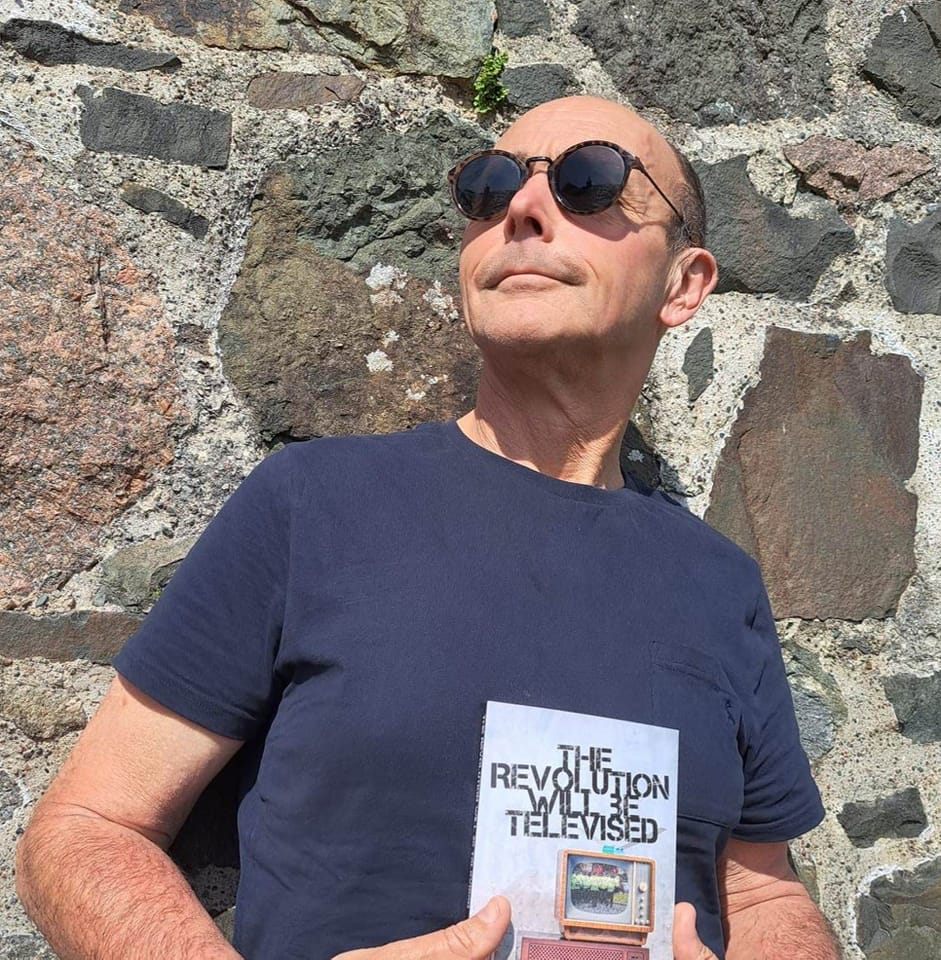
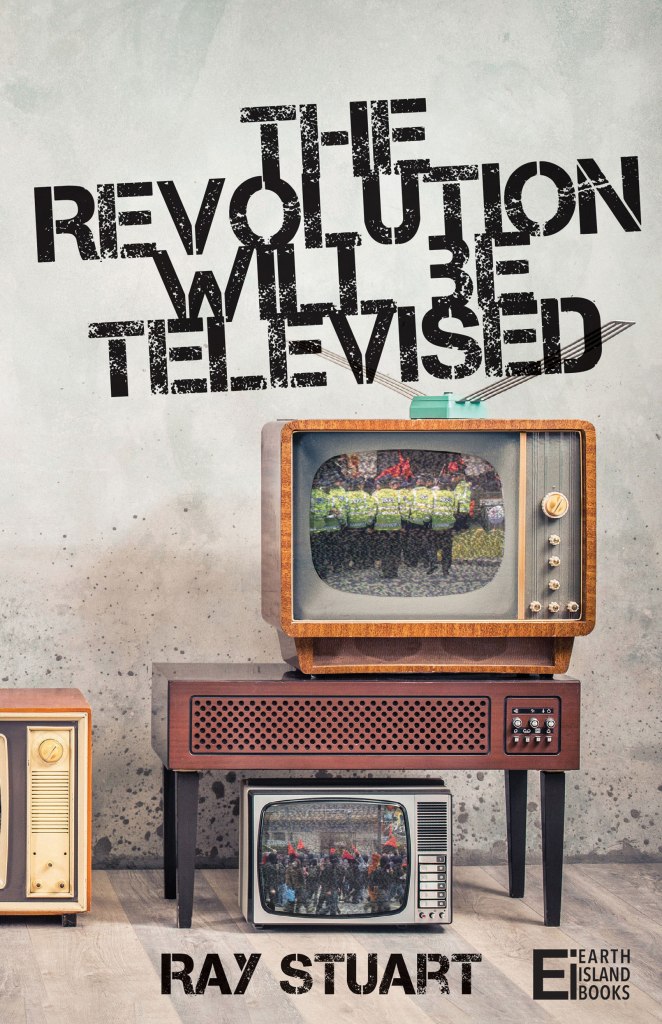
We are thrilled to present an interview with Ray Stuart, the author of “The Revolution Will Be Televised.”
Your book, “The Revolution Will Be Televised,” showcases your strong opinions on various societal issues, including the monarchy, government, religion, and hereditary privilege. What drove you to express your indignation about the state of the nation in this format, and what do you hope readers take away from your perspective?
Ray: I started writing the book as separate articles simply because I felt so powerless in the face of the arrogance radiating out from Westminster. If that rabble didn’t inspire revolution, then I realised nothing would. Boris Johnson is the epitome of self-serving egotistic dishonest privilege and his tenure in number 10 was a perfect example of class privilege in action. Even when his party tried to do the right thing, it was from a paternalistic rather than empowering position.
The more I watched them handing each other gongs and lucrative contracts, ignoring the majority unless there were votes to be had and lurching ever more to the right, I felt I had to do something to get it off my chest. Writing it down helped and from pointing out Johnson’s flaws, low hanging fruit perhaps but satisfying, I started on other topics that in some way supported or upheld the position and status of him and his ilk.
Sometimes I just wanted to scream and charge down to London, lob some cobble stones at the Palace of Westminster and chuck the whole lot of them in the Thames. I understand though that any attempt at revolution will give them the opportunity to be even more draconian. I’ve no doubt that change will come but it needs momentum and some consensus, a collective will perhaps. I’m a tiny part of the mechanism of change, but if everyone who feels the same starts becoming a tiny part of that mechanism a tipping point will come. It almost happened when Jeremy Corbyn was leading the Labour party. I couldn’t sign up for everything he stood for but gosh it triggered the establishment to push back with every slur and trick they could muster, a sure sign he was on the right path!
What readers take from it will be different for everyone. I’m hoping people have a good chuckle and then start to think about some of the topics I cover. I suppose my biggest hope is that it’ll trigger discussion and debate. I know there will not be a revolution, indeed I want to avoid one because everyone will have different ideas and it’ll be a bloody mess. We just need to think and ultimately be in control of our own destiny.
The description of your book mentions that your ire is fierce, yet your passion is strong, tempered with witticisms and progressive thoughts. How did you find the balance between expressing strong opinions and maintaining an enjoyable and discursive writing style?
Ray: That’s a great question.
I don’t seem to be able to avoid chucking in a few jokes when I write. It’s a character flaw. The balance was something I thought about but that’s just how the book came out. I try not to edit myself as I go along, otherwise I get bogged down.
But I would accept criticism that a serious subject shouldn’t be treated too lightly. My defence is that a book like this must be accessible. There are plenty of volumes out there bemoaning the state of the nation. Different authors will have different styles and readers will gravitate towards something that suits them.
As a self-confessed member of the middle classes the challenge has been to advocate change from a position of relative personal comfort.
“What do we want?”
“Workers in control of the means of production and greater variety of couscous at Waitrose!”
“When do we want it?”
“Well, Tuesdays is bridge club, Wednesday is choir practice, Nigel takes Penelope to lacrosse training on Thursdays, Friday is Mandy’s do at the Legion, how about Saturday, no wait, Samantha has the gymkhana. Monday’s good for me!”
Okay, so that was for humorous effect but the point stands, a lot of people have busy lives but equally a lot of people have been abandoned by the state. It is incumbent on anyone with a conscience to think beyond their own four walls. Years of Tory government has led to appalling selfishness and an underclass of people left behind. We can change things without being patronising, but it takes work, activism and ideally the end of the sycophantic press pandering to their masters and demonising the working class.
The phrase “If the power isn’t in your hands, then whose is it in?” suggests a call to action. Can you elaborate on the themes of empowerment, discussion, cooperation, organization, and rising up, as mentioned in your book? How do you envision the role of individuals in effecting change?
Ray: Let’s start from the end. Its really all about individuals, empowering yourself is the first step. Of course, that’s far easier said than done and from personal experience I can testify that there are times in life when other issues, family, work etcetera, take precedence. We all have to eat, feed and clothe our families and put a roof over our heads. Real life means compromise.
Although they can be a mixed blessing, Unions are a good example of collective action. I once worked with a man who, quite seriously said, ‘now people have rights at work there is no need for Unions anymore…’
When I’d calmed down, I tried to explain that attitudes like that are exactly why we need them. We can’t surrender what little collective power we have. It has been eroded by the Tories and shamefully also by the Labour party, who ironically are funded in no small way by Unions.
“ If the power isn’t in your hands, then whose is it in?” is a call to think. To understand that you, adorable though you are, are powerless on your own. The dilemma is that collective action often means unacceptable compromise. If everyone who hates the Tories voted Labour we’d have them out. But then we’d be tacitly supporting a party that’s slightly left of the Conservatives but hardly a burning flame of revolutionary zeal. They still echo the thoughts of the Tories when it comes to migration, strikes, justice and most other areas. They aren’t even much better on issues of equality and the environment than many on the right of the house. I’d rather have Labour than Tory, although in Scotland we have the SNP and Greens hold the balance. It’s a tad more mature, with proportional representation, but still we have parties trading and dealing and Westminster still holds the real power.
I deliberately avoided offering too many solutions because the first step is understanding the weight of opposition to change and how the system is fortified against working people having a voice. We call it democracy, but party politics relies on compromise and accepting the unpalatable in the name of democracy.
Instead, I urge people to discuss and debate the issues with friends, neighbours and colleagues and start thinking about how we could exercise some power. It can happen, avalanches gain momentum from tiny snowflakes.
Punk rock played a significant role in your life, influencing your worldview. How has this musical genre shaped your perspective on activism and rebellion, and how do you incorporate its influence into your writing?
Ray: When I was at school I got into heavy metal, I wore quadruple denim and worshipped at the feet of Status Quo and Deep purple.
Then punk exploded and I gravitated towards it simply because it was passionate and cut through the bullshit. I might have loved Deep Purple but there was no way I’d ever play guitar like Richie Blackmore, but I stood a chance of emulating Viv Albertine.
It turned out I had absolutely no musical ability, but punk is about attitude rather than ability. And every punk gig I’ve been to, big or small, from the late 70s to now, is marked by friendliness and comradery. Of course, there are some boneheads who like a scrap but generally I find punk is a subculture that could teach the rest of the country valuable lessons on cooperation, mutual respect and tolerance.
Your decision to leave the rat race and live in a motorhome in 2016 seems like a pivotal moment. How did this experience influence the themes explored in “The Revolution Will Be Televised,” and did it contribute to your desire to write about societal issues?
Ray: Initially it was a reaction to feeling trapped in the mortgage/debt/work merry-go-round. Both my wife and I had been single parents for a long time before we got together so as our children forged their own paths, we fled the nest.
We worked at music festivals, mainly smaller ones and found comradery and so much love amongst them that it started us thinking that returning to ‘normality’ in a suburban semi wasn’t for us. You could say that starting to record our travels unlocked a desire to write that had been quashed by my schooling. Getting out of the day to day grind gave me space to explore thoughts/beliefs and writing them down provided an outlet for my growing frustration with the state of the UK and further afield. At the time when Donald Trump was elected and the Brexit vote was taking place, those frustrations grew to epic proportions!
Your book “Still Following Rainbows” documents your experiences on the Isle of Mull. How did the highs and lows of adjusting to life on a Scottish island contribute to your reflections on societal and political issues, and did it shape the narrative of your latest book?
Ray: Hmm, another interesting question. I suppose it was threefold.
Firstly, the pace of life is slower, and with our work/life balance much improved I had time to think and ponder. Plus, the benefits of being on an island with a close-knit community who are supportive of each other helped us understand that being in a small community was ideal for us. I love the idea that we could all be in close knit neighbourhoods with health care, food, work and suchlike centred around the local population.
That’s a pipe dream of course. I’ve just got back from a trip to London and the sheer weight of humanity was startling. I was thinking, where do you begin, but wandering around I saw lots of vibrant local hubs and community centres so its not all doom and gloom.
Secondly, I love Scotland. We have free prescriptions because the government understands prevention is better than cure. (And cheaper in the long run). It’s not an idyllic socialist paradise but it certainly seems to be run on longer term goals than the five year cycle of unachievable election promises that Westminster dole out.
Thirdly, I think I saw a lot of the corruption and dishonesty in Westminster more as an observer. It was interesting taking that step back and being a little more objective. That hadn’t occurred to me until you asked that question, so thank you.
“Even Unicorns Die” was released during the Covid-19 lockdown, featuring unpublished articles and stories. How did the lockdown and its challenges influence the content of this collection, and what motivated you to share these pieces at that particular moment?
Ray: Honestly, I was bored. Lockdowns were awful for a lot of people. Far too many died, often alone, many people struggled with their mental health and businesses suffered, mostly the small ones rather than the big corporations.
I was one of a handful locked down in acres of open countryside, a mile from our nearest neighbour and four miles from the nearest shop. We were extremely lucky, and I realise that, but I also got restless as most of my day-to-day work involved the public, who were absent.
I started jotting down ideas, found a few unpublished bits and bobs and thought, sod it, lets put it together in a book. If it passes the time for someone, brings a smile to their face, or makes them question something then where’s the harm?
You humorously describe yourself as officially a hypocrite, working for someone with an alphabet soup after their name and being a vegetarian who likes smoked salmon. How do these personal contradictions inform your perspective, and do they play a role in your approach to activism and writing?
Ray: Life is about contradictions. It’s a natural state in a complex world.
I shopped at the CoOp but was buying Unilever and Nestle products. I’m more discerning now but only because I can afford to be. When times were tough, I’d buy cheap food and clothing that had more than likely been made in a sweatshop. How you live an ethical life is a personal decision and you must be accountable to yourself.
Regarding work, I can work for someone who is a fair employer, is genuinely trying to keep an important historical building open to the public and understands that we hold different views on many topics. I’d struggle to work for a big corporation but if needs must…who knows? I’d never blame anyone for doing what they must do to survive. It’s a messed-up world and if the only job is in Weatherspoons then its not for me to judge.
I think my gradual switch from hardline left politics to more free-thinking anarchism has been because I understand that no political philosophy will work unless its totalitarian and oppressive. That’s a big red line for me so I’ve come around to more nuanced thinking. Do you want to talk about how in the book you talk about how life is not black/white, right/wrong etc you mention living in a binary world – can you say something about that?
I describe myself as vegetarian if I’m filling in a form for my diet. I don’t want to be at a wedding and have half a roast pig plopped in front of me. But I’m not terribly discerning when it comes to checking ingredients all the time.
And yes, I do eat fish sometimes. Like I said, I’m a hypocrite.
What topics or themes do you envision exploring in your future writing, and how do you plan to continue contributing to discussions about societal change and activism?
Ray: At the moment I’m finishing a collection of short stories. Provisionally titled The Weight of Sin, its pretty dark stuff, and although there are nods towards the ills of the world it falls short of activism.
I’m not sure what a follow up to The Revolution would look like. The danger of that type of writing is it’s hard to write in such a way that it remains topical. I found this out when Johnson was replaced by Liz Truss then Rishi and then the Queen died, necessitating many revisions. And people wonder why I hate editing!
I have a vague notion of a collaborative piece, maybe a book with other contributors who can offer their thoughts on what needs to change and why. Interested in contributing Djordje?
What message or piece of advice would you like to share with readers who engage with “The Revolution Will Be Televised,” especially those who might be inspired to take action in their own way?
Ray: Whatever you choose to do, do something (that doesn’t cause physical harm to others). Help at a foodbank, write an article or letter, organise a protest, go along on a march, sab a hunt – start small and build up.
Be yourself and play to your strengths. Keep your aims realistic. There’s an old cliché that you should think global and act local. It’s not bad advice. The weight of the task before us may seem overwhelming but every little bit helps. If you don’t change the world but one person benefits, one family has a hot meal or one pig gets to wallow free, then you have made a difference.
 Thoughts Words Action